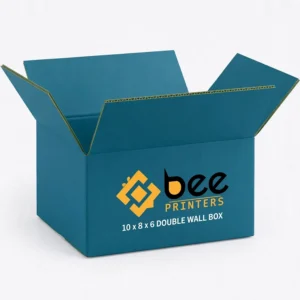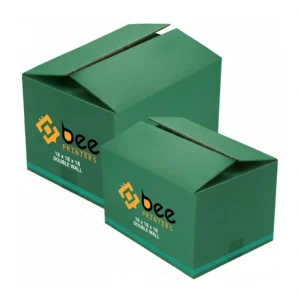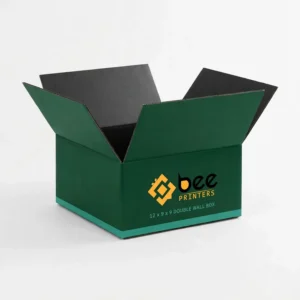
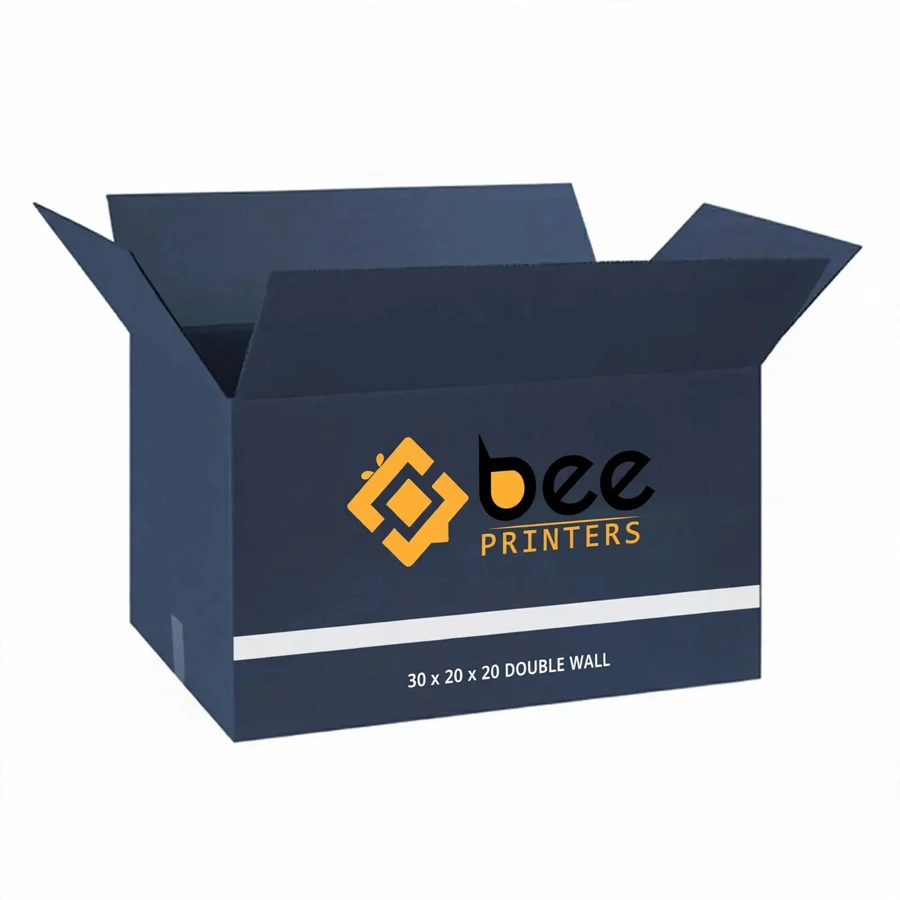
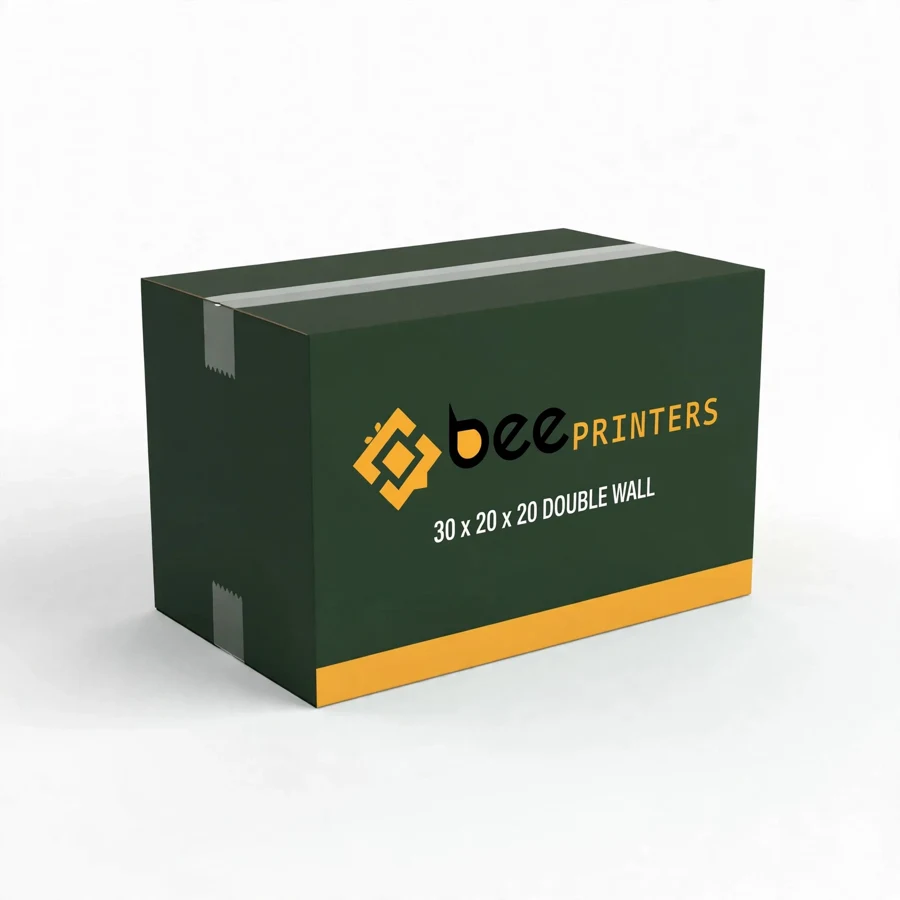
Not every shipment fits in a standard carton. Some products are simply too long, too wide or too bulky for ordinary boxes, and forcing them into a box that is too small is how goods arrive damaged. 30x20x20 double wall cardboard boxes from Bee Printers solve that problem. At thirty inches long, twenty inches wide and twenty inches deep, this oversized shipping box holds large, bulky items comfortably, while the double-wall corrugated board gives it the strength to protect them through handling, stacking and long-distance transit. Two fluted layers bonded between liner sheets make the walls far more resistant to crushing and punctures than a single-wall carton, which matters most when a box this large is carrying real weight.
Large boxes fail in a different way from small ones. A small box that is overloaded usually splits at the bottom; a large box that is under-built sags in the middle, bulges at the sides and collapses when another parcel is stacked on top. Double-wall construction prevents that. The extra layer of fluting acts like a structural rib running through the board, keeping the panels flat and the corners square even when the box is fully loaded. That rigidity is what makes the 30x20x20 format reliable for the bulky shipments it is designed for — the box keeps its shape from the warehouse shelf to the customer’s door.
Big electronics and small appliances are a natural fit for a 30-inch box. A desktop computer tower, a monitor with its stand, a kitchen mixer, a vacuum cleaner or a set of audio speakers all need length as well as depth, and the 30x20x20 interior gives them room plus space for protective cushioning. The double-wall board absorbs the bumps of transit, and because the box is wide as well as long, heavier items can be centred so the weight sits evenly instead of pressing on one corner. Retailers and refurbishers who ship electronics regularly value that stability, because a cracked screen or a dented casing means a return, a replacement and a lost customer.
The same logic applies to trade-in and repair programmes. A customer sending a device back for repair needs a box that fits the item without a struggle and protects it on the return journey. A roomy double-wall box with foam or bubble wrap inside does that job far better than a box that has to be forced shut. Businesses can include the flat-packed box with the return label, so the customer packs the device, tapes the box and sends it back with confidence that it will arrive intact.
Flat-pack furniture is a major user of oversized boxes. Chair seats, table legs, shelving panels, bed slats and dismantled furniture parts are long and awkward, and they need a box that matches their dimensions rather than one they have to be squeezed into. A 30x20x20 box takes many of these parts with room for edge protectors and wrapping, and the double-wall board stands up to the weight of solid wood or metal components. Furniture sellers shipping replacement parts, hardware kits or single components find this size far more practical than a generic large carton, because the contents sit flat and cannot shift around during transit.
Home goods follow the same pattern. A set of large cushions, a rolled rug, a bundle of curtains, a collection of lampshades or a boxed set of bedding all fit comfortably in a box of this size. The twenty-inch depth means soft goods can be folded once rather than compressed into a tight roll, so they arrive looking the way they should. For e-commerce sellers in homeware, that matters: a cushion that arrives creased or a lampshade that arrives dented is a return waiting to happen, and a properly sized double-wall box prevents it.
Exhibitors move a surprising amount of bulky material to and from events: pop-up banners, display stands, samples, brochures, branded merchandise and demonstration products. A 30x20x20 double-wall box is a practical way to pack all of it. The long interior takes rolled banners and folded display panels, the width takes stacks of brochures and sample packs, and the double-wall board survives being loaded into vans, stacked in storage rooms and unpacked on a busy exhibition floor. After the event, the same box packs everything back up again, and because the board is strong, it can make the return trip several times before it needs replacing.
Event organisers and marketing teams often keep a stock of these boxes for exactly this purpose. They are large enough for the awkward items, strong enough for repeated use, and easy to label with the event name, the stand number and the contents. When several boxes travel together, the uniform size makes loading a van or a pallet much simpler, and the flat panels take large labels that are easy to read in a crowded loading bay.
Soft goods in bulk are heavier than they look. A box full of folded towels, workwear, uniforms or hotel linen weighs a great deal, and a single-wall box will often tear at the handles or split along the bottom. The 30x20x20 double-wall format handles that weight, and its generous interior means textiles can be folded neatly rather than stuffed in. Laundries, uniform suppliers, hospitality businesses and textile wholesalers use this size to move stock between sites, to ship orders to hotels and restaurants, and to store seasonal linen. The box can be taped shut, labelled and stacked, and the contents stay clean and dry inside.
Bulk clothing shipments work the same way. An online fashion seller dispatching a wholesale order, a charity collecting donated clothing, or a manufacturer sending samples to a buyer all need a box that holds a large volume of soft goods without bursting. The 30-inch length takes folded garments laid flat, which keeps them presentable, and the double-wall board keeps the box intact even when it is packed full and stacked under other parcels.
Car parts are another classic use for an oversized double-wall box. Bumpers, trim pieces, exhaust sections, body panels and sets of floor mats are long, sometimes heavy and often oddly shaped. A 30x20x20 box gives them the length they need, and the double-wall board protects painted or polished surfaces from the knocks of transit. Parts suppliers shipping to garages and workshops rely on boxes like this because a damaged part means a delayed repair and an unhappy customer. The box can be lined with paper or foam, the part wrapped, and the whole parcel taped and labelled for a courier who may stack it with heavier freight.
Industrial shipments follow the same logic. Machine components, tool sets, cable reels, safety equipment and spare parts are often too long for a standard carton but too light for a wooden crate. The 30x20x20 double-wall box fills that gap: strong enough for the weight, large enough for the length, and cheap enough to use for everyday shipments. For businesses that ship industrial goods regularly, having this size on the shelf means packers can get an order out the door quickly instead of building a custom box for every unusual item.
A box this large has a lot of flat surface, and that surface can work for the brand. Printing a logo, a handling message or a simple design on the outside turns the parcel into a moving advertisement, and the large panels make the print easy to read from a distance. Handling marks such as fragile, this way up and do not stack are also more visible on a big box, which helps couriers treat the parcel correctly. The full family of sizes is listed in the double cardboard boxes category, so businesses can match the box to each order instead of using one size for everything.
For smaller or lighter orders, a lighter format may be more economical, and a complementary option such as Corrugated Mailer Boxes can cover the everyday parcels while the 30x20x20 double-wall box handles the oversized ones. Keeping both on the shelf gives packers a choice: the right box for the right order, every time. That choice saves on void fill, reduces shipping weight and keeps the goods protected, which is the whole point of good packaging.
Businesses that ship bulky goods go through large boxes steadily, and buying at wholesale prices keeps the cost per box down. These 30x20x20 double-wall boxes are available in bulk, so warehouses, fulfilment centres, furniture sellers and parts suppliers can keep a ready supply without over-ordering. The boxes arrive flat-packed, which means a large quantity takes up very little storage space until it is needed, and each one assembles in seconds with packing tape. A flat-packed stack of oversized boxes is far easier to store than a stack of assembled ones, and it keeps the warehouse floor clear for the work that matters.
If you are not sure this is the right size for your products, start with a modest quantity and test it with your real shipments. Pack your largest typical order, add the cushioning you normally use, tape it shut and see how it handles. Many businesses find that the 30x20x20 format becomes their default for anything that does not fit a standard carton, and once it is on the shelf, the packing team reaches for it without thinking. That is the sign of a box size that earns its place in the warehouse.
| Material | Kraft, Cardboard, Corrugated, Rigid stock |
| Sizes | All custom sizes (any length × width × height) |
| Printing | CMYK / PMS, full-color, offset & digital |
| Finishing | Matte, Gloss, Soft-touch, Foil, Spot UV, Embossing |
| Add-ons | Window cut-outs, inserts, interior printing |
| Minimum Order | 100 boxes |
| Turnaround | 7 to 10 business days after design approval |
| Shipping | Free shipping across the US |