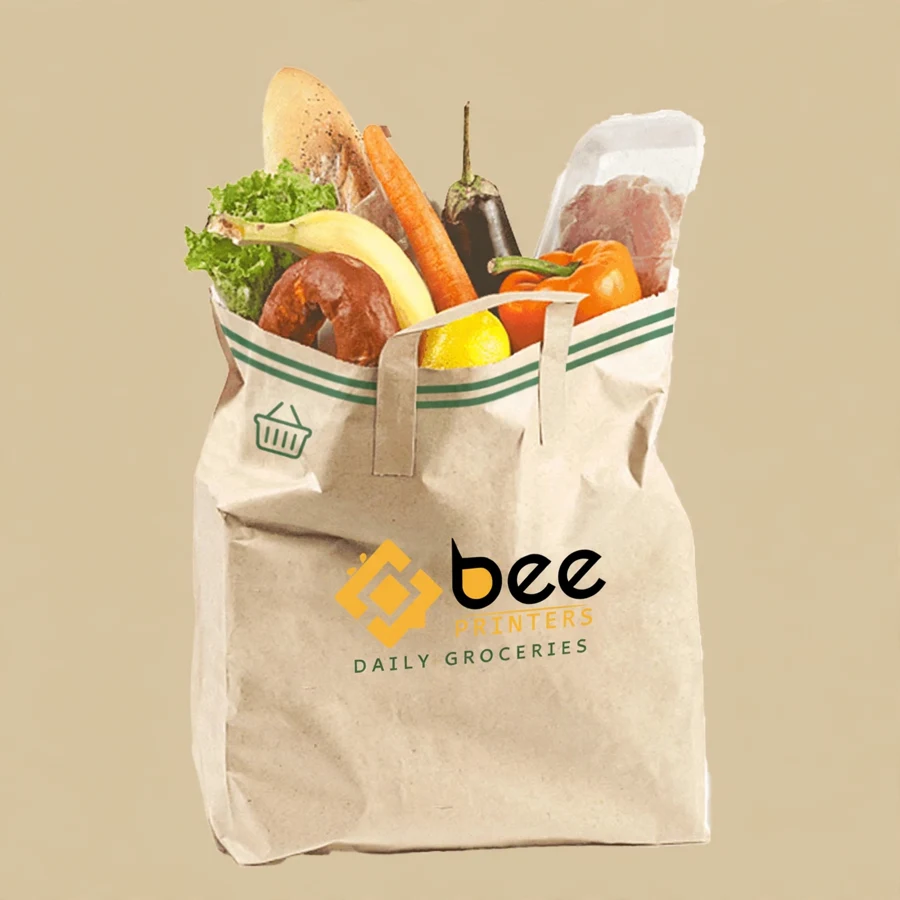
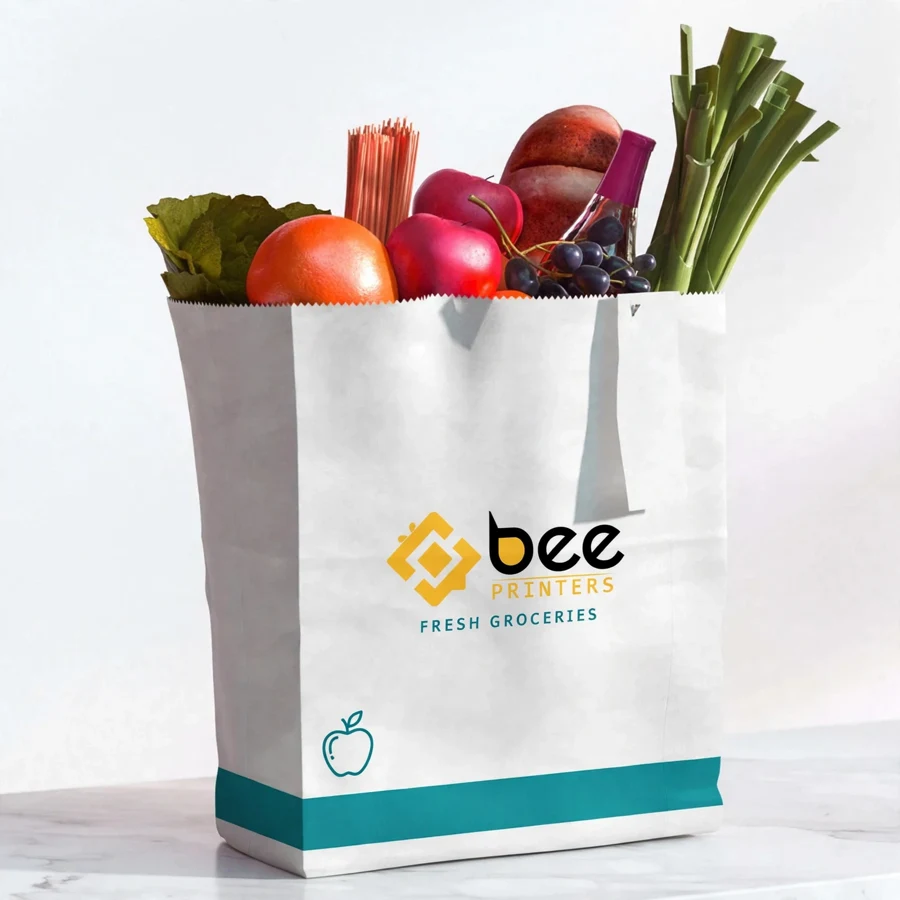
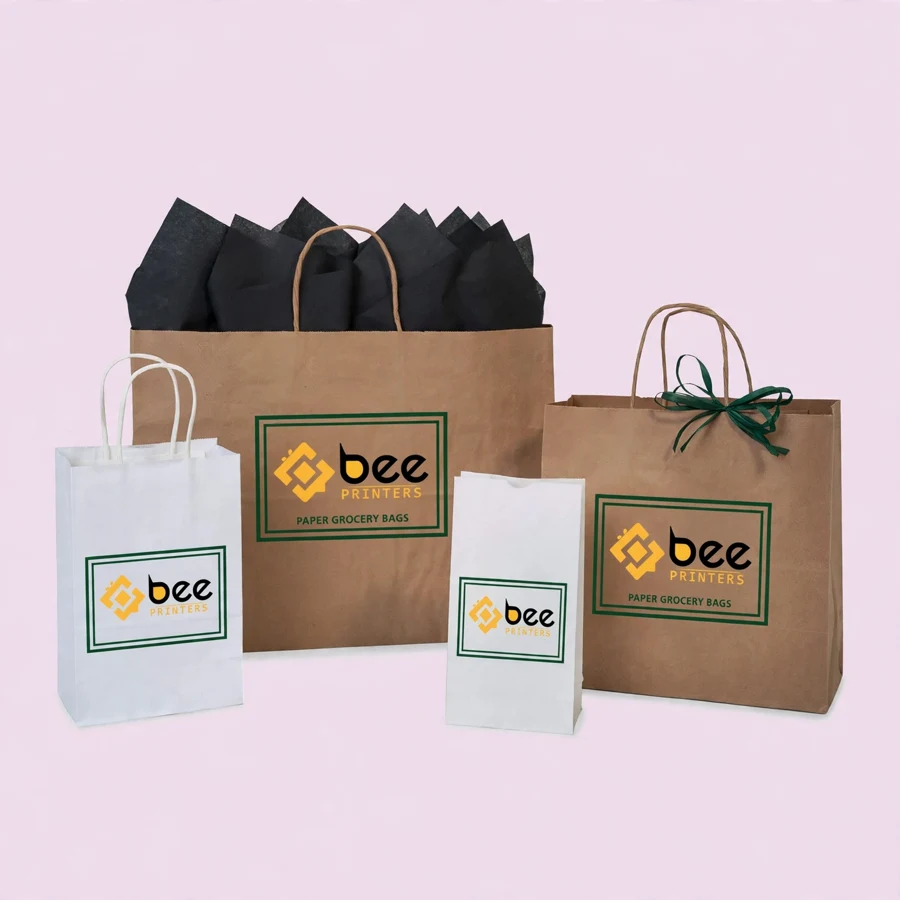
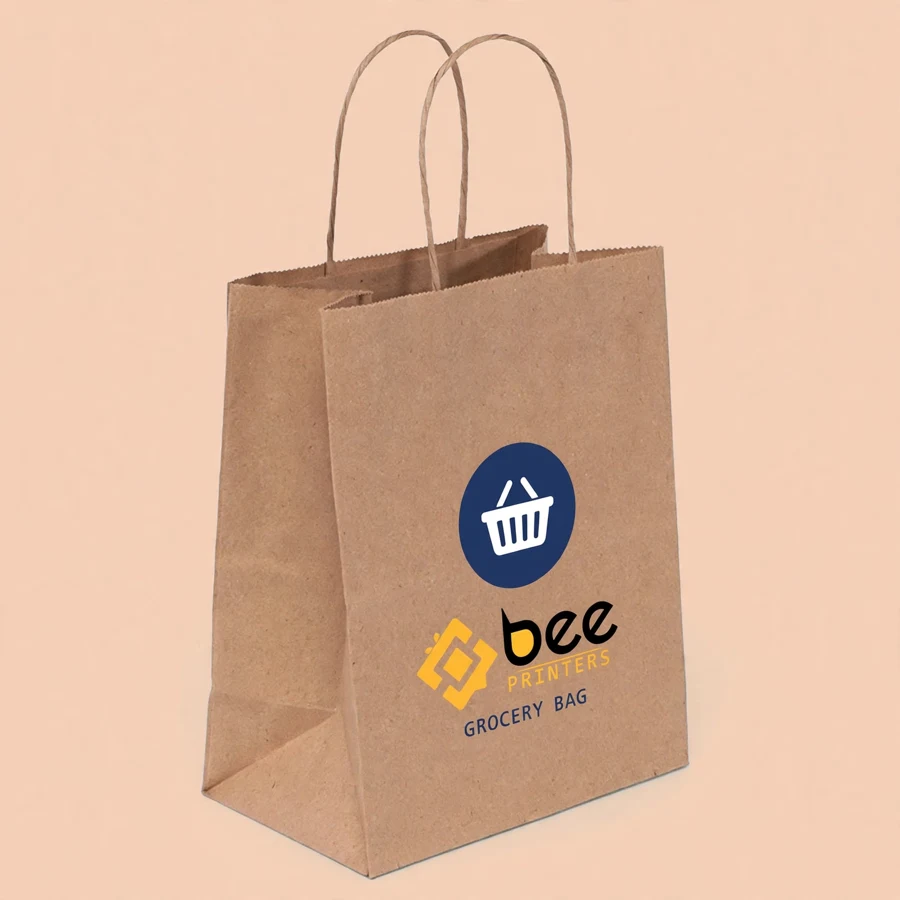
A grocery bag is the last thing a shopper touches before leaving the store, and the first thing they see when they unpack at home. Custom paper grocery bags are durable, eco-friendly carriers made from sturdy kraft paper, printed with the store’s own logo and colors. At Bee Printers, they are built to hold real grocery weight, from tins and bottles to fresh produce. For supermarkets, grocery stores, farm shops and retail chains, a printed paper grocery bag replaces single-use plastic with a carrier customers trust, reuse and recognize.
Groceries are heavy, awkward and often damp. A bag that splits at the bottom or tears at the handles ruins the shopping trip and can damage the food inside. A well-made paper grocery bag uses a heavy kraft stock, a reinforced flat base and strong handles, so it holds a full shop without failing. It also stacks flat for storage at the till, opens easily for packing, and stands upright while being filled, which keeps the checkout moving.
The first reason is the move away from plastic. Customers expect a paper option at the till, and many stores now charge for plastic or have removed it entirely. A sturdy paper grocery bag is the practical replacement: familiar, recyclable and strong enough for a weekly shop. Stores that offer a good paper bag find customers accept it without complaint, and many reuse it for storage, recycling and errands.
The second reason is branding. A shopper carrying a printed grocery bag down the street is advertising the store to everyone they pass. For independent grocers and farm shops, that visibility builds local recognition; for chains, a consistent bag design across every branch reinforces the brand at every till. A clean logo on a natural kraft bag looks honest and premium, which matches how grocery stores want to be seen.
The third reason is the customer experience. A bag that holds its shape, stands up in the car boot, and does not tear when lifted by the handles makes unpacking easier at home. Handles that are comfortable to hold matter when a bag is full of tins and bottles, and a reinforced base matters when the bag is set down on a wet pavement. These details are what separate a good grocery bag from a cheap one.
Paper grocery bags are made from heavyweight kraft paper, usually in a natural brown or a bleached white finish. Kraft is strong, tear-resistant and recyclable, and its natural look suits grocery and farm-shop branding. White kraft gives a cleaner surface for full-color printing and suits supermarkets with a bright, modern identity.
The paper weight is matched to the intended load. A small bag for a few items can use a lighter stock; a large bag for a full weekly shop needs a heavier stock with a reinforced base and stronger handles. The base is folded and glued to stay flat and hold its shape under weight, and the side seams are glued to take the strain of a full bag.
Some grocery bags use a moisture-resistant treatment for carrying chilled and fresh items, such as milk, produce and frozen goods, where condensation can weaken plain paper. This keeps the bag strong even when the contents are cold and damp, which is a common failure point for lighter bags.
Flat paper handles are the classic grocery-bag handle: strong, comfortable and made from the same paper as the bag, so the whole bag stays recyclable. They fold flat for storage and are easy to grip even when the bag is heavy. Twisted paper handles are a slightly softer, rounder option that some stores prefer for comfort.
Handle-free grocery bags, often called SOS (self-opening style) bags, have no handles and are packed flat for fast use at the till. They suit stores that pack groceries at speed and customers who carry bags in a trolley or a car. Die-cut handles, where the handle is cut into the bag itself, suit a modern, minimal design and keep the bag flat for storage.
The bag structure is usually a flat-bottomed, gusseted design: the sides expand to hold volume, the base sits flat so the bag stands upright, and the top folds or stays open for easy packing. This structure is what lets a paper bag hold as much as a plastic carrier without the same risk of tearing.
Grocery bags come in sizes from small bags for a few items to large bags for a full weekly shop. A small bag suits a corner shop or a deli counter; a medium bag suits a regular grocery run; a large bag suits a family shop with tins, bottles and bulky items. The size is set by what the store sells most, and many stores order two or three sizes to cover the full range.
Depth and width matter as much as height: a bag that is too narrow will not hold a cereal box flat, and a bag that is too shallow will not hold a tall bottle upright. The proportions are set around typical grocery items, so the bag packs efficiently and looks full without being overstuffed.
Custom sizing is available for stores with a specific need, such as a tall bag for wine and bottles, a wide bag for bakery and produce, or a bag dimensioned to fit a particular shelving or till setup. The bag is dimensioned to the store’s real use, not to a generic template.
Full-color printing lets a grocery bag carry the store’s full identity: logo, brand colors, a short message, and practical information such as opening hours or a web address. A bold logo on a natural kraft background is the classic grocery-bag design, and it works because it is readable from a distance and looks honest. A full all-over print suits larger chains with a strong visual identity.
Most grocery bags keep printing simple, with one or two colors on kraft, which keeps the cost low at the high volumes grocery stores use. Full-color printing is available for stores that want a brighter, more detailed design, such as a farm shop with an illustration or a supermarket running a seasonal campaign.
Seasonal and promotional designs are easy to run on grocery bags, from harvest and holiday artwork to local event branding. A limited-edition bag can become a talking point in the store, and customers who like the design will reuse it, giving the store extra exposure.
Supermarkets and grocery chains are the main users, ordering handled and handle-free bags in their brand colors for every till. Independent grocers and farm shops use them to give their store a consistent, professional look and to offer customers a paper alternative to plastic. Delis, bakeries and butchers use smaller grocery bags for counter sales.
Farmers’ markets and food halls use printed grocery bags for stallholders, giving the market a shared identity while each stall keeps its own branding on other packaging. Health-food and organic stores use kraft grocery bags as part of a wider low-plastic offer, and convenience stores use them for larger purchases that will not fit in a small carrier.
Grocery bags sit within the wider paper packaging range. Stores that sell food alongside household goods often coordinate their bags with other printed packaging from the custom food boxes collection, so the bag, the box and the in-store packaging all carry the same brand.
Paper grocery bags are produced to specification, so pricing depends on the paper stock, the bag size, the handle style, print coverage and order quantity. Grocery stores use bags in high volumes, so larger quantities reduce the unit cost significantly. Smaller runs suit independent shops, seasonal designs and new stores testing a first design.
To order, share the bag size, the typical load, the preferred paper and handle, and the artwork or logo. A specification and quote follow, with a proof of the bag design before production so the store can check the size, the colors and the logo placement. Free design support can help turn a logo into a full bag design, or build a new design from the store’s colors and style.
For stores that want a consistent paper packaging range, matching boxes complete the set. Paper boxes in the same artwork give grocers and delis a coordinated format for bakery items, produce and prepared foods, keeping the whole shop looking like one brand.
It depends on the paper weight and handle style. Bags are specified around the intended load, with heavier kraft stock and reinforced bases for a full weekly shop with tins and bottles.
Yes. The bags are made from paper-based kraft stock that is recyclable, and handle-free and flat-handle styles keep the whole bag paper-based.
Yes. The full exterior can be printed with the logo, brand colors, a short message and practical information such as opening hours or a web address.
Bags are sized to the shop, from small counter bags to large weekly-shop bags, with custom sizing available for bottles, bakery and produce.
| Material | Kraft, Cardboard, Corrugated, Rigid stock |
| Sizes | All custom sizes (any length × width × height) |
| Printing | CMYK / PMS, full-color, offset & digital |
| Finishing | Matte, Gloss, Soft-touch, Foil, Spot UV, Embossing |
| Add-ons | Window cut-outs, inserts, interior printing |
| Minimum Order | 100 boxes |
| Turnaround | 7 to 10 business days after design approval |
| Shipping | Free shipping across the US |