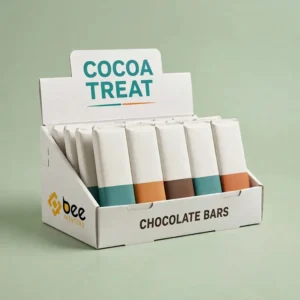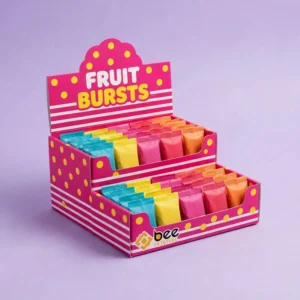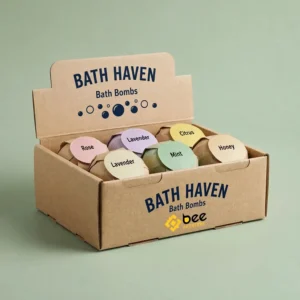


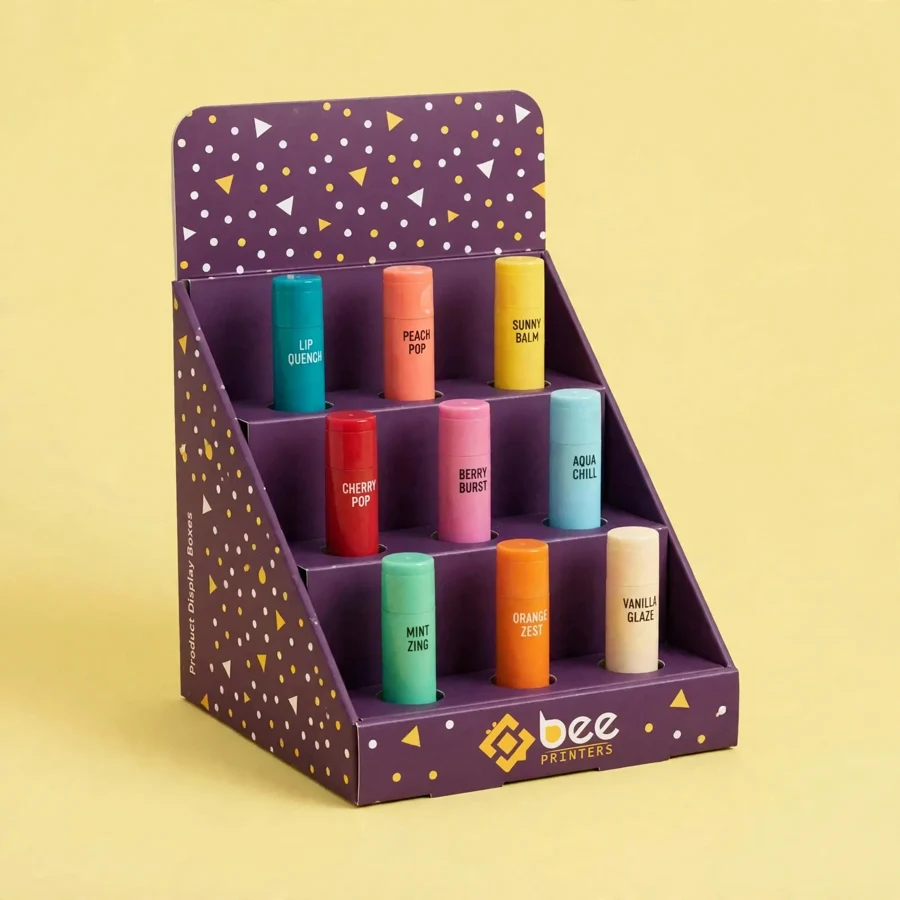
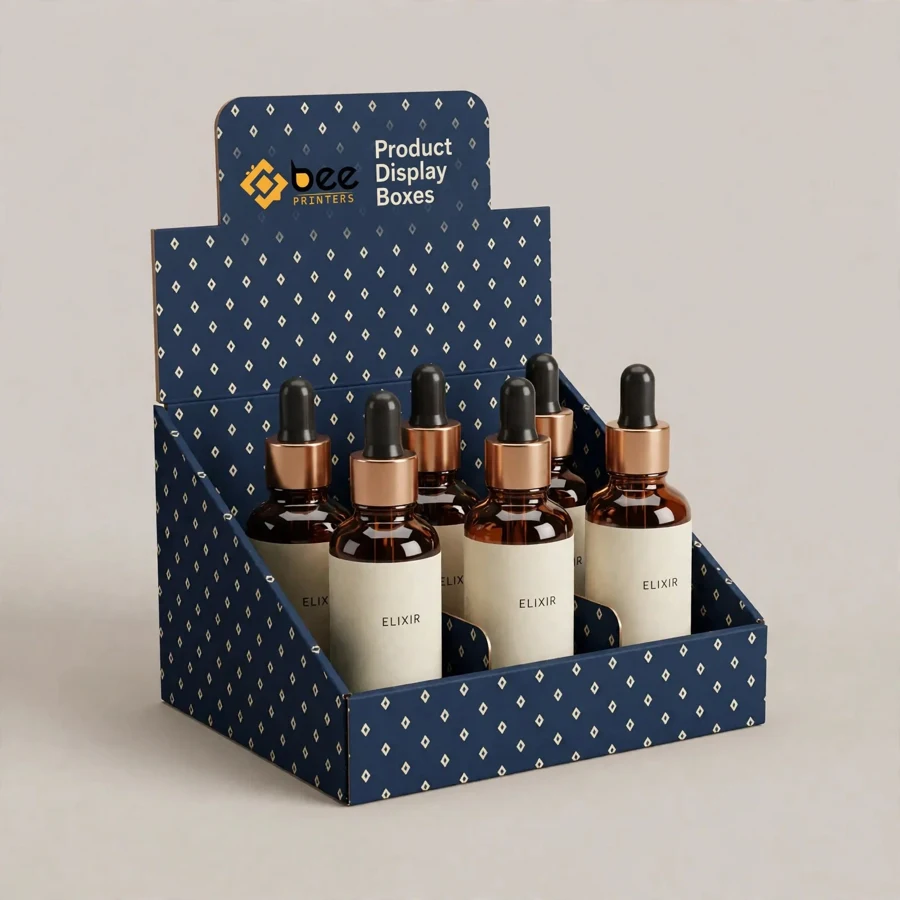
A product display box is a custom printed box made to hold a product upright, show it clearly and carry the brand where shoppers can see it, whether that is on a retail shelf, a shop counter or a market stall. Almost every product sold in a shop benefits from being displayed rather than simply stored: customers buy what they can see, and a display box makes the product visible, reachable and attractive. The box protects the product from dust and handling, keeps it standing in neat rows, and gives the brand space for its logo, its colours and a short message about what is inside. At Bee Printers, each product display box is printed with the customer’s own artwork and built to the size of the product it holds, so the display fits the product and the shop rather than the other way round.
Ordinary packaging is designed mainly to protect a product and to carry it from the factory to the shop. A display box has a second job, which is to sell the product once it arrives. That changes almost every decision about its design. The front of the box is kept low or cut away so the product is visible, the top carries a header panel with the brand name, and the base is made strong enough to hold a full row of products without sagging. The box is built to stand on its own in the busiest part of the shop, and to keep looking tidy as products are taken out one by one. Materials, printing and finishing are all chosen with the shop floor in mind, because a display box is handled by staff and customers many times a day and must keep its shape and its colours through all of it.
Product display boxes come in several forms, and each one suits a different place in the shop. Counter display boxes are compact and sit beside the till, where customers wait and browse; they are ideal for small items such as cosmetics, snacks, sachets and accessories. Shelf trays line up on retail shelving and hold products in neat rows, making it easy for staff to restock and for customers to compare options. Point of purchase displays stand at the end of an aisle or near an entrance, where they catch the eye of shoppers who were not looking for the product. Dump bins hold loose or bagged items that customers can pick through, and floor displays present larger quantities for a promotion. The right form depends on the size of the product, the number of units on show and the space the shop has available.
A display box needs to be stronger than the carton a product is shipped in, because it stays on show for weeks and is handled constantly. Sturdy cardboard in a suitable thickness is the usual choice, holding its shape under the weight of a full row of products and resisting the knocks of daily use. White board gives the brightest base for full-colour printing, while kraft board gives a natural, understated look that suits handmade and organic products. Corrugated board adds extra strength for heavier items such as jars and bottles, and rigid board gives a premium feel for gifts and luxury goods. The board thickness, the base construction and the way the box is glued or locked together are all chosen around the product’s weight and the length of time the display will be in use.
Printing is what turns a plain box into a display, and the choices made here decide how the product is seen. Full-colour printing can carry photographs, illustrations and bold colour blocks, while a simpler one- or two-colour design can look just as striking when the layout is clean. A die-cut window lets customers see the product itself, which is often the best selling point of all, and a clear film over the window keeps the contents protected while they are on show. Finishes such as a matte lamination protect the print from fingerprints and scuffs, while a gloss lamination makes colours look deeper and brighter. Foil stamping or embossing can be added to a logo for a premium touch, though many brands keep the design simple so the product remains the focus. The full range of custom display boxes shows how these print and finish options can be combined for different products and different shops.
Almost any small or medium-sized product can benefit from a display box, but some benefit more than others. Cosmetics such as lip balms, creams and small bottles sell well from counter displays, because customers want to see the colours and read the labels before they buy. Snacks, sweets and single-serve drinks are natural counter items, picked up on impulse while waiting to pay. Stationery, phone accessories and small gift items also suit display boxes, as do sample sizes and trial packs that introduce customers to a new product. Larger items such as candles, jars of food and bottles of sauce work well in shelf trays, where the display keeps them upright and grouped by flavour or variety. In every case the display box makes the product easier to find, easier to pick up and easier to buy.
A display box that sells is usually a simple one. The brand name should be readable from a few steps away, the product should be visible without opening the box, and the message on the box should say what the product is in as few words as possible. One strong colour often works better than many, because it helps the display stand out among the other boxes on the shelf. The layout should leave empty space around the logo and the product, rather than filling every centimetre with text and pictures. It also helps to think about the display from the customer’s point of view: can they see the product, can they reach it easily, and can they understand what it is without picking it up? A display that answers all three questions is doing its job, and a display that fails on any of them is costing the brand sales.
Ordering a product display box starts with the product itself: its size, its weight, how many units go in each display, and where the display will stand. From those details the box size, the board thickness and the structure are worked out, and the artwork is prepared for printing. Brands can order in wholesale quantities for a single shop, a chain of stores or a seasonal promotion, and repeat orders can be printed from the same artwork so the display looks the same everywhere it appears. Because the boxes ship flat and fold up quickly, they are easy to send to different locations and simple for shop staff to assemble and fill. A quote is the simplest way to compare sizes, materials and print options, and to work out the most practical display for the product and the budget.
A product display box works all day, every day the shop is open, presenting the product, carrying the brand and inviting customers to pick the item up. It costs far less than other forms of advertising, yet it speaks to the customer at the exact moment they are ready to buy. When it is designed well, with the right size, a strong structure and clear, honest artwork, it becomes one of the most reliable tools a brand has for turning shelf space into sales. For brands that want a display made for the counter in particular, counter top display boxes offer compact formats built for till points and service counters. Whichever form the display takes, the aim is the same: put the product where customers can see it, make it easy to reach, and let the packaging help the product sell itself.
| Material | Kraft, Cardboard, Corrugated, Rigid stock |
| Sizes | All custom sizes (any length × width × height) |
| Printing | CMYK / PMS, full-color, offset & digital |
| Finishing | Matte, Gloss, Soft-touch, Foil, Spot UV, Embossing |
| Add-ons | Window cut-outs, inserts, interior printing |
| Minimum Order | 100 boxes |
| Turnaround | 7 to 10 business days after design approval |
| Shipping | Free shipping across the US |