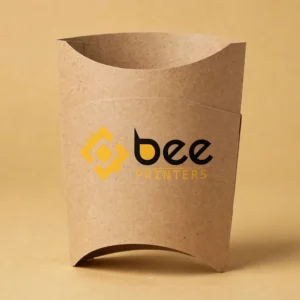
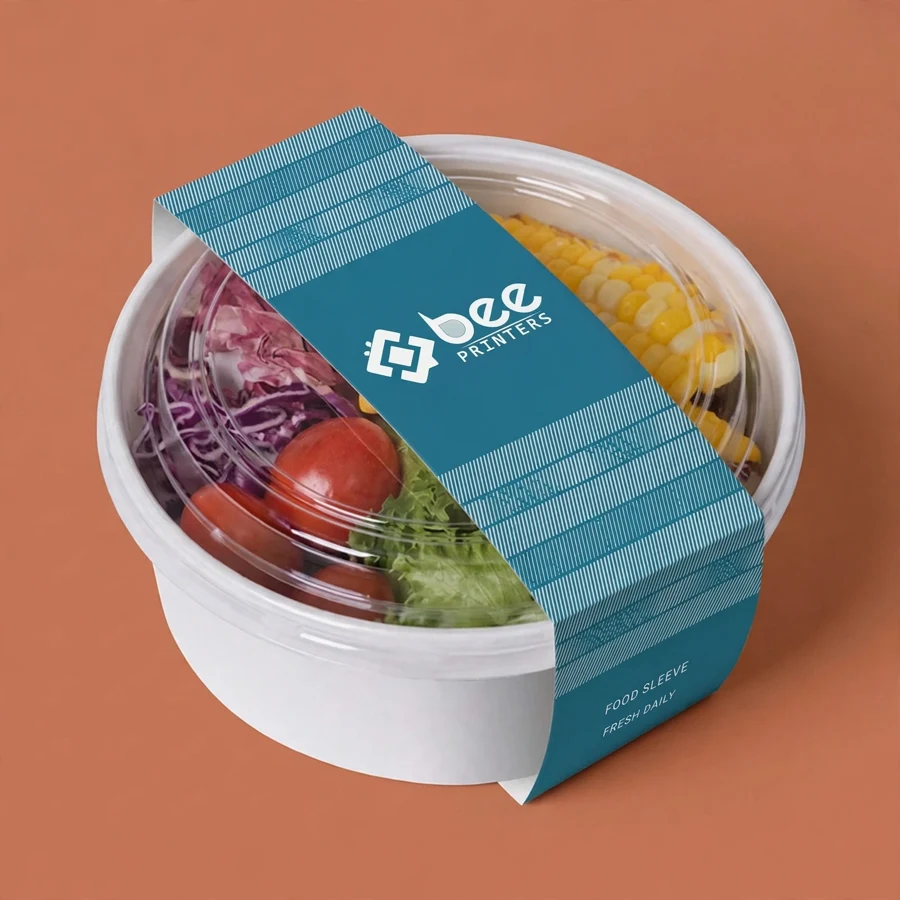
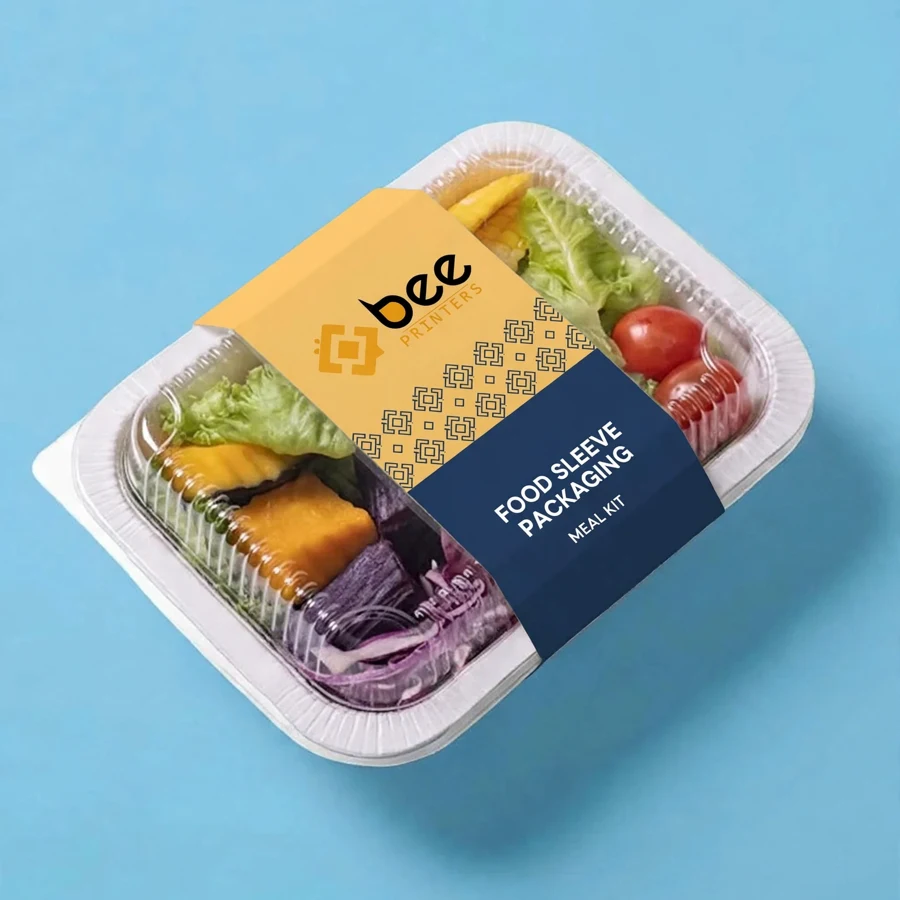
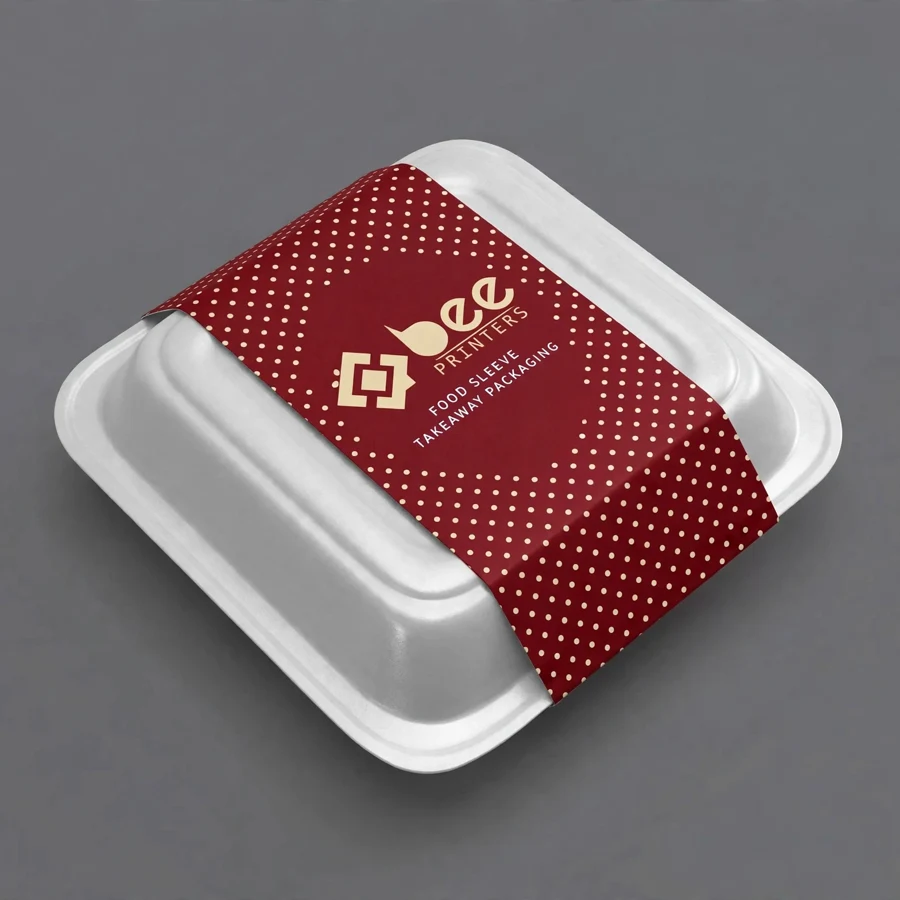
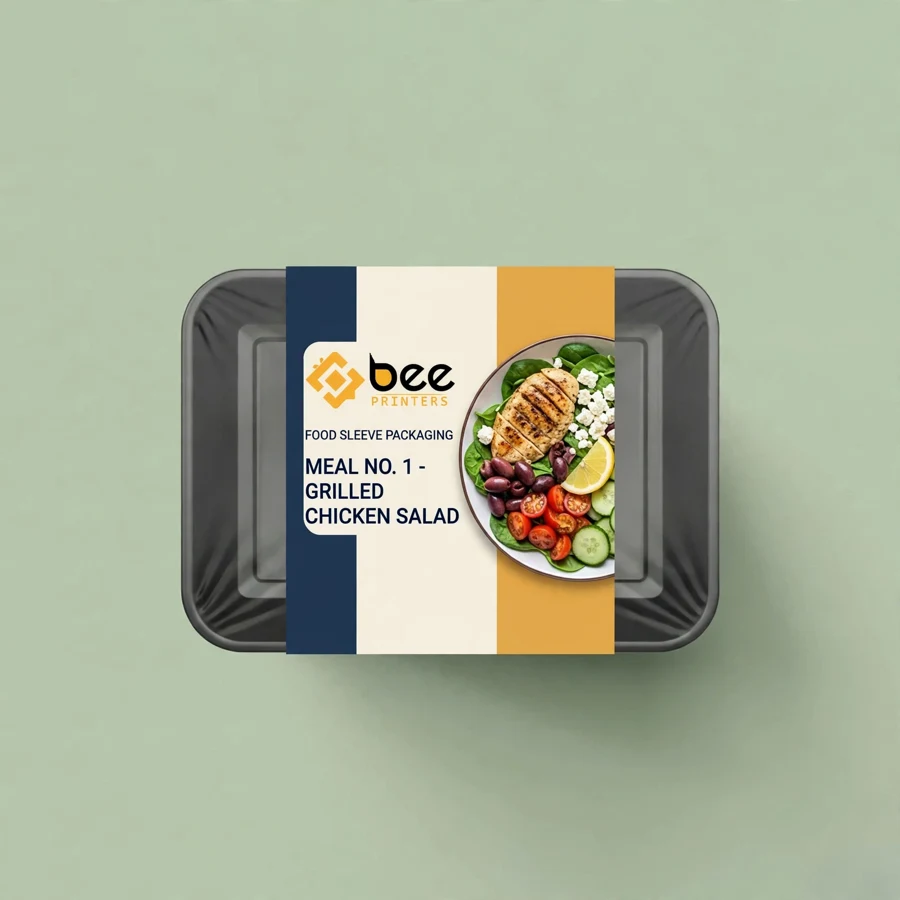
Food sleeve packaging wraps a food container, a cup, a burger or a sandwich in a printed band that carries the brand, keeps the food warm in the hand, and tells the customer what is inside. A bare takeout container is anonymous and hard to hold when it is hot, so the sleeve does work the container cannot do alone. At Bee Printers, custom food sleeve packaging is made from food-safe materials, printed with the brand artwork, and supplied at wholesale prices for takeout, bakery, bowls and food containers.
Food sleeves cover a wide range of uses: burger sleeves, sandwich sleeves, cup sleeves for hot drinks, sleeves for bowls and noodle boxes, and bands for bakery boxes and takeout containers. Each use needs a different sleeve. A cup sleeve needs to insulate the hand from a hot cup. A burger sleeve needs to hold the burger together and catch the filling. A bowl sleeve needs to carry the brand around a round container. The sleeve is designed around the food it wraps and the place it will be eaten.
A printed food sleeve turns an anonymous container into a branded product. The customer sees the restaurant name, the logo and the dish name before they take the first bite, and the sleeve stays with the food from the counter to the table, the car or the desk. That is advertising that travels with the meal, and it costs no more than the sleeve itself.
The sleeve also protects the hand. A hot cup, a warm burger box or a heated bowl is uncomfortable to hold bare, and a cardboard sleeve gives the customer a cool, comfortable grip. The sleeve is made from board thick enough to insulate, and it can be printed on the outside while the inside stays plain, so the hand rests on a clean surface.
For the seller, the sleeve is the unit of branding. A stack of sleeves takes up little space, costs little per unit, and can be changed for a season, a promotion or a new dish without changing the containers underneath. The sleeve carries the barcode, the price and the allergen details where they are needed, so the till and the shelf stay in step.
The cup sleeve is the most familiar food sleeve: a tapered band of corrugated or plain board that slides over a hot drink cup. It is die cut to the cup’s taper, so it grips the cup without sliding, and it is printed with the cafe or restaurant branding. A cup sleeve can also carry a message, a loyalty offer or a seasonal design, and it is the surface the customer holds for the whole drink.
Burger and sandwich sleeves are flat bands that wrap around the food itself. A burger sleeve holds the burger together, catches the filling and the sauce, and gives the customer a clean way to hold the burger while eating. The sleeve is usually made from grease-resistant paper or board, so it does not go soft during the meal, and it is printed with the brand and the burger name.
Bowl sleeves and container bands wrap around takeout bowls, noodle boxes and bakery boxes. A bowl sleeve is a wide band that carries the brand around a round container, with a space for the dish name and the contents. A bakery box band is a narrower sleeve that holds the box closed and carries the bakery branding, so the box looks like a gift instead of a plain carton.
Food sleeves are made from food-safe paper and board, chosen for direct or indirect contact with food. Grease-resistant paper keeps burger and sandwich sleeves from going soft, while corrugated board insulates cup sleeves against heat. The board is chosen around the food: hot drinks need insulation, greasy food needs grease resistance, and bakery boxes need a band that holds the box closed without marking it.
The inks and coatings used on food sleeves are chosen for food contact too. The outside of the sleeve carries the print, and the inside that touches the food or the cup is kept plain or coated with a food-safe layer. The sleeve is designed so the printed surface does not come into direct contact with the food itself, which keeps the packaging safe and the food clean.
Board weight is a balance. A cup sleeve needs enough thickness to insulate the hand, while a burger sleeve needs to be thin enough to fold around the food without cracking. The right weight depends on the food and the container, and a sample sleeve is the simplest way to check the fit, the grip and the feel before ordering in bulk.
Food sleeve design starts with the dish name and the brand, because those are the two things a customer looks for first. The front of the sleeve carries the restaurant name, the logo and the dish name in type large enough to read at arm’s length, and the back carries the ingredients, the allergen details and the brand story in smaller type. The design is kept clean, because a food sleeve is read quickly and often with one hand full.
Color carries the menu. A restaurant with several dishes can give each one its own sleeve color, so the kitchen and the customer can tell the orders apart at a glance, while the layout and the logo stay the same across the range so the sleeves read as a family. A single-dish brand can use one strong color and a clean layout, so the sleeve stands out on a counter full of plain containers.
The artwork should reflect the food without making claims the dish cannot support. Simple illustrations of the dish, clean typography and a strong brand mark all suit food sleeves, and they print well on both coated and kraft board. The design is kept honest: the sleeve names the dish, the brand and the key details, and it leaves the rest to the food itself.
Food sleeve packaging is ordered by the quantity, the size, the board and the print coverage, and the unit cost falls as the quantity rises. Restaurants, cafes and bakeries usually order in bulk and keep stock for each dish on the menu, so the packaging stays consistent across the counter. A sample sleeve is the simplest way to check the fit, the grip and the print before committing to a large run.
When ordering, it helps to know the container dimensions, the dish the sleeve wraps, the board and finish preferences, and the artwork files. A dieline and a printed proof confirm that the sleeve fits the container and the artwork sits where it should before the full run is printed. The wider sleeve range is listed in the custom packaging sleeves collection, where food sleeves sit alongside die cut and paper sleeves for comparison.
Businesses that want matching food sleeves for other items on the menu can look at custom food packaging sleeves, another printed sleeve option from the same supplier for cafes, bakeries and takeout counters.
Yes. Food sleeves are made from food-safe paper and board, with grease-resistant and heat-insulating options, and the printed surface is kept away from direct contact with the food.
Yes. The restaurant name, logo, dish name, ingredients and allergen details can all be printed on food sleeves, with the layout matched to the sleeve size.
Cup sleeves are die cut to the cup’s taper and size, so the sleeve grips the cup without sliding. Sharing the cup size is the fastest way to get the right fit.
Yes. Burger and sandwich sleeves are made from grease-resistant paper or board, and they wrap around the food to hold it together and catch the filling while the customer eats.
Minimums depend on the sleeve size, the board and the print method. Sharing the container size and the quantity gives a firm quote and a clear minimum for the chosen style.
| Material | Kraft, Cardboard, Corrugated, Rigid stock |
| Sizes | All custom sizes (any length × width × height) |
| Printing | CMYK / PMS, full-color, offset & digital |
| Finishing | Matte, Gloss, Soft-touch, Foil, Spot UV, Embossing |
| Add-ons | Window cut-outs, inserts, interior printing |
| Minimum Order | 100 boxes |
| Turnaround | 7 to 10 business days after design approval |
| Shipping | Free shipping across the US |