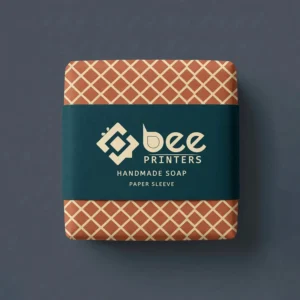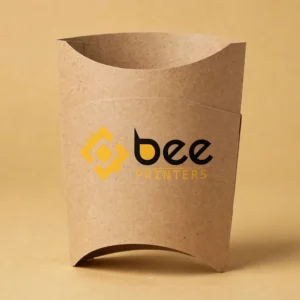
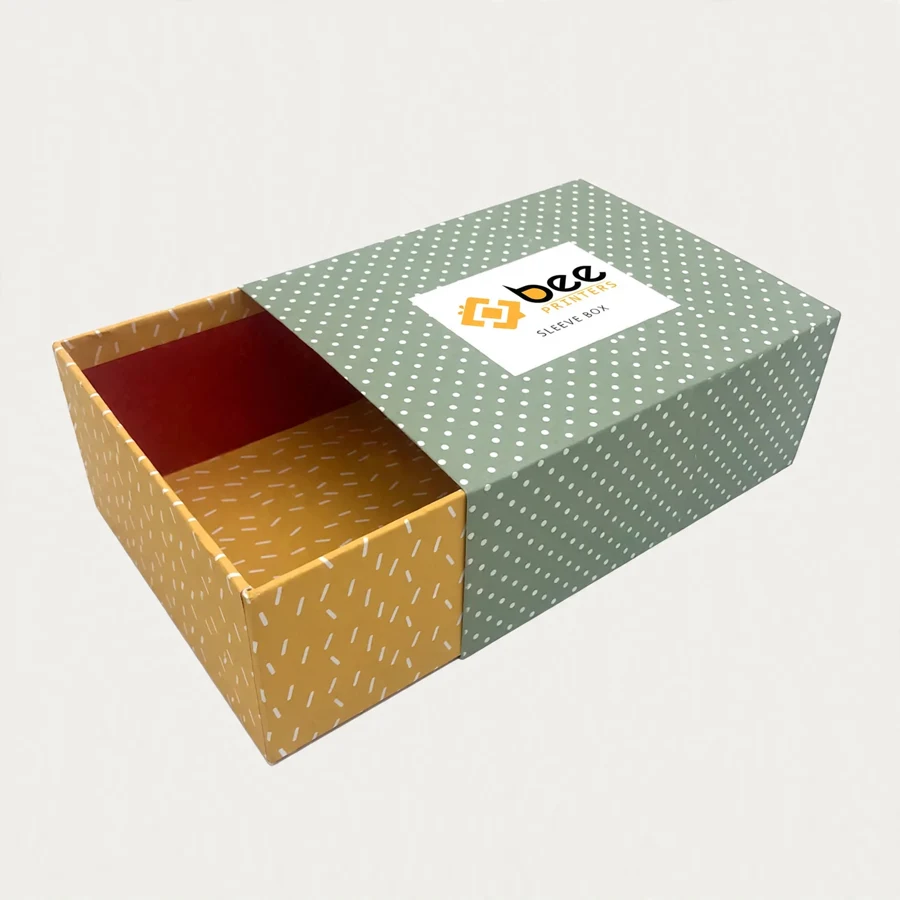
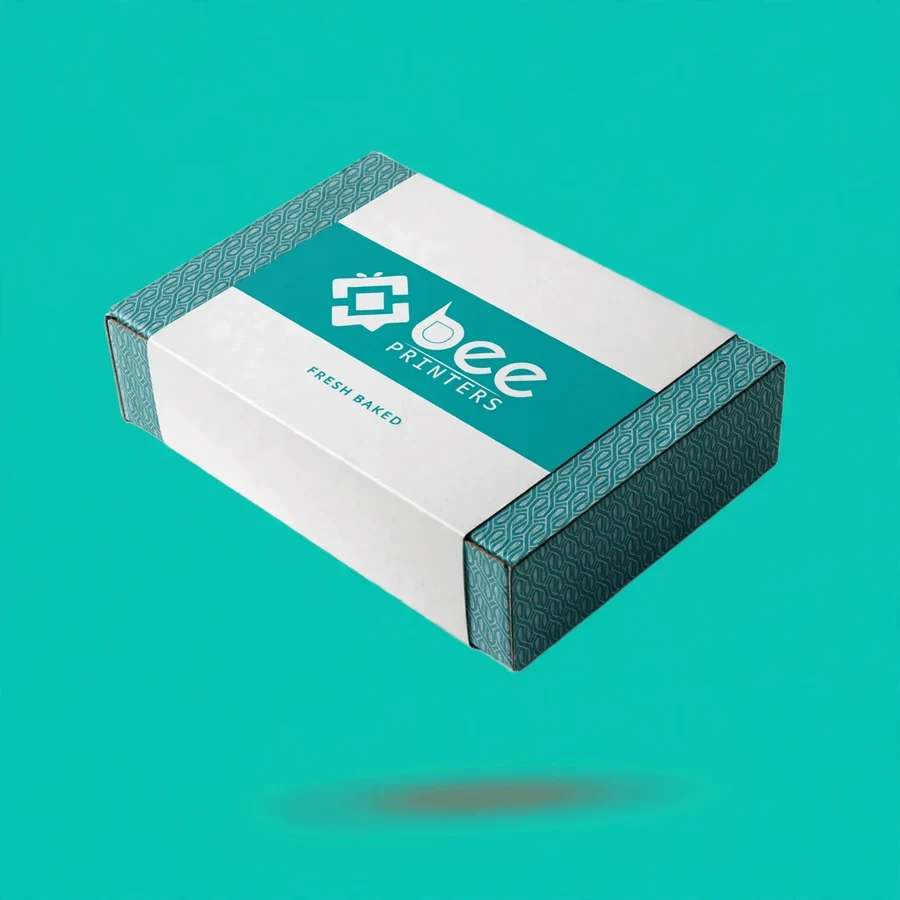
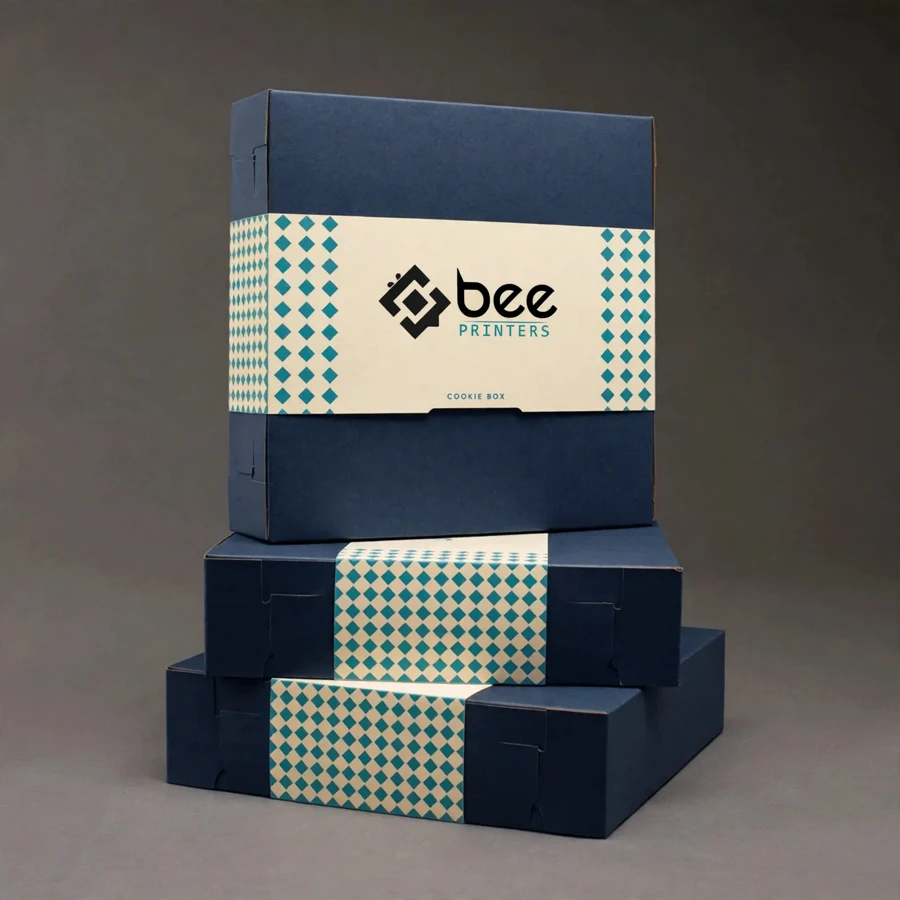
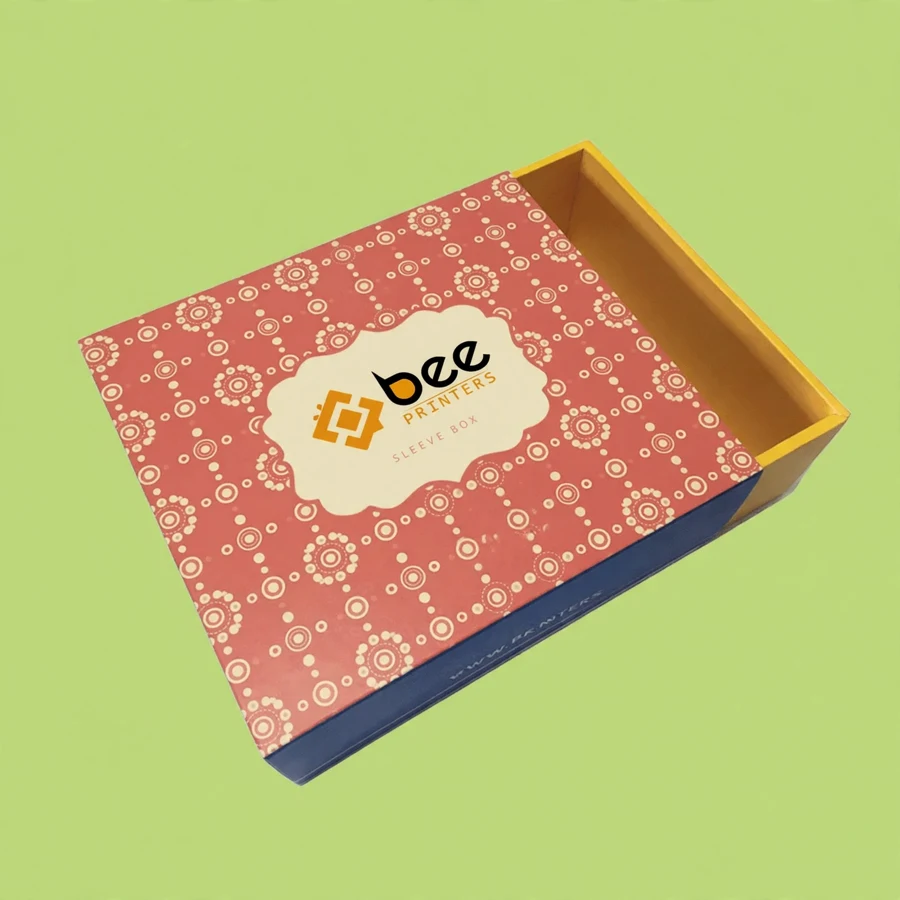
A sleeve is one of the simplest ways to change how a product looks on a shelf. It is a printed band or tube, open at both ends, that slides over a box, a bottle, a jar, or a bundle and turns a plain container into a branded one. The product inside does not change, the inner box does not change, and the cost stays far below a full custom box, yet the customer sees a finished, retail-ready package. At Bee Printers, custom sleeve packaging is printed to fit the item it wraps, so the artwork sits straight, the edges line up, and the sleeve stays put from the packing table to the shelf.
The format works because it separates structure from branding. A brand can keep a standard plain box for protection and let the sleeve carry the color, the logo, the product name, and the story. When the design changes for a season, a gift edition, or a new scent, only the sleeve needs reprinting. That is why sleeves are a favorite for small runs, test launches, and limited editions: the commitment is small, the turnaround is fast, and the shelf impact is far bigger than the piece of board suggests.
Sleeves wrap a surprising range of products. Soap bars are the classic case, where a belly band around a plain bar or a small carton gives a handmade product a shop-ready label without a full box. Bottles of sauce, oil, or drink take a tall sleeve that covers the middle of the bottle and leaves the neck and cap visible. Apparel brands use wide sleeves to hold a folded shirt or a pair of socks together, turning a soft item into a neat rectangle that stacks well. Gift boxes, candle jars, books, and small electronics all take the same treatment, and the sleeve can be sized to any of them.
Food businesses use sleeves on takeout containers, bakery boxes, and cups, where the sleeve adds branding to a container that is otherwise plain. A coffee cup sleeve is the best-known example, but the same idea works on a sandwich box, a cake box, or a bowl. The sleeve gives the customer something to hold, something to read, and something to remember, while the container underneath does the practical work of holding the food.
Most sleeves are printed on card stock or kraft board. Card stock takes bright, sharp color and suits designs with photography, gradients, or fine detail. Kraft board gives a natural, earthy feel and suits brands that want a handmade or rustic look, with the brown fiber showing through the print. Heavier boards hold their shape better on larger boxes, while lighter stock is enough for a small soap band or a cup sleeve. The board weight is chosen to match the item, so a sleeve neither sags nor fights the product it wraps.
Finishing options change the feel of the sleeve without changing its job. A matte lamination gives a soft, modern surface that resists scuffs. A gloss lamination makes colors pop and suits bright, bold artwork. Spot gloss can highlight a logo or a pattern, and embossing can raise a mark or a line of text so the customer feels it before reading it. Foil stamping adds a metallic accent for premium editions. None of these finishes is required, but each one is a way to make a simple sleeve feel deliberate.
The one thing a sleeve cannot forgive is a wrong size. Too loose and it slides off or twists; too tight and it tears on the way on or crushes the box underneath. The fit depends on the exact dimensions of the item, including any lid, label, or irregular shape, and on the thickness of the board itself. Measuring the real product, not a guess at its size, is the step that decides whether the sleeve works. A sample run on the actual item is worth more than any measurement chart, because it shows how the sleeve behaves when it is slid on by hand at packing speed.
The glue or seal matters too. Some sleeves are glued into a tube and slid over the product from one end. Others wrap around the item and are sealed at the back, which suits items that cannot be slid into a tube. The seam can be hidden on the back or the bottom so the front of the sleeve stays clean. Die-cut windows, thumb notches, and perforated tear strips can be added where the product needs to be seen or the sleeve needs to come off easily.
A sleeve has less space than a full box, so the design has to be disciplined. The brand name and the product name do the heavy lifting, with one clear image or pattern behind them. Small text belongs on the back panel, where the customer looks after picking the product up. The front should read from a few feet away, because that is the distance at which a shopper decides to reach for it. Too much text on the front makes the sleeve look busy and the product look cheap.
Color choice is part of the fit as well. A sleeve that contrasts with the box underneath stands out; one that matches it looks calm and premium. A kraft sleeve on a kraft box reads as natural and honest. A white sleeve with a single bold color on a dark box reads as clean and modern. The sleeve and the item underneath should be planned together, not as two separate decisions, because the customer sees them as one package.
Sleeves are economical because they use far less board than a full box, and the savings grow with the order size. A brand can order one sleeve design for several products if the sizes match, or order a different design for each product line. Because the sleeve is printed flat and folded at packing time, storage is simple: flat sleeves stack in a small space until they are needed. That matters for small businesses without warehouse room.
When you are ready to add branded sleeves to your range, browse the custom packaging sleeves category to see the formats available, and look at Custom Sleeve Rigid Boxes for a rigid-box version of the same idea. Send the dimensions of the item the sleeve will wrap, your artwork or a rough idea of it, and the quantity you need, and we will quote the board, the print, and the finishing that fit your product and your budget.
| Material | Kraft, Cardboard, Corrugated, Rigid stock |
| Sizes | All custom sizes (any length × width × height) |
| Printing | CMYK / PMS, full-color, offset & digital |
| Finishing | Matte, Gloss, Soft-touch, Foil, Spot UV, Embossing |
| Add-ons | Window cut-outs, inserts, interior printing |
| Minimum Order | 100 boxes |
| Turnaround | 7 to 10 business days after design approval |
| Shipping | Free shipping across the US |