
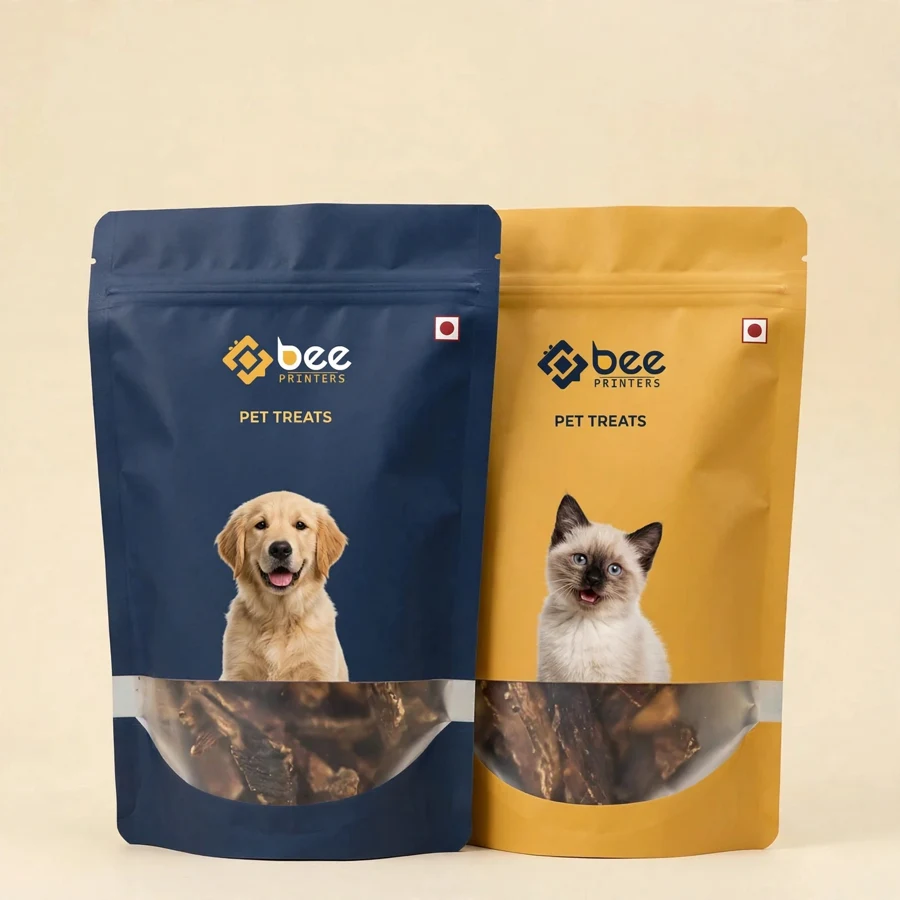
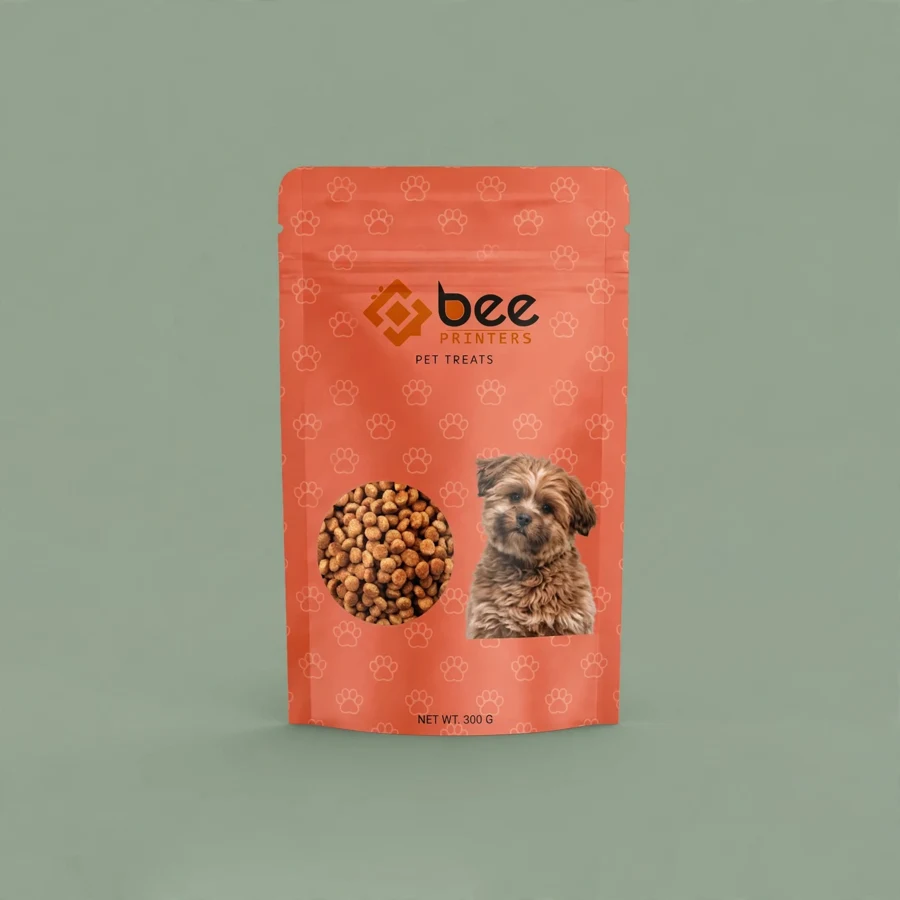
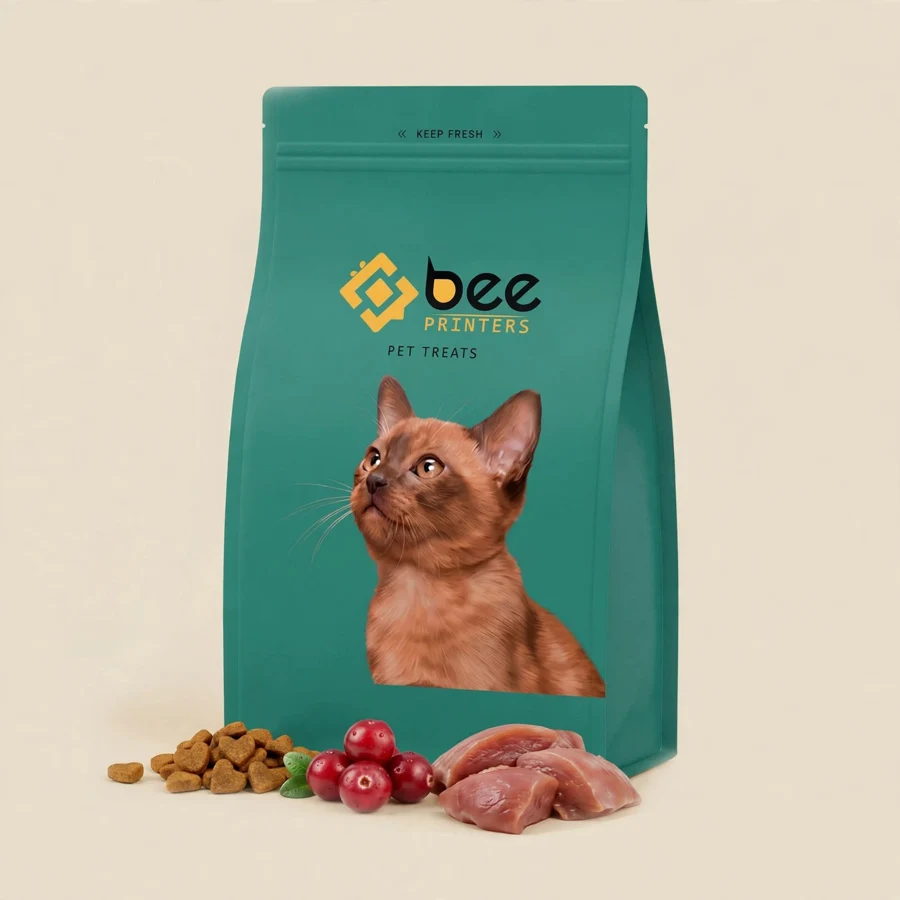
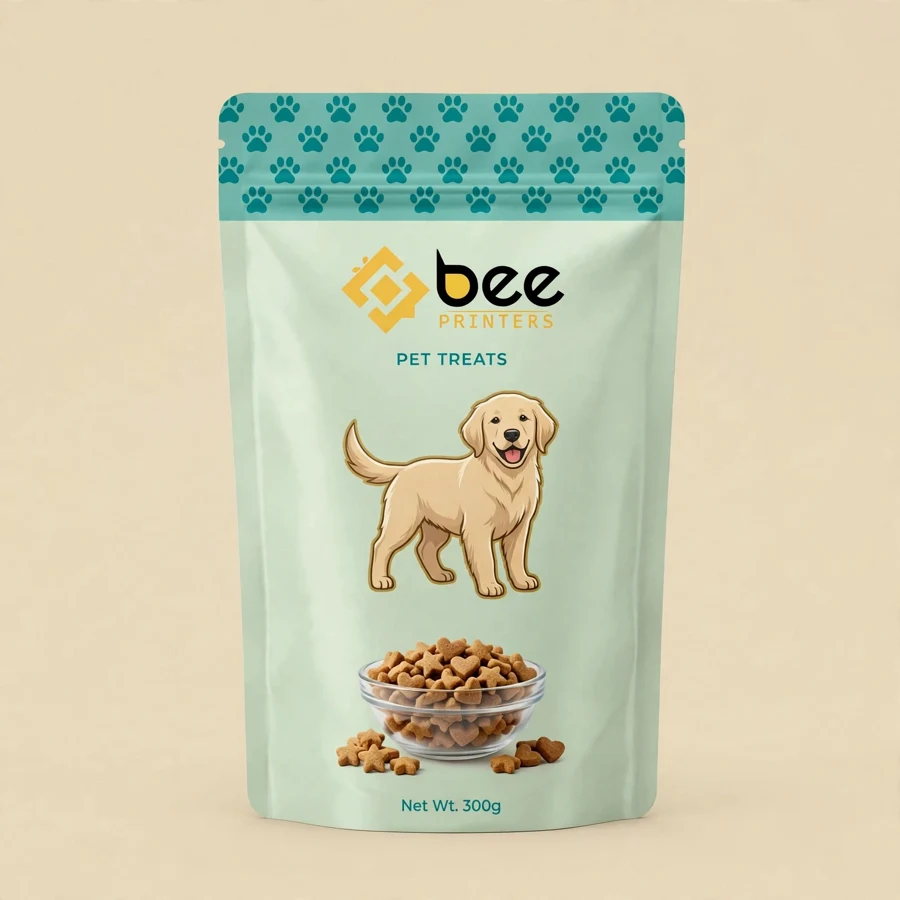
A pet treat is a small purchase, and it is often an impulse purchase. The customer is standing in front of a shelf full of treats, and the pouch has a few seconds to earn a place in the basket. A mylar pouch does that job well: it stands upright, it shows bright, sharp print, and its shape and finish make the treats inside feel like a proper product rather than a loose handful. At Bee Printers, custom pet treat mylar pouches are made from multi-ply barrier film, printed in full color, and finished with a resealable zipper, so the pouch looks good on the shelf and keeps working in the kitchen after it is opened.
Treats are also a repeat purchase. A customer who buys a pouch once and likes what is inside will come back for the same pouch, and the pouch is what they recognize. A consistent design, a clear product name, and a pouch that still looks good after a week in the cupboard all help that recognition. Packaging is not the treat, but it is the reason the treat gets a second chance.
A mylar pouch is not a single sheet of plastic. It is several layers laminated together, and each layer has a job. The outer layer takes the print and gives the pouch its look. The middle layers give it strength and act as a barrier against moisture and air. The inner layer seals the pouch shut. Together, the layers keep dry treats crisp and protect softer treats from drying out, which is what keeps the product in good condition from the packing line to the last treat in the bag.
The film can be chosen for the product. A heavier film suits a larger pouch or a heavier fill. A lighter film suits a small, single-serve pouch. A matte film gives a soft, premium look and reduces glare under shop lights. A gloss film makes colors brighter and suits playful, bold designs. A metallic or holographic film can be used for a limited edition or a premium line, where the shine itself is part of the appeal.
A resealable zipper is the most useful feature on a treat pouch. The customer opens the pouch, takes out a treat, and presses the zipper shut, and the remaining treats stay protected. Without a zipper, the pouch has to be folded and clipped, and the treats lose freshness faster. A good zipper opens easily the first time and keeps sealing after many uses, which is why the zipper quality is worth checking on a sample.
Other closures suit other uses. A tear notch gives a clean first opening without scissors. A hang hole lets the pouch hang from a display hook, which suits small pouches in a pet store. A spout or a pour feature suits a pouch that is emptied into a container. The closure is chosen for how the customer will actually use the pouch, not for how it looks in a photograph.
Mylar pouches do not have to be rectangles. A die-cut pouch can be shaped to match the product: a bone shape for dog treats, a fish shape for cat treats, or a rounded pouch that fits a display stand. A custom shape makes a pouch instantly recognizable, and it costs little more than a standard shape once the die is made. The shape should still stand up, stack, and fit the shelf, because a pouch that falls over is a pouch that does not sell.
Size is planned around the fill weight and the display. A small pouch suits a trial size or a single-serve treat. A medium pouch suits the standard retail size. A large pouch suits a bulk or value size. The pouch should look full without being overfilled, because a pouch that looks half empty makes the customer feel short-changed, while a pouch that is bursting at the seams looks careless.
Full gravure print gives a mylar pouch its sharp, saturated color, and it suits designs with photography, illustration, and fine detail. The front of the pouch carries the brand, the product name, and the animal it is for, in type large enough to read from a few feet away. The back carries the feeding guide, the ingredients, and the barcode. A window in the front panel can show the treats inside, which is useful when the treats themselves are attractive, but a window is not essential when the print does the work.
A mylar pouch has to work on the filling line as well as on the shelf. The pouch arrives flat, is opened, filled, and sealed, and the seal has to be clean and strong every time. A pouch that seals poorly wastes product and time, so the film and the seal layer are chosen for the filling method as well as for the look. Heat sealing is the most common method, and the inner layer of the film is made to seal quickly and evenly at the temperature the line uses. Once filled, the pouch should stand upright without leaning, which depends on the bottom gusset and on the fill level. A pouch that stands straight is easier to pack into shipping cartons, easier to stack on a shelf, and easier for the customer to pick up. On the shelf, the pouch faces forward, with the brand and the product name at eye level, and the zipper at the top where the customer expects it. A pouch that is designed with the shelf in mind sells better than one designed only for the photograph.
Ordering is straightforward: choose the size, the film, the zipper, and the print, and the price improves with quantity. Small runs suit a new treat or a seasonal flavor, while larger runs suit a product that sells steadily. To see the options, browse the pets products boxes category, and compare with Mylar Food Bags for a related format. Send your pouch size, your artwork, and the quantity you need, and we will quote a mylar pouch made for your treats.
| Material | Kraft, Cardboard, Corrugated, Rigid stock |
| Sizes | All custom sizes (any length × width × height) |
| Printing | CMYK / PMS, full-color, offset & digital |
| Finishing | Matte, Gloss, Soft-touch, Foil, Spot UV, Embossing |
| Add-ons | Window cut-outs, inserts, interior printing |
| Minimum Order | 100 boxes |
| Turnaround | 7 to 10 business days after design approval |
| Shipping | Free shipping across the US |


