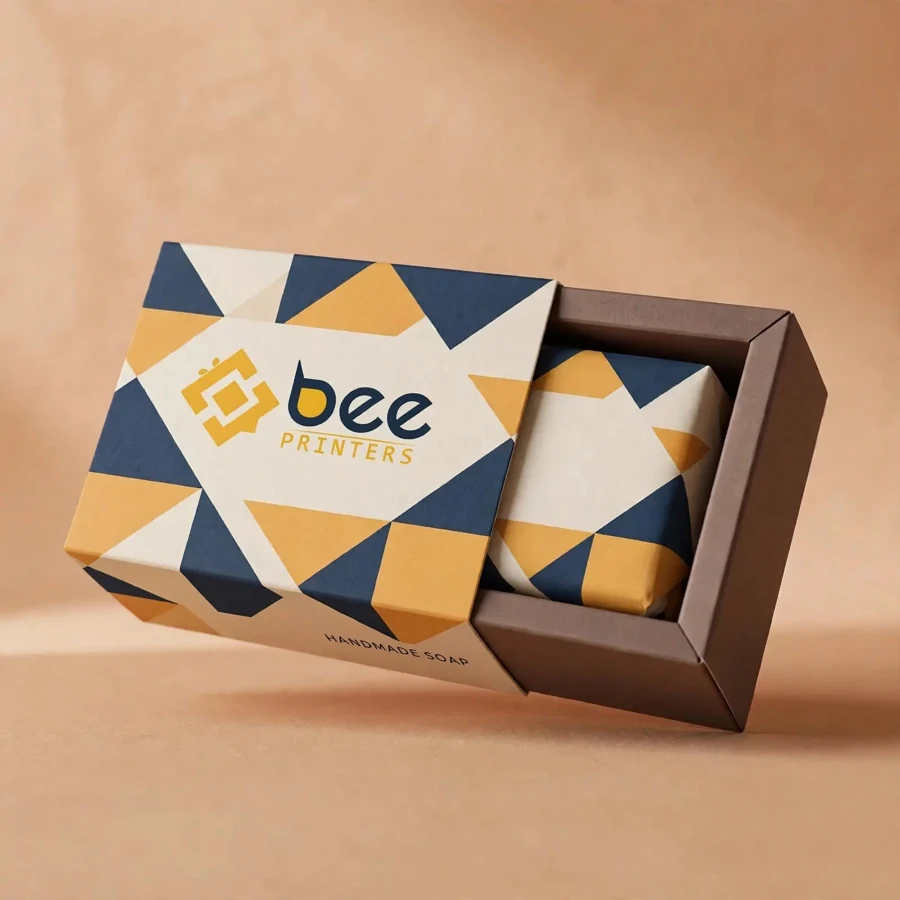
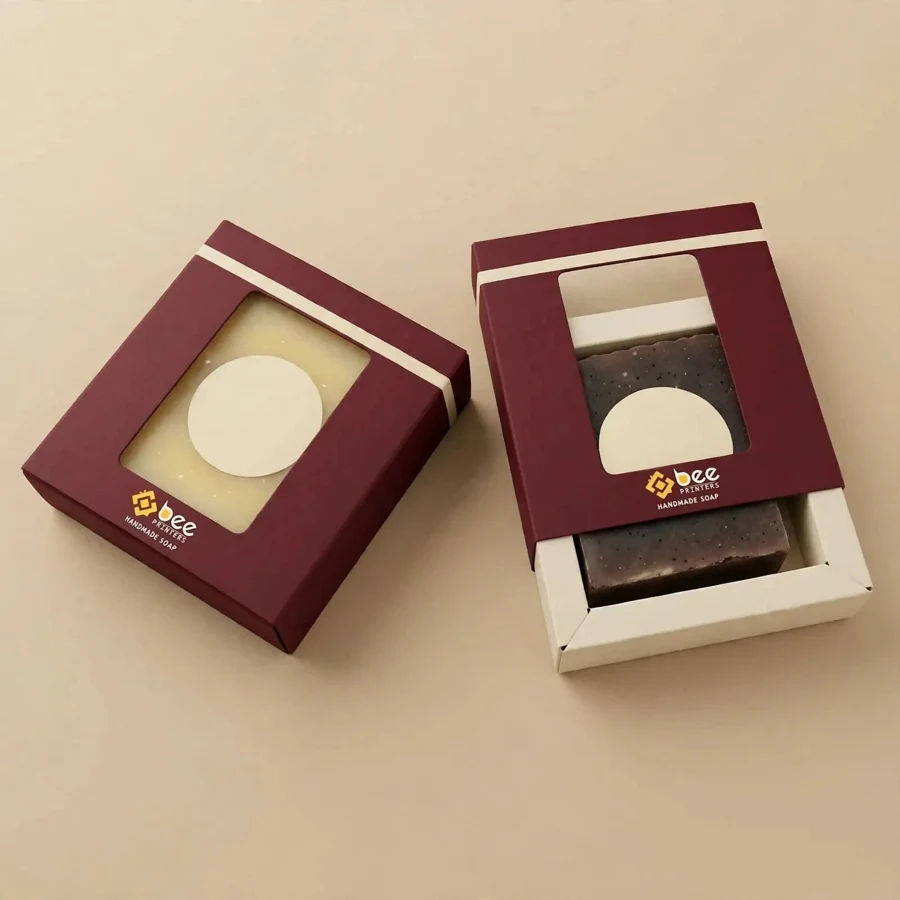
Handmade soap is made in small batches, often by one person or a small team, and the box around it should feel just as considered as the bar inside. A custom handmade soap box gives an artisan bar a pack that looks crafted rather than mass-produced, with natural materials, a simple honest design, and room for the details that matter to a buyer: the scent, the ingredients, and the maker’s name. At Bee Printers, handmade soap boxes are printed and cut to fit the bar, with formats that suit market stalls, gift shops, and online orders alike.
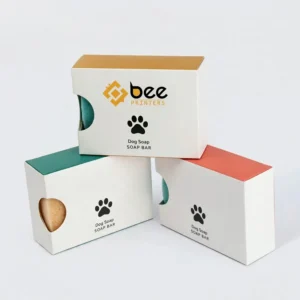
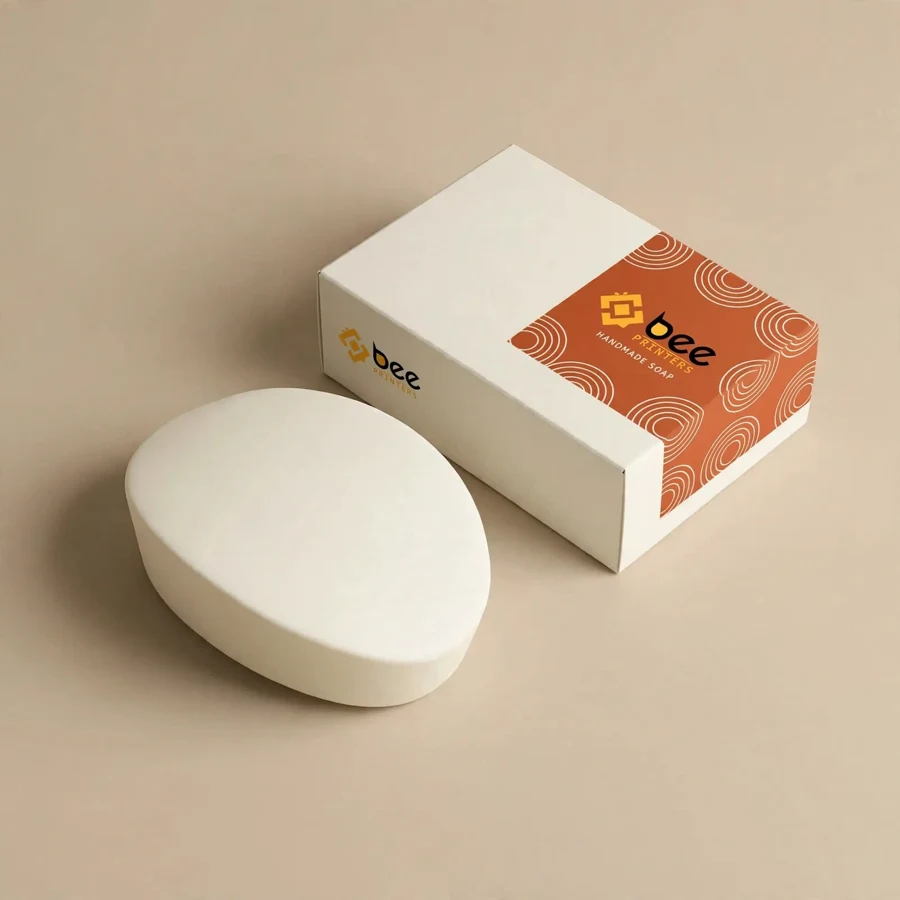
Handmade bars are rarely identical. They can be cut by hand, poured into moulds, or shaped in small batches, so their size and shape can vary from one batch to the next. The box has to allow for that variation without looking loose or oversized, which is why many makers choose a belly band, a sleeve, or a tuck-end box with a little room built in. A belly band is a strip of printed card wrapped around the middle of the bar, leaving the ends visible so the buyer can see and smell the soap. A sleeve covers more of the bar while keeping the ends open, and a tuck-end carton encloses the bar completely, protecting it during shipping and storage. Each format suits a different way of selling, and many makers use more than one across their range. Our custom soap boxes range includes all of these formats, so a maker can keep the same branding across bands, sleeves, and full cartons.
The look of a handmade soap box is usually simple. Kraft board is the most popular choice, with its natural brown tone and visible fibre giving the pack a rustic, handmade feel without any extra decoration. Uncoated white or cream board is another option, giving a clean, bright background for a printed design. A single-colour print, a hand-drawn illustration, or a simple stamp-style logo often suits a handmade bar better than a busy full-colour design, because the bar itself is the star. The box should frame the bar, not compete with it.
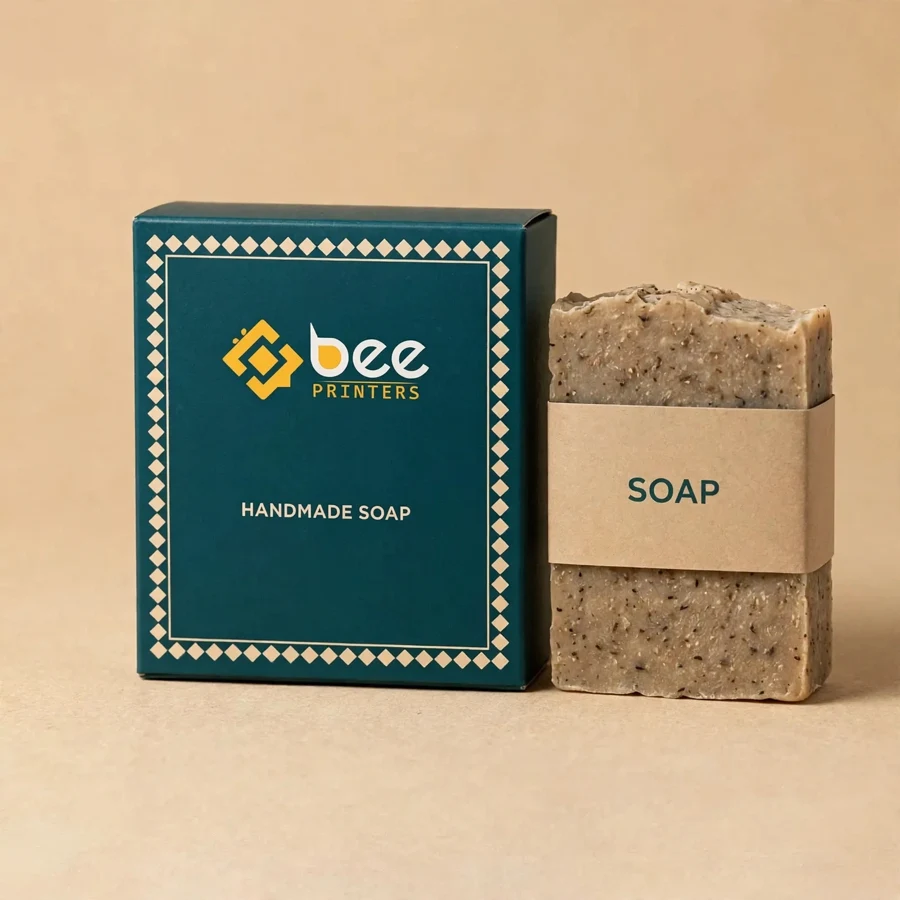
A kraft belly band is the simplest handmade soap pack, and it is also one of the most effective. A strip of kraft card is printed with the brand name, the scent, and a small design, then wrapped around the bar and glued or tucked at the back. The band holds the bar together, carries the branding, and leaves most of the soap visible, so a buyer can see the colour, the texture, and any layers or swirls in the bar. Belly bands are light, low-cost, and easy to store flat, which suits a maker working from a small space. They can be printed in small quantities, so a maker can order a different band for each scent without committing to a large run.
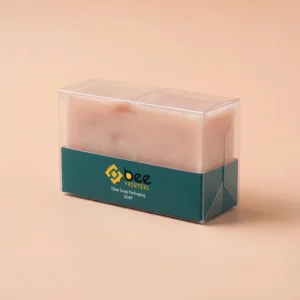
A tuck-end box gives the bar more protection. It is a printed carton with flaps at both ends that close over the bar, keeping dust and handling off it. Tuck-end boxes suit bars sold in shops, where the pack may sit on a shelf for weeks, and bars sent by post, where the box needs to survive the journey. The box can be printed inside and out, with the ingredients and directions on the back and a window cut-out on the front so the bar still shows through. A window cut-out is a die-cut opening in the front panel, covered with clear film or left open, that frames the most attractive part of the bar. It gives the buyer a glimpse of the soap without leaving the bar exposed.
Buyers of handmade soap often want to know what is in the bar, and the box is where that information lives. An ingredient panel lists the contents in plain text, usually on the back or the side of the box, in a type size that can be read without a magnifying glass. The panel should be set with enough contrast against the board to read easily, and the text should be checked carefully before printing, because a misspelt ingredient on a printed box is expensive to fix. The scent name, the bar weight, and the maker’s name or website usually sit on the front, where a buyer sees them first.
Window cut-outs need the same care as the rest of the box. The window should be placed where it shows the best part of the bar, and the film behind it should sit flat so it does not distort the view. A window that is too large can weaken the box, while one that is too small hides the bar. The cut edge should be clean, with no rough fibres or torn board, because the window is one of the first things a buyer looks at. Some makers leave the window open, with no film, so the buyer can smell the bar through the opening. That works well at a market stall, where the scent is part of the sale, but it leaves the bar more exposed to dust and handling.
Printing for handmade soap boxes is usually kept simple. One or two colours on kraft board can look more handmade than a full-colour print, and a stamp-style logo or a line illustration suits the aesthetic. Full-colour CMYK printing is still available where a design needs it, for example a photographic label or a detailed illustration, and it reproduces well on uncoated board, though colours print softer than they do on coated stock. A matte finish keeps the natural feel of the board, while a light varnish protects the print from handling without making it glossy.
Paper choice also shapes the feel of the pack. Kraft board is made from unbleached fibre, giving it a warm brown tone and a slightly rough texture. Recycled board has a similar look, with a softer tone and a lighter weight. Uncoated white board gives a clean background for print and a crisp, modern feel. The board weight matters too: a belly band can be made from lighter card, while a tuck-end box needs thicker board to hold its shape. A box that is too thin feels flimsy and can collapse on a shelf, while one that is too thick is hard to fold neatly.
Handmade soap is often sold face to face, at a market stall, a craft fair, or a small shop, and the box plays a part in that sale. A tidy stack of boxed bars looks more professional than a pile of loose bars, and a consistent design across scents makes the stall look like a brand rather than a hobby. The box should be easy to open, because a buyer at a stall will often want to look at the bar and smell it before buying, and a box that tears when it is opened reflects badly on the maker. A simple tuck flap or a band that slides off easily is better than a glued box that has to be torn open.
Online sales add a different set of needs. A box that is light and flat-packed keeps postage down, and a sturdy board protects the bar in a postal bag. The design should photograph well, because the buyer sees the pack on a screen before they see it in person, and a clear, well-lit photograph of the boxed bar is often the first thing that sells it. A consistent look across the range also helps online, because a buyer who liked one scent can recognise the next one by the box alone.
When you order custom handmade soap boxes, start with the bar: measure it, including any uneven edges, and decide whether you want a belly band, a sleeve, or a full carton. Small orders suit a new scent or a seasonal bar, while larger orders suit a range that is selling steadily. Ask for a proof so you can check the colours, the ingredient text, and the fold before the full run is printed, and test the box with a real bar to make sure the fit is right. For a printed carton with a clear window instead of a band, see our window soap boxes, which pair printed card with a display window that shows the bar.
A custom handmade soap box does a simple job well: it protects the bar, carries the maker’s name, and presents the soap in a way that feels as carefully made as the bar itself. Whether the bar is sold at a market stall, in a gift shop, or online, the right box helps it reach the buyer looking its best and ready to be enjoyed.
| Material | Kraft, Cardboard, Corrugated, Rigid stock |
| Sizes | All custom sizes (any length × width × height) |
| Printing | CMYK / PMS, full-color, offset & digital |
| Finishing | Matte, Gloss, Soft-touch, Foil, Spot UV, Embossing |
| Add-ons | Window cut-outs, inserts, interior printing |
| Minimum Order | 100 boxes |
| Turnaround | 7 to 10 business days after design approval |
| Shipping | Free shipping across the US |