
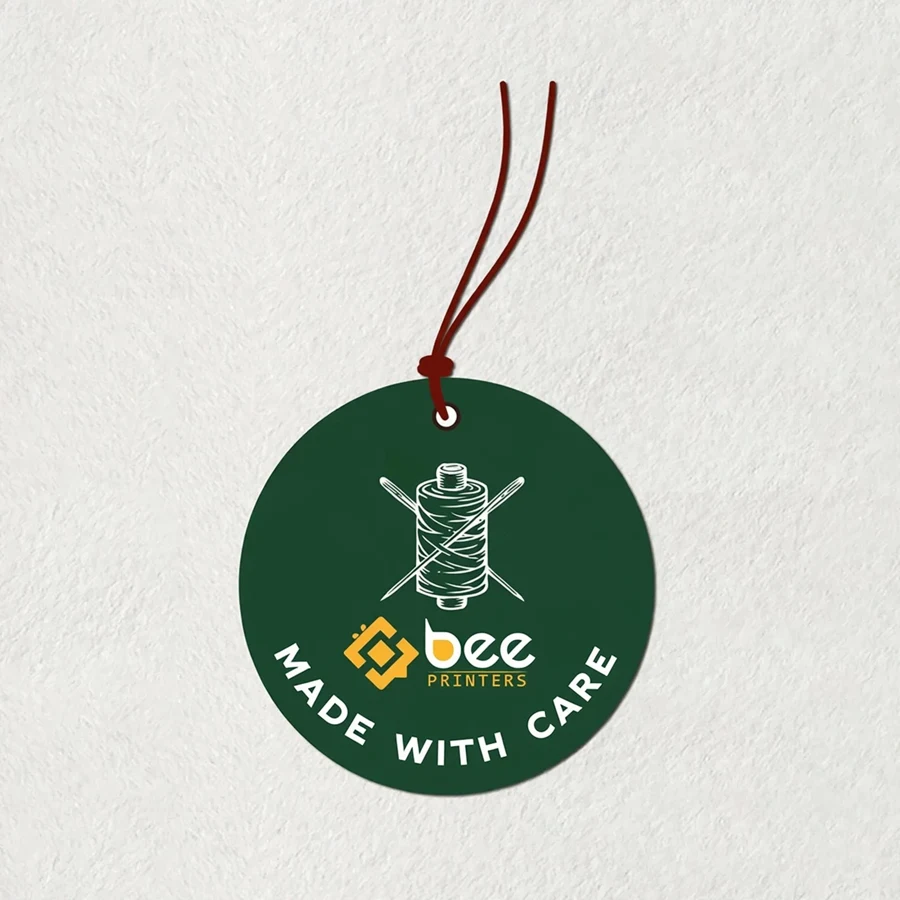
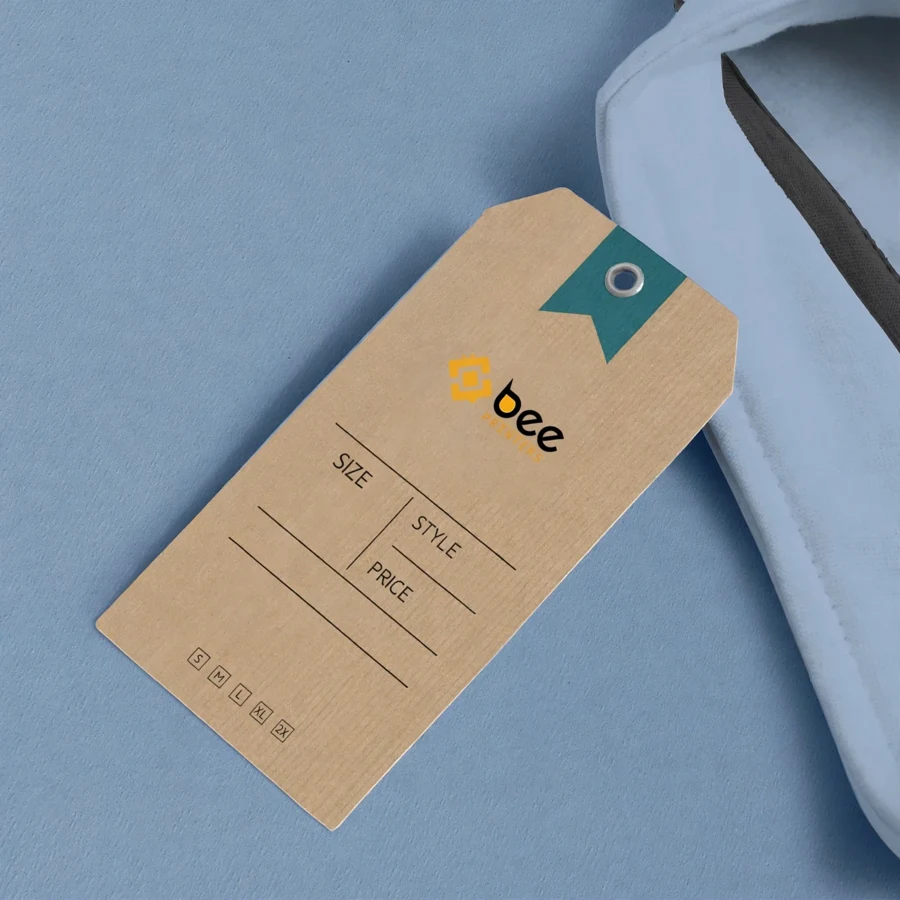
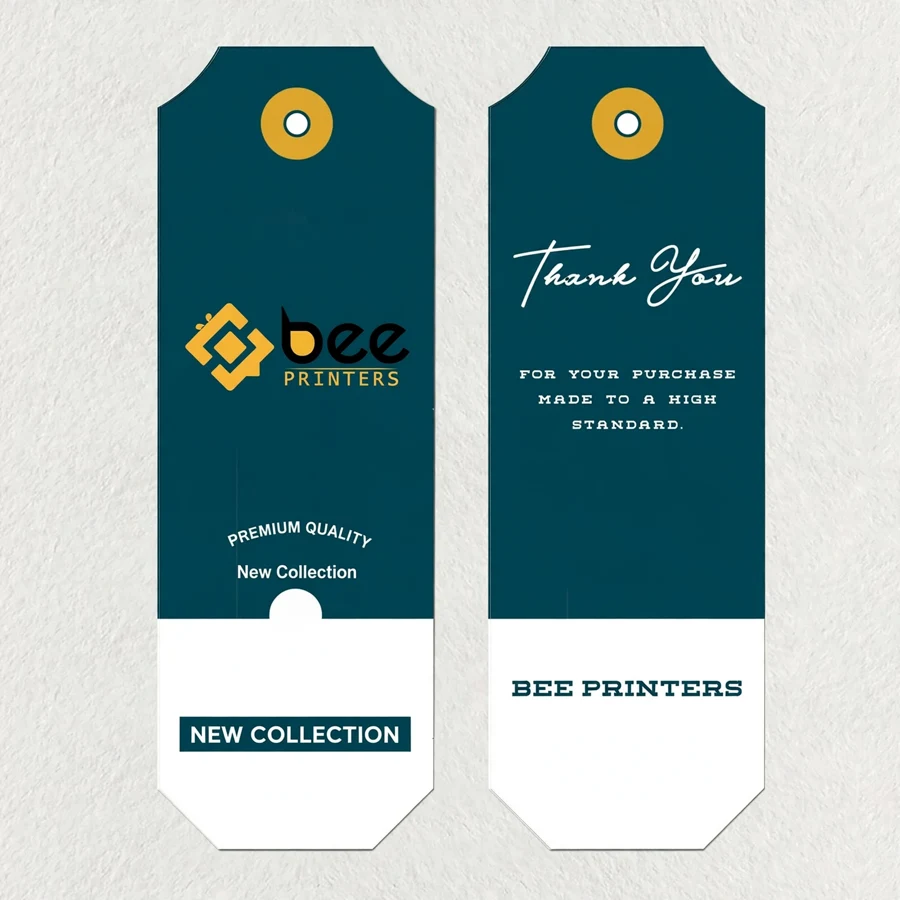
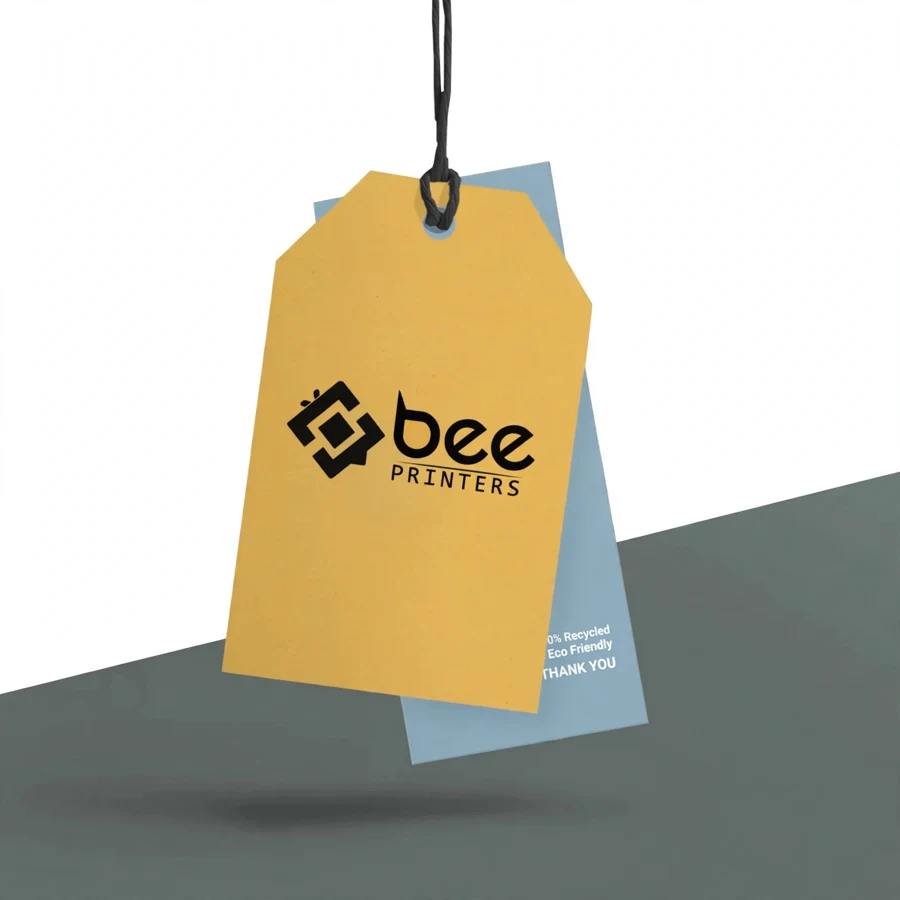
Die-cut hang tags are printed on custom card stock and trimmed to the shape of your design, so the tag itself becomes part of the presentation instead of a plain rectangle tied to a product. At Bee Printers, these tags are printed in full color on both sides, in custom shapes, with a matte, gloss or UV finish. They suit clothing, accessories, gifts and packaged goods, and they give a small product a finished, retail ready look. A well made hang tag tells the customer what the product is, who made it and why it matters, and it does all of that in a space no bigger than a few inches.
The die cut is what makes these tags different from standard tags. Instead of a rectangle with a hole punched in the corner, the tag can be shaped like a logo, a leaf, a star, a bottle, a house or any outline that fits the brand. The shape catches the eye first, before the customer reads a single word, and it signals that the product behind it was made with care. For a clothing label, a shaped tag adds a designer touch. For a handmade product, it shows the maker paid attention to the details. For a gift, it turns the tag into a keepsake rather than a piece of card to throw away.
A hang tag is often the first thing a customer touches. It hangs from a garment, a bag, a bottle or a gift, and it is handled, turned over and read before the product itself is examined. A distinctive shape makes that first touch memorable. A bakery can use a cupcake shaped tag, a candle maker can use a flame outline, a toy brand can use a character silhouette and a boutique can use a tag shaped like its own logo. The shape reinforces the brand without a single extra word, and it makes the product easy to recognize on a crowded rack.
Shape also helps with function. A tag shaped around a hole stays strong where the string passes through, and a tag with a wide base has room for a price, a barcode or care instructions without looking crowded. Because the tag is cut to your artwork, the shape and the printed layout can be planned together, so the logo sits where it looks best and the text stays clear of the edges. That planning is what separates a professional tag from a homemade one, and customers notice the difference even if they cannot name it.
These tags are printed on custom card stock chosen for stiffness and print quality. The card needs to be thick enough to hang straight, resist bending in a shopping bag and survive handling on a retail rack, while still taking full color printing cleanly on both sides. Double sided printing doubles the space available: the front carries the logo, the product name and the main message, while the back holds the price, the size, the care instructions, the website or a short brand story. Both sides are printed in full color, so the tag looks finished from every angle.
The finish changes how the tag feels and how it handles wear. A matte finish gives a soft, understated surface that suits natural and minimal brands, and it is easy to write on if prices or notes need to be added by hand. A gloss finish adds shine and deepens the colors, which suits bold artwork and photographic designs. A UV finish adds a hard, glossy coating that protects the surface from scuffs and moisture, which is useful for tags that will be handled often or displayed outdoors. The finish is chosen around the brand and the setting, not as an afterthought, because it shapes how the customer perceives the product.
Clothing brands use hang tags to carry the information a garment needs: the brand, the size, the price, the fabric and the care instructions. A die cut tag does that job while also acting as a small piece of branding that the customer sees before the garment itself. For a boutique or an independent label, the tag is often the only printed branding on the product, so it has to work hard. A custom shape, a clean layout and a quality finish make the garment feel like a considered product rather than a generic item with a tag attached.
The tag is attached with a string, a ribbon or a pin through a punched hole, and the hole placement is part of the design. A well placed hole keeps the tag hanging straight and prevents tearing, even when the garment is tried on and handled repeatedly. For delicate fabrics, a light string and a small tag keep the weight down. For heavier garments like coats and denim, a thicker card and a stronger attachment suit the product. Matching the tag to the garment in weight and style is a small detail that makes the whole presentation feel coherent.
Hang tags are not only for clothing. They are tied to gift bags, attached to gift boxes, hung from bottles and jars, and used as price tags at markets and craft fairs. A die cut tag on a gift turns a simple present into something that looks prepared and personal, especially when the tag carries a message, a name or a short note. For packaged goods, the tag can carry information that does not fit on the main label, such as a batch number, a story about the maker or instructions for use.
For retailers, hang tags help organize stock and present products clearly. A shaped tag in a consistent brand color makes a market stall or a shop shelf look organized and intentional, and it helps customers find the price and the details without asking. For handmade sellers, the tag is often the main branding on the product, so a custom shape and a clean print can lift a simple item into a gift ready product. The same tag design can be used across a whole range, with the shape staying constant and the product details changing, which keeps a collection looking unified.
A good hang tag is designed for a small space. The front should carry the most important element, usually the logo or the product name, large enough to read at arm’s length. The back can hold the supporting details in smaller text. Keep the number of elements low: a logo, a short line of text and a price is usually enough. Too much information makes the tag look crowded and customers stop reading. Use colors that match the product and the brand, and keep the contrast high enough that the text is easy to read in shop lighting.
Think about the string as part of the design too. A plain string suits a simple tag, while a ribbon, a twine or a colored cord can add a finishing touch that matches the brand. The string color should work with the tag colors rather than clash with them. If the tag is for a gift, a ribbon in a brand color turns the tag into part of the wrapping. If the tag is for retail, a sturdy string that survives handling matters more than decoration. Either way, the attachment should be chosen with the same care as the print.
Ordering starts with the shape and the artwork. Share the design, choose the card stock and finish, and decide how much information the tag needs to carry on each side. A proof at full size is worth checking before a large run, because text that looks fine on a screen can be too small once printed, and a shape that looks bold on a monitor can feel fiddly in the hand. Checking the proof also confirms the hole placement and the balance of the tag when it hangs.
Our stickers and labels range includes other printed formats that pair well with hang tags, from product labels to seals, so a full set of printed pieces can be planned together. For a related printed item in the same family, double sided stickers share the double sided printing idea and work well as seals or labels alongside a hang tag. Together, a shaped hang tag and a matching sticker give a product a complete, coordinated presentation that customers notice and remember.
| Material | Kraft, Cardboard, Corrugated, Rigid stock |
| Sizes | All custom sizes (any length × width × height) |
| Printing | CMYK / PMS, full-color, offset & digital |
| Finishing | Matte, Gloss, Soft-touch, Foil, Spot UV, Embossing |
| Add-ons | Window cut-outs, inserts, interior printing |
| Minimum Order | 100 boxes |
| Turnaround | 7 to 10 business days after design approval |
| Shipping | Free shipping across the US |