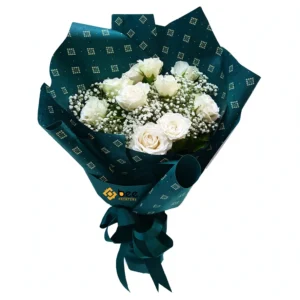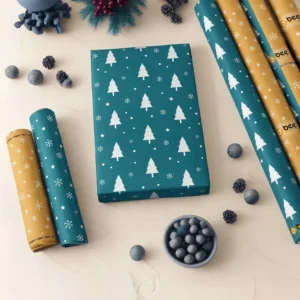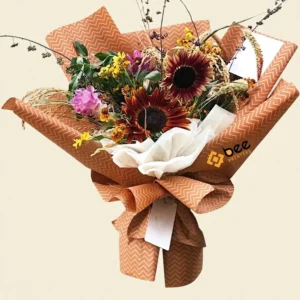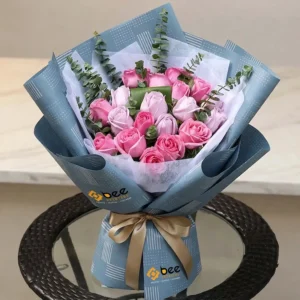
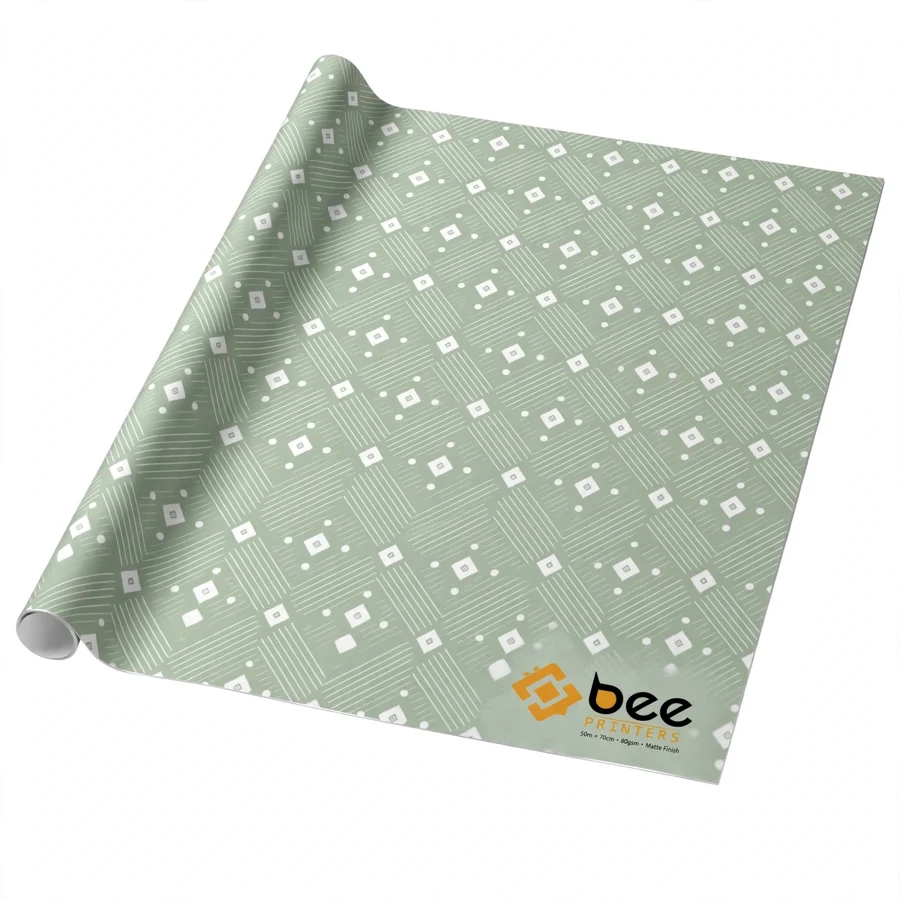
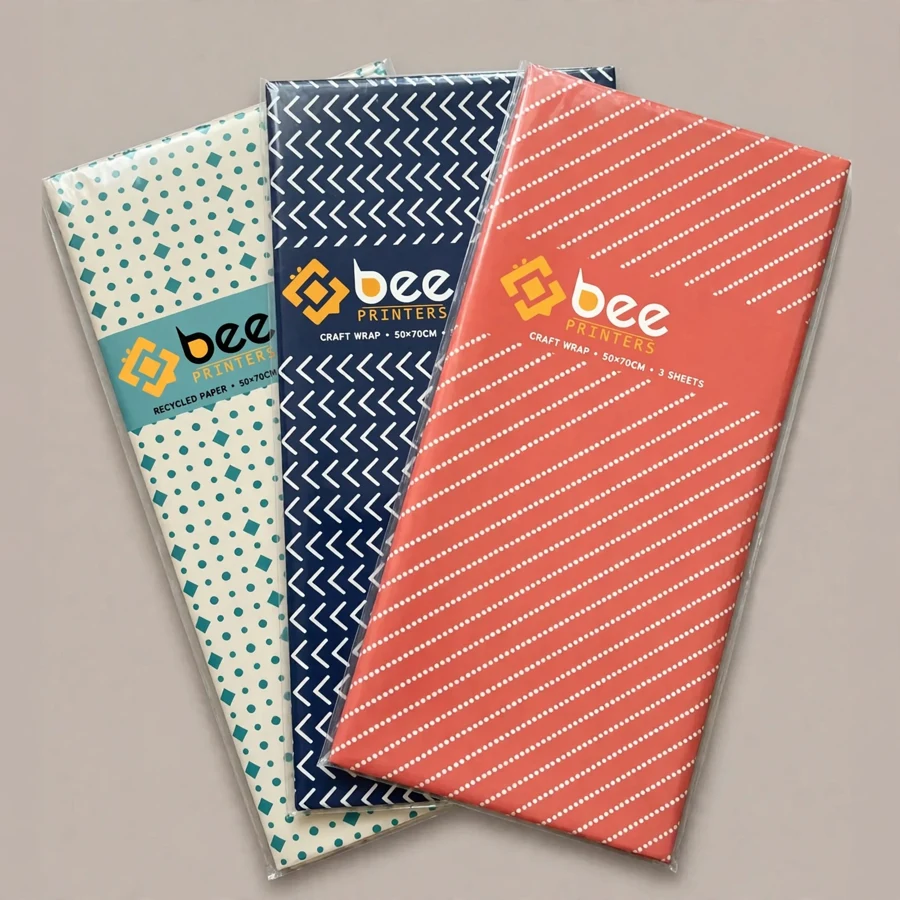
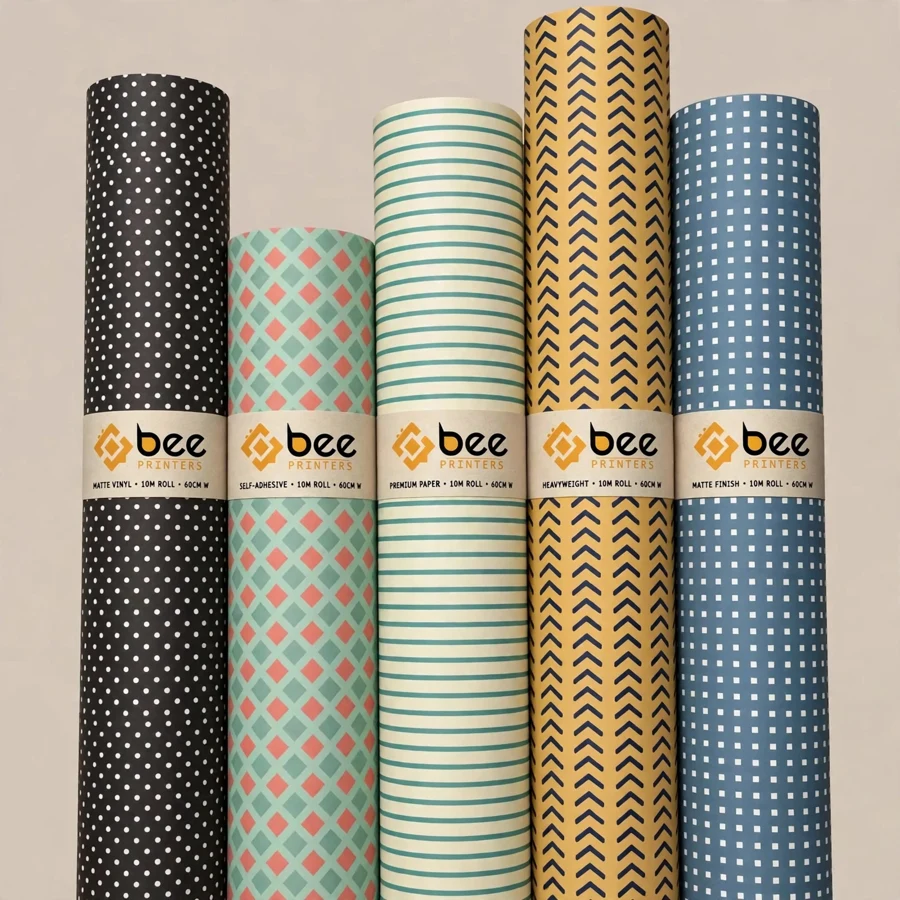
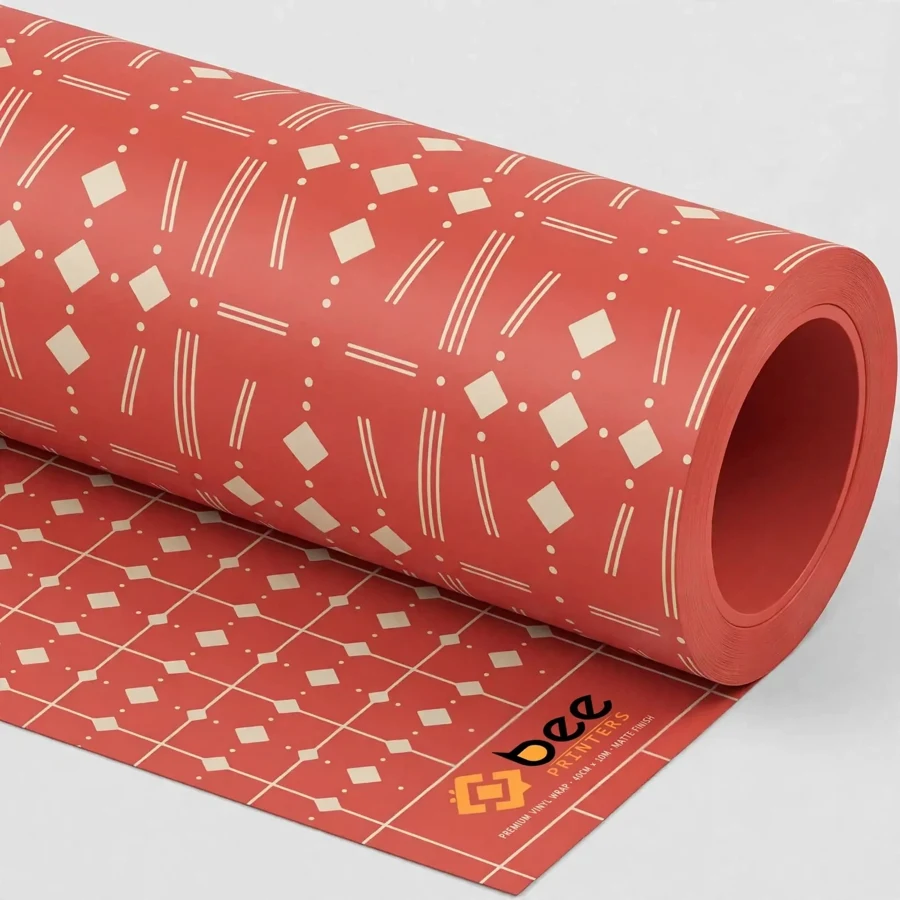
A bouquet is only half done when the stems are tied. The wrap is what turns a bunch of flowers into a gift, and designer flower wrapping paper does that job with prints that look deliberate instead of plain. At Bee Printers, designer floral wraps are printed with botanical illustrations, modern flower patterns and vintage-inspired motifs, so florists and gift shops can match the paper to the flowers inside. Browse the full wrapping paper range to compare prints, finishes and roll sizes, or see how a printed food wrap carries a brand in our Taco Wrapping Paper — the same idea of a paper that protects the product and presents it at the same time. Designer paper is not about adding decoration for its own sake. It is about giving a bouquet a frame, a colour story and a first impression that matches the care that went into arranging the flowers.
Florists reach for designer flower paper because customers notice it before they notice the individual stems. A bunch of roses wrapped in a soft botanical print reads as a considered gift. The same roses in plain kraft read as practical. Both have their place, but when the bouquet is for a birthday, an anniversary or a thank-you, the printed wrap carries part of the message. Designer papers also photograph well, which matters for florists who sell through social media and online shops. A bouquet wrapped in a distinctive floral print is easy to recognise in a feed, and customers start asking for the wrap by its look as much as for the flowers.
The designer range covers three broad print families. Botanical prints use fine line work and naturalistic drawings of leaves, stems and petals, often in a single ink colour on a soft background. They suit wildflower bunches, garden roses and arrangements that lean natural rather than formal. Modern florals go bolder, with large-scale blooms, flat colour blocks and repeat patterns that read clearly from a distance. These work well for bright mixed bouquets and for gift wrapping where the paper itself is part of the present. Vintage patterns borrow from older textile and wallpaper designs, with small dense florals, muted tones and a softer, more romantic feel that suits dried flowers, pastel roses and heritage-style arrangements.
Choosing between them is mostly a question of what the flowers look like and who is receiving them. A botanical print keeps the focus on the flowers, because the line work is quiet and the colours are restrained. A modern floral competes a little with the bouquet, which is fine when the bouquet is simple and the wrap is meant to add the colour. A vintage pattern sits somewhere in between, adding warmth without shouting. Florists who stock all three can wrap the same dozen roses three different ways and offer three different moods, which is a simple way to give customers a choice without changing the flowers at all.
Designer flower wrapping paper is supplied in rolls and in cut sheets, and the two formats suit different working styles. Rolls are the practical choice for a busy florist counter. The paper pulls off the roll, cuts to the length the bouquet needs, and there is no waste from pre-cut sizes that do not match the bunch. Large rolls also keep the cost per bouquet down, which matters when wrapping is done dozens of times a day. Sheets are better for gift shops and for customers who wrap at home, because a sheet is ready to use without a roll holder or a cutting bench, and the print is fully visible before the first fold.
The paper itself is chosen to fold cleanly around stems and to hold a crease without cracking the print. It is light enough to gather and pleat around a bouquet, but strong enough that it does not tear when the stems are pushed through or the wrap is tied off with ribbon or twine. The printed side stays bright after folding, and the inks are set so they do not rub off on hands or on the petals. That matters more than it sounds, because a florist handles the paper all day and a customer carries the bouquet against clothing. A wrap that sheds colour is a wrap that will not be ordered twice.
Custom printing turns designer flower paper into a branded product. A florist can have a signature floral pattern printed in brand colours, with a small logo or shop name repeated quietly in the design, so every bouquet that leaves the shop advertises the business. Custom designs are also useful for weddings and events, where the wrap can match the invitation, the table setting or the bridesmaids dresses. A wedding florist who wraps three hundred bouquets in the same custom print gives the whole event a visual thread that guests notice and photograph.
Custom work starts with the print, not the paper. A design that works at bouquet scale needs a repeat that looks good when the paper is folded, gathered and viewed from one side only. Large blooms can be lost in a fold, while a smaller repeat stays readable. Colours need to be chosen for how they look next to real flowers rather than on a screen, because a green that looks fresh on a monitor can look dull next to fresh foliage. Working with a printer who understands bouquet wrapping means these details are checked before the run, so the finished paper behaves the way the design promised.
Good wrapping is a skill, and the paper should make it easier rather than harder. A cone wrap suits a single stem or a small hand-tied bunch, gathering the paper to a point below the blooms and leaving the flower heads fully visible. A full wrap suits a larger bouquet, with two sheets crossed at an angle so the corners flare out like petals around the flowers. A sleeve wrap, where the paper forms a loose tube around the bunch, suits long-stemmed flowers and protects them in transit while still showing the heads.
Whatever the method, the same habits help. The paper should be cut generously, because a wrap that is too small has to be stretched and will tear at the folds. The stems should be trimmed and the bunch secured before the paper goes on, so the wrap is not holding the arrangement together by itself. A ribbon, a twist of twine or a wax seal finishes the wrap and gives the customer something to hold. The finished bouquet should stand on its own, sit comfortably in a hand, and survive a car journey without the paper slipping. Designer paper that is cut well and tied neatly is the difference between a bouquet that looks bought and one that looks made.
When ordering designer flower wrapping paper, start with the flowers you sell most. If your best sellers are roses and lilies, a classic botanical or a soft vintage print will match them every day. If you sell bright seasonal bunches, a modern floral in a strong colour will lift them. Order a small quantity of two or three prints first and see which one customers ask for again. The print that sells is not always the one that looks best on a sample sheet, because a wrap only proves itself when it is folded around real flowers and carried out of the shop.
Think about storage too. Rolls need a holder or a shelf where they can unroll without creasing, and sheets need to stay flat and dry. Keep the most used print within reach of the wrapping bench and the rest nearby, so the choice of paper does not slow the wrapping down. A shop that wraps quickly and well sells more bouquets, and the paper is part of that speed. Designer flower wrapping paper earns its place on the bench when it folds easily, prints cleanly and makes every bouquet that leaves the shop look like it was wrapped by someone who cared.
| Material | Kraft, Cardboard, Corrugated, Rigid stock |
| Sizes | All custom sizes (any length × width × height) |
| Printing | CMYK / PMS, full-color, offset & digital |
| Finishing | Matte, Gloss, Soft-touch, Foil, Spot UV, Embossing |
| Add-ons | Window cut-outs, inserts, interior printing |
| Minimum Order | 100 boxes |
| Turnaround | 7 to 10 business days after design approval |
| Shipping | Free shipping across the US |