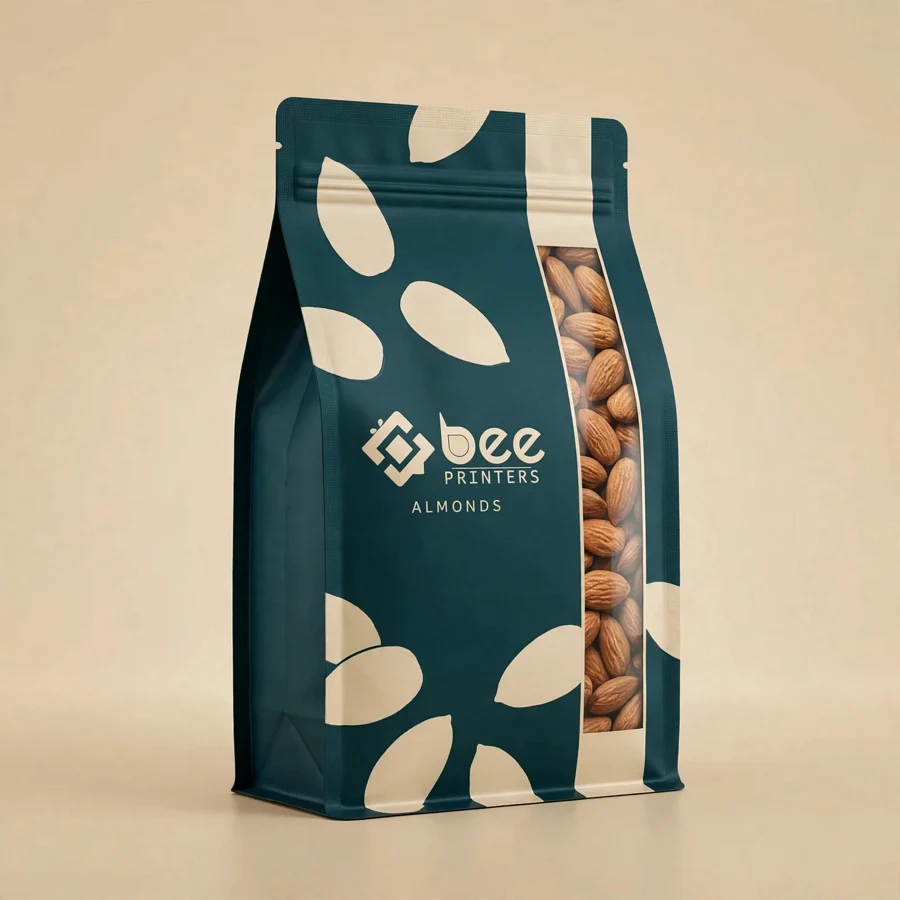
Almonds are sold everywhere — in supermarkets, health stores, gift shops, markets and online — and the packaging is often what makes a customer pick one pack over another. Almond packaging from Bee Printers covers the formats almond sellers actually use: boxes, pouches, bags and wrappers, in food-grade, eco-friendly and premium options, all with custom branding. Whether the almonds are sold plain, roasted, flavoured or as part of a gift set, the right pack keeps them fresh, protects them in transit and presents them well on the shelf.
Packaging for dry goods like almonds has a practical job before it has a marketing job. Almonds need to stay dry, stay clean and stay whole. A pack that lets in moisture or air will spoil the product, and a pack that crushes easily will leave the customer with broken pieces. That is why almond packaging uses food-grade materials and structures that seal properly: a sealed pouch keeps air out, a rigid box protects the contents from being crushed, and a well-made bag stands up on a shelf without tipping over. The branding comes on top of that solid foundation.
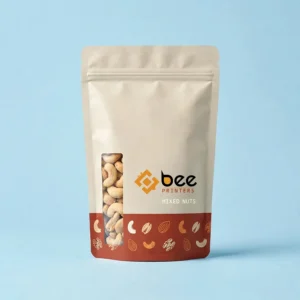
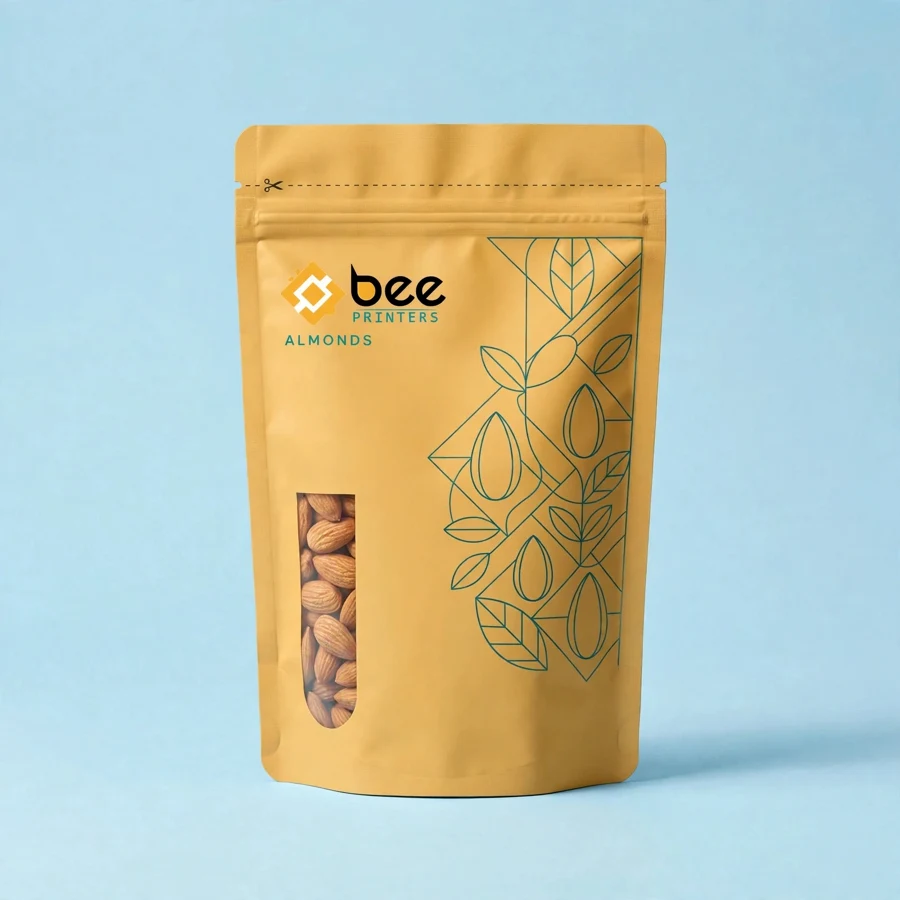
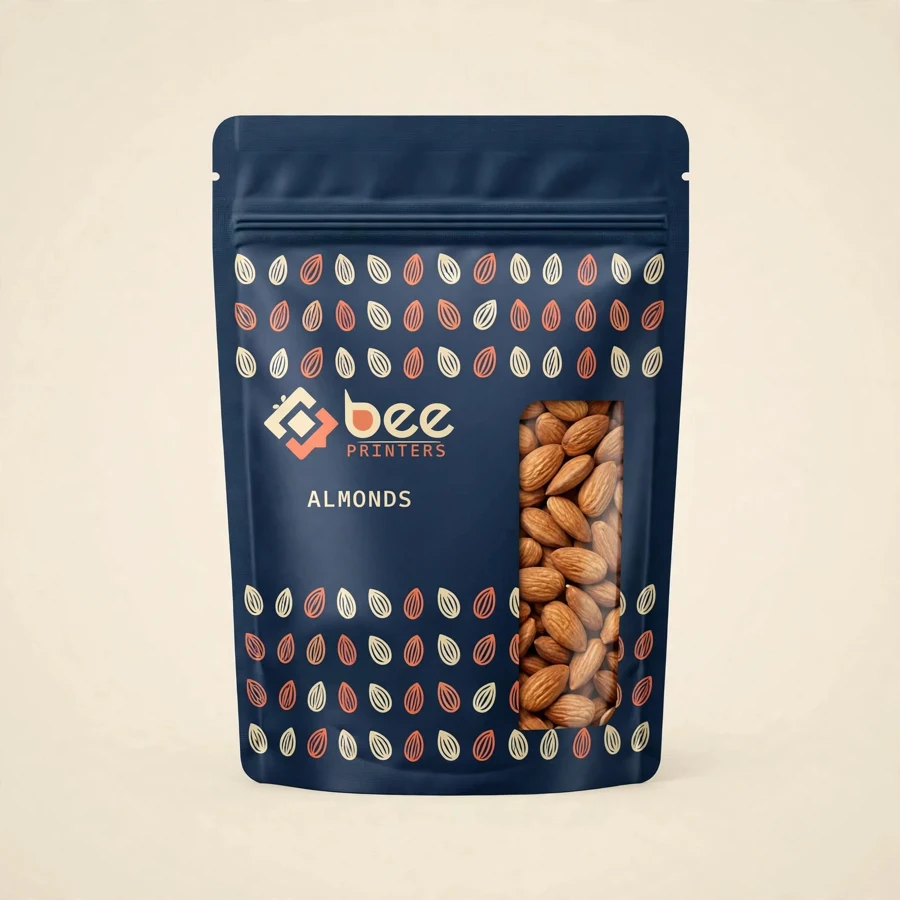
Each format suits a different way of selling almonds. A rigid or folding box suits premium and gift almonds: the box can be printed with an elegant design, lined with a food-safe inner layer, and finished with a window that shows the almonds inside. A stand-up pouch suits retail shelves: it stands on its own, takes a full-colour print, and can be resealed so the customer can use a little at a time. A flat bag suits bulk and wholesale sales, where the almonds are sold by weight and the pack is simple and economical. A wrapper suits single-serve portions, snack packs and sample sizes.
Many almond brands use more than one format. A premium gift box for the festive season, a stand-up pouch for the everyday retail range, and a small single-serve wrapper for snacking or sampling — all carrying the same branding, all made from food-grade material. That range lets a brand serve different customers and different occasions without changing its identity. The choice of format depends on how the almonds are sold, how they are stored and how the customer will use them.
Food-grade packaging is not optional for almonds — it is the standard. The materials that touch the food must be safe for food contact, free from anything that could transfer taste or odour, and able to keep the contents dry. Pouches and bags for almonds commonly use layered films that block moisture and air, with a seal that can be opened and closed again. Boxes for almonds use food-safe board with an inner barrier layer, so the almonds never touch untreated board. These are practical, established materials that keep almonds in good condition from packing to purchase.
Freshness is closely tied to the seal. A resealable pouch lets the customer open the pack, take what they need and close it again, which keeps the remaining almonds fresh for longer. A heat-sealed bag protects the almonds through shipping and storage until the customer opens it. A box with a well-fitting lid keeps dust and moisture out on a shop shelf. For sellers, that freshness is a selling point in itself: almonds that taste fresh are almonds the customer will buy again.
Almonds are a popular gift, especially in festive seasons and for corporate gifting. A premium rigid box with a printed design, a fitted inner tray and a ribbon or magnetic closure turns a simple bag of almonds into a present. The box can be printed with the brand’s colours and logo, with a design that reflects the occasion — a festive pattern, an elegant minimal look or a bold modern print. Inside, the almonds can be packed in a sealed inner pouch so they stay fresh while the box itself is kept and reused.
Gift packaging also suits flavoured and coated almonds, which are often sold as a premium product in their own right. A small, beautifully printed box of roasted or chocolate-coated almonds makes a thoughtful gift or a corporate giveaway, and the packaging is what makes it feel like a gift rather than a grocery item. Businesses that sell almond gift sets often find that the box is what the customer remembers — and what brings them back for the next occasion.
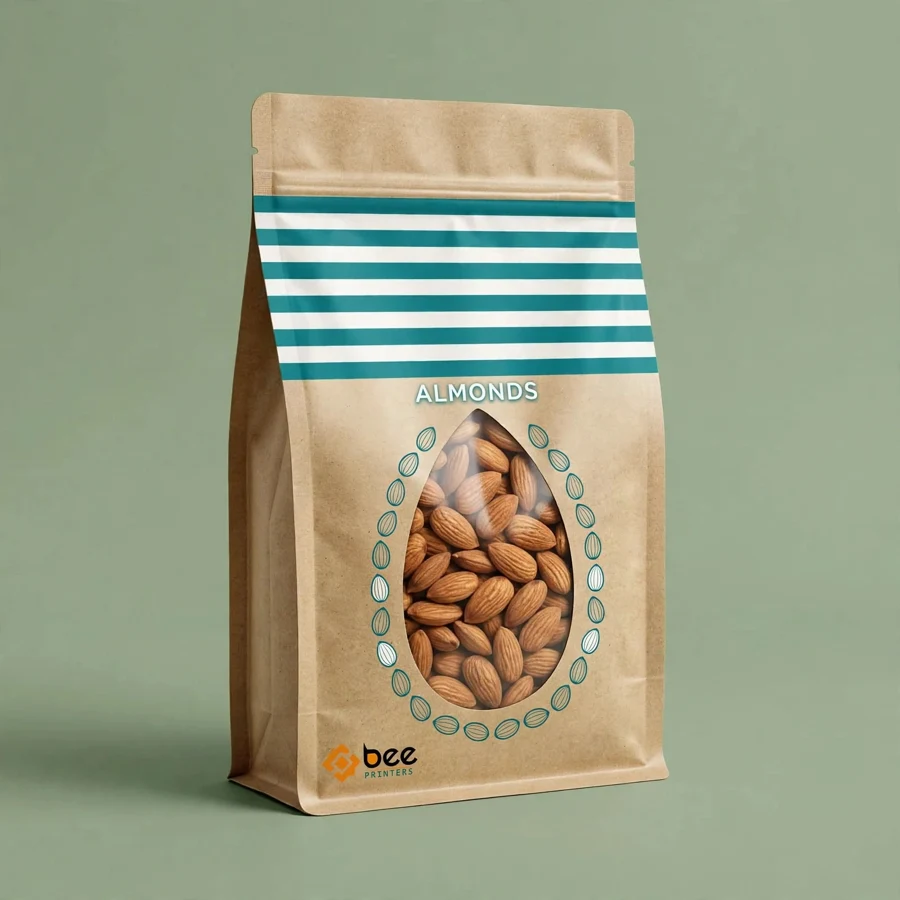
Many almond brands want packaging that reflects the natural character of the product. Eco-friendly options are available, including recyclable board, compostable films and kraft-style finishes that give the pack a natural look. A kraft box or pouch with a simple printed design suits almonds well: the natural brown board suggests a wholesome, unprocessed product, and the print can carry the brand, the product name and the pack weight. These options let a brand offer packaging that is kinder to the environment without giving up on presentation or protection.
Choosing an eco-friendly format is a practical decision as well as a branding one. Recyclable and compostable materials are increasingly what customers look for, and retailers often prefer them too. The key is to choose a material that still protects the almonds properly — a compostable pouch that seals well, a recyclable box with a food-safe barrier — so the product stays fresh and the packaging still does its job. The right eco-friendly pack does both.
Branding is where almond packaging earns its keep on the shelf. A printed pack with a clear product name, a recognisable logo and an attractive design stands out among plain packs, and it tells the customer what is inside at a glance. The print can include the almond variety, the roast or flavour, the pack weight and any information the seller wants the customer to see. A window in the box or pouch lets the customer see the almonds themselves, which is often the most persuasive thing of all.
Almond packaging is part of a wider range of dry-fruit packaging, and the full range is listed in the dry fruits packaging category. For sellers who also pack other dry fruits, nuts or gift assortments, a complementary format such as Chocolate Gift Boxes can cover gift sets and mixed assortments alongside the almond range. Keeping the branding consistent across the whole range — the same colours, the same logo, the same style — makes the brand easy to recognise and easy to trust.
Ordering custom almond packaging starts with the format and the quantity: boxes, pouches, bags or wrappers, in the size that suits your pack weight and your shelf. From there, the material, the print and the finish can be chosen to match your brand and your budget. Wholesale pricing keeps the per-pack cost down for regular sellers, and a small initial order can be used to test a new design or a new product line before committing to a larger run.
If you are launching an almond product for the first time, start with the format your customers already know — a stand-up pouch for retail, a gift box for festive sales — and add your branding to it. If you already sell almonds, consider whether a premium gift box or an eco-friendly option could open a new market for you. Either way, the packaging should do three things: keep the almonds fresh, protect them in transit, and make the customer want to pick the pack up. Get those three right, and the packaging will sell the almonds for you.
| Material | Kraft, Cardboard, Corrugated, Rigid stock |
| Sizes | All custom sizes (any length × width × height) |
| Printing | CMYK / PMS, full-color, offset & digital |
| Finishing | Matte, Gloss, Soft-touch, Foil, Spot UV, Embossing |
| Add-ons | Window cut-outs, inserts, interior printing |
| Minimum Order | 100 boxes |
| Turnaround | 7 to 10 business days after design approval |
| Shipping | Free shipping across the US |