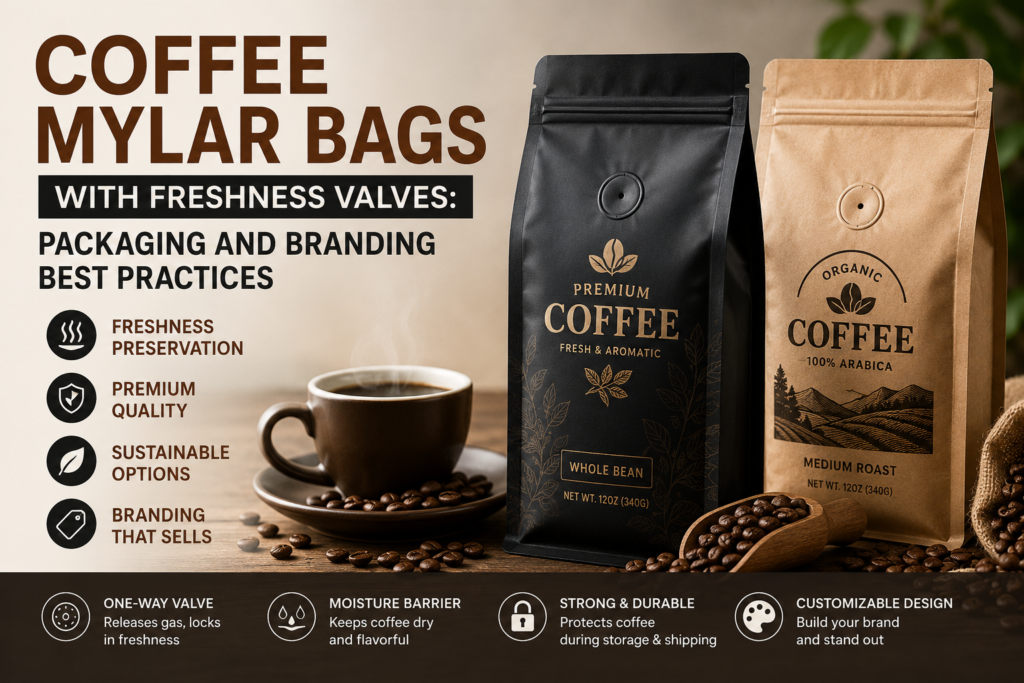
Coffee is one of the most demanding products to package. It’s aromatic, oil rich, and begins losing its character the moment it’s roasted. Get the packaging wrong, and even the best single origin beans will taste flat, stale, or lifeless by the time they reach a customer’s cup. This is exactly why mylar bags have become the industry standard for specialty coffee roasters and why understanding how to use them properly, from freshness valves to branding, is one of the most important decisions a roaster will make.
Whether you’re a small batch roaster shipping your first 100 bags or an established brand scaling up production, this guide breaks down everything you need to know about Coffee Mylar Bags. If you’re ready to move from research to sourcing, you can explore Cereal Mylar Bags bags built specifically for product protection and branding.
Why Mylar Bags Are the Gold Standard for Coffee Packaging
Mylar, technically known as BoPET (biaxially oriented polyethylene terephthalate), is a polyester film prized for one core property: it’s an exceptional barrier against oxygen, moisture, and light. In coffee packaging, mylar bags are rarely made of pure mylar alone they’re typically multi layer laminates combining mylar or foil with polyethylene or kraft paper, engineered specifically to protect roasted beans.
Here’s why that matters. Roasted coffee has three enemies:
- Oxygen triggers oxidation, which breaks down the aromatic compounds responsible for flavor.
- Moisture degrades texture and accelerates staling, and can introduce mold risk in humid climates.
- Light (especially UV) breaks down oils and compounds in the beans, similar to how light degrades wine.
A well made mylar bag blocks all three. Compare this to standard packaging materials like simple kraft paper or thin plastic pouches, which are porous or semi permeable and allow oxygen and moisture to seep in over time. For a product with a shelf life measured in weeks (not months, despite what some brands imply), that barrier protection is not optional it’s the difference between a bag of coffee that tastes fresh on day 20 and one that tastes dull.
There’s also a practical business reason roasters love mylar: it holds a crisp fold, resists punctures during shipping, and — critically for branding — provides an excellent surface for high resolution printing.
The Freshness Valve: Small Component, Big Function
If you’ve ever pressed on a bag of coffee and felt a small circular give near the top, that’s the one way degassing valve often just called a Child Resistant Mylar Bags or “coffee valve.” It looks minor, but it solves a genuine chemistry problem.
The problem it solves: Freshly roasted coffee beans release carbon dioxide (CO2) for days, sometimes weeks, after roasting a process called degassing. If you seal beans in an airtight bag with no way for that gas to escape, one of two things happens: the bag swells and eventually bursts, or you’re forced to wait for the beans to finish degassing before packaging, delaying shipment and losing freshness.
How the valve works: It’s a simple one way mechanism, usually a small plastic disc with a check valve or a covered pinhole. Internal pressure from the CO2 pushes the valve open just enough to let gas escape, but external air pressure keeps it sealed shut so no oxygen gets back in. This means you can package coffee almost immediately after roasting (many roasters bag within 24 48 hours) without worrying about bag rupture or bean staleness from delayed packaging.
A few practical notes on valves:
- Placement matters. Valves are typically placed high on the bag, away from the coffee itself, to avoid clogging with oils or grounds (especially important for ground coffee, which off gasses faster and produces more fine particulate than whole bean).
- Quality varies. Cheap valves can fail — either not resealing properly (letting oxygen in) or clogging (causing the bag to bulge). It’s worth sourcing valves from a reputable supplier rather than the lowest bidder.
- Whole bean vs. ground. Ground coffee degas faster and more intensely due to increased surface area, so valve function is even more critical here than for whole beans.
- Not always necessary for small formats. Some single serve or very small batch packaging skips the valve entirely and simply allows beans to rest before sealing but for standard 8oz–5lb retail bags, a valve is close to essential.
Branding on Mylar: What Actually Works
This is where packaging stops being purely functional and starts being a marketing asset. In a crowded coffee aisle or an equally crowded Instagram feed, the bag is often a customer’s first tactile and visual interaction with your brand before they’ve even tasted the coffee.
Custom Biscotti Mylar Bags can be produced via a few different printing approaches, and the right one depends on your order volume and design complexity:
- Digital printing is ideal for smaller runs, frequent design changes, or roasters who want to offer origin specific or seasonal labels without committing to huge minimum order quantities. It’s fast to turn around and cost effective at lower volumes.
- Flexographic (flexo) printing becomes more economical at higher volumes and produces vibrant, consistent color across large runs, but usually requires higher minimums and longer lead times due to plate setup.
- Rotogravure offers the highest print quality and is used by large scale coffee brands, but it’s typically only cost justified at very high volumes.
- Stock bags with custom labels are a hybrid approach a pre printed or blank mylar bag with a separately printed label applied. This is popular with newer or smaller roasters because it dramatically lowers the barrier to entry: you’re not committing to thousands of units of one design.
Design considerations specific to mylar
- Matte vs. glossy finish changes how your branding reads. Matte finishes have become closely associated with premium, specialty coffee positioning, while glossy finishes tend to read as more mainstream or commercial. Neither is “better” it’s about matching the finish to your brand identity.
- Kraft look laminates (mylar laminated with a paper like or kraft textured outer layer) let you keep the barrier protection of mylar while achieving a natural, artisanal look very popular in specialty coffee.
- Window cutouts are a common feature, giving customers a visual on the beans themselves. If you use one, make sure it doesn’t compromise the barrier seal around the window.
- Legibility of required information. Roast date, origin, tasting notes, weight, and any regulatory information (allergen statements, business address, etc.) need to remain legible even as design elements compete for space. Roast date, in particular, is increasingly something specialty consumers look for bags that make it easy to find and build trust.
- Color consistency across runs. If you’re reordering the same design, work with a printer who can match Pantone or CMYK values consistently. Color drift between print runs is a common, avoidable branding inconsistency.
Beyond the bag
Branding doesn’t stop at the printed graphics. Consider:
- Consistent typography and color across your bags, website, and social presence, so the bag feels like part of a system rather than a standalone object.
- Space reserved for storytelling origin, farmer/cooperative info, tasting notes which increasingly matters to specialty coffee buyers who want more than just a product; they want a narrative.
- QR codes linking to brew guides, origin stories, or subscription sign ups, which are easy to incorporate into a mylar bag’s print layout and add a layer of interactivity that flat print can’t.
Best Practices for Coffee Mylar Bags in Mylar Bags
Pulling the above together, here’s a practical checklist for getting coffee packaging right:
- Package soon after roasting, not immediately after grinding and use a valve. This preserves freshness while avoiding bag rupture from CO2 buildup.
- Choose the right barrier laminate for your climate. Roasters in humid regions should prioritize moisture barrier performance even more heavily than average.
- Match bag size to product weight. Too much headspace lets more oxygen sit in the bag before sealing; too little makes filling and sealing difficult.
- Seal properly. Heat seals should be tested for consistency a weak seal defeats the purpose of an otherwise excellent barrier film.
- Store finished, sealed bags away from direct light and heat before they reach the customer, even though the mylar itself blocks light — this protects the integrity of the packaging and ink over time.
- Get a physical sample before committing to a large print run. Screen colors and printed colors can differ meaningfully; always request a physical proof.
- Clarify minimum order quantities and lead times up front with your packaging supplier, particularly if you’re a smaller roaster digital printing or stock bag with label approaches can meaningfully lower your entry costs.
- Keep required label information legible and compliant, and don’t let design trends compromise practical information like roast date and weight.
- Think of the bag as reusable brand real estate many customers repurpose or photograph bags, so a design that photographs well and holds up outside the original context (empty on a shelf, in a photo) extends your brand’s reach.
Final Thoughts
Bee Printers solves a genuine technical problem for coffee roasters protecting a perishable, aromatic product from oxygen, moisture, and light while doubling as one of the most valuable branding surfaces a coffee company owns. Getting the freshness valve right protects the product; getting the branding right protects the business. The roasters who treat packaging as seriously as they treat sourcing and roasting are, unsurprisingly, often the ones building the strongest, most recognizable brands in a crowded market.
If you’re evaluating packaging suppliers, ask specifically about barrier laminate specs, valve quality and placement, minimum order quantities, and available printing methods — the answers to those four questions will tell you most of what you need to know about whether a supplier can deliver packaging that protects your coffee and represents your brand well.
Ready to get started? Browse our full range of custom mylar bags with low minimum order quantities, free design support, and multiple printing and finishing options built for coffee brands.