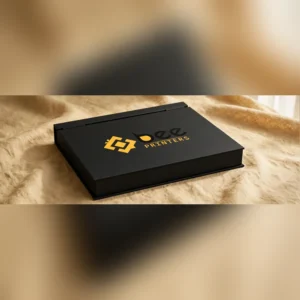
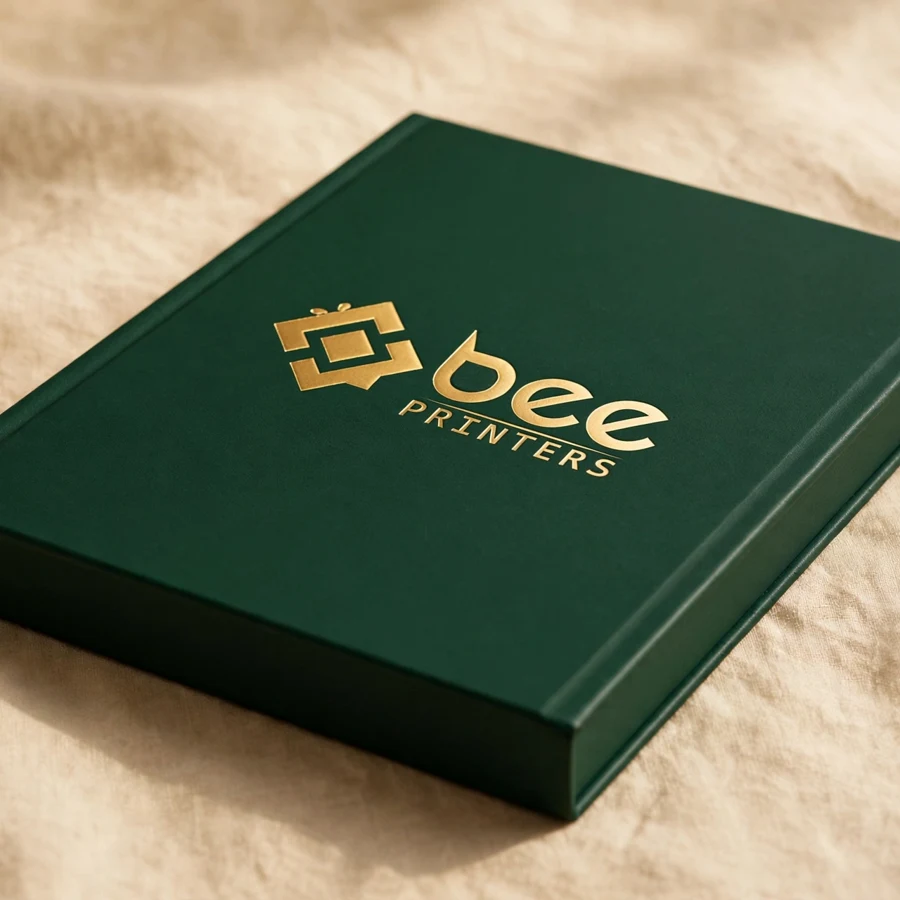
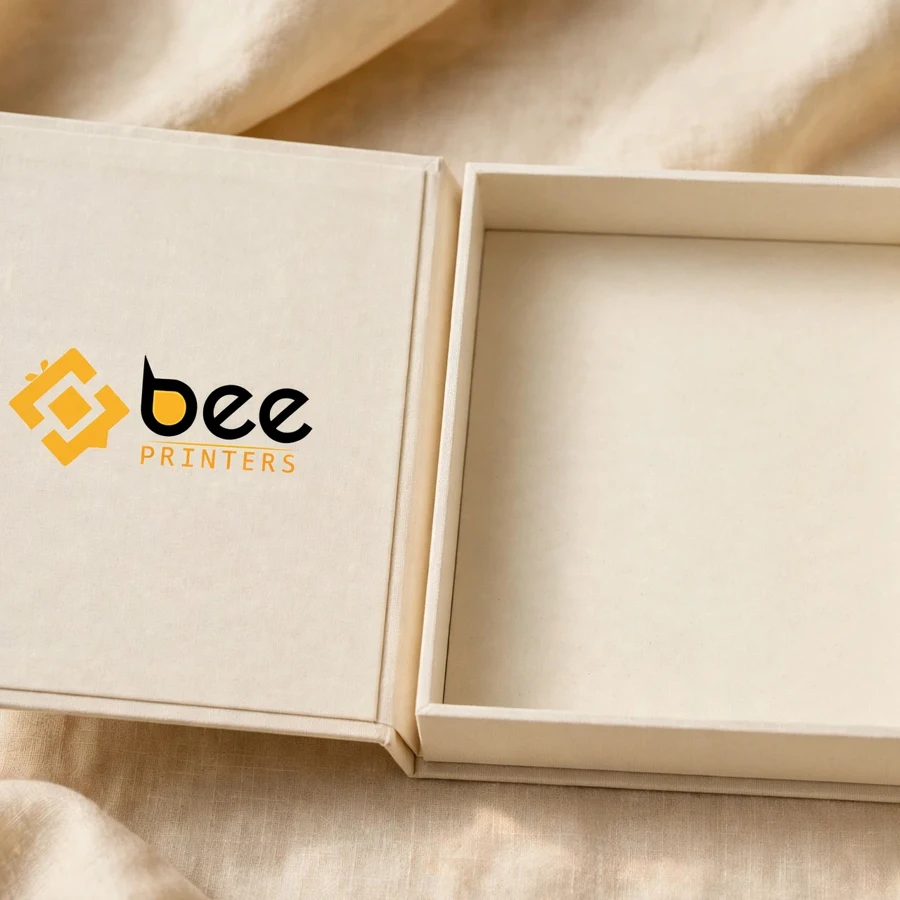
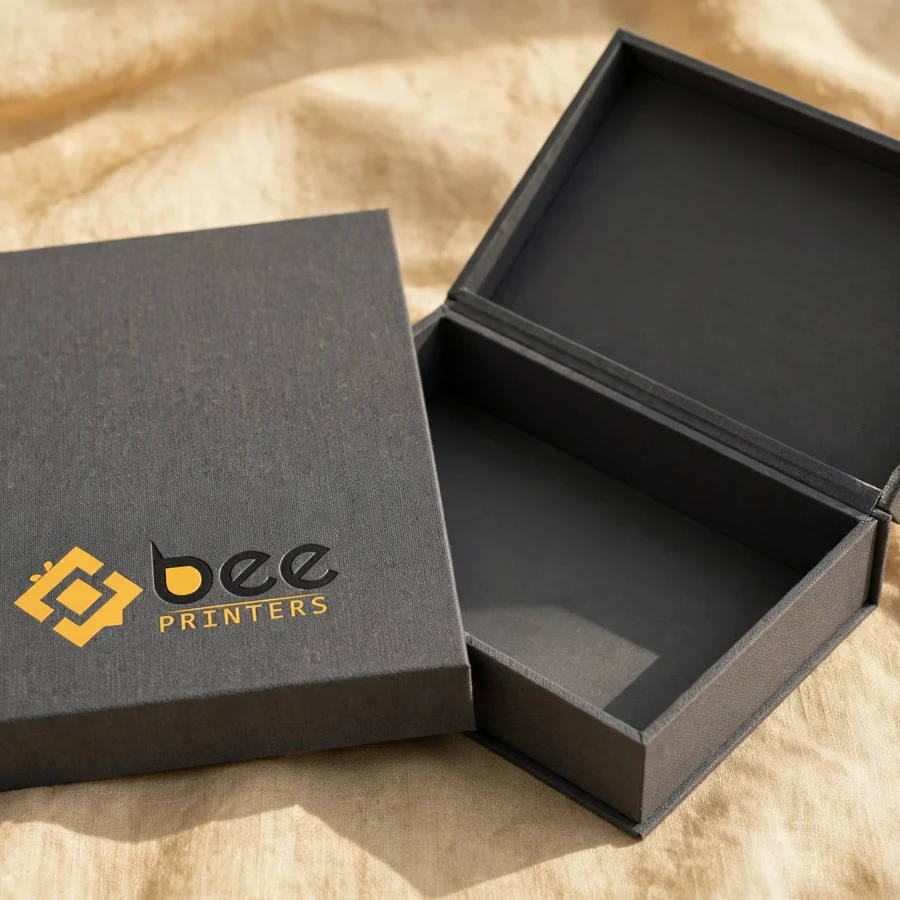
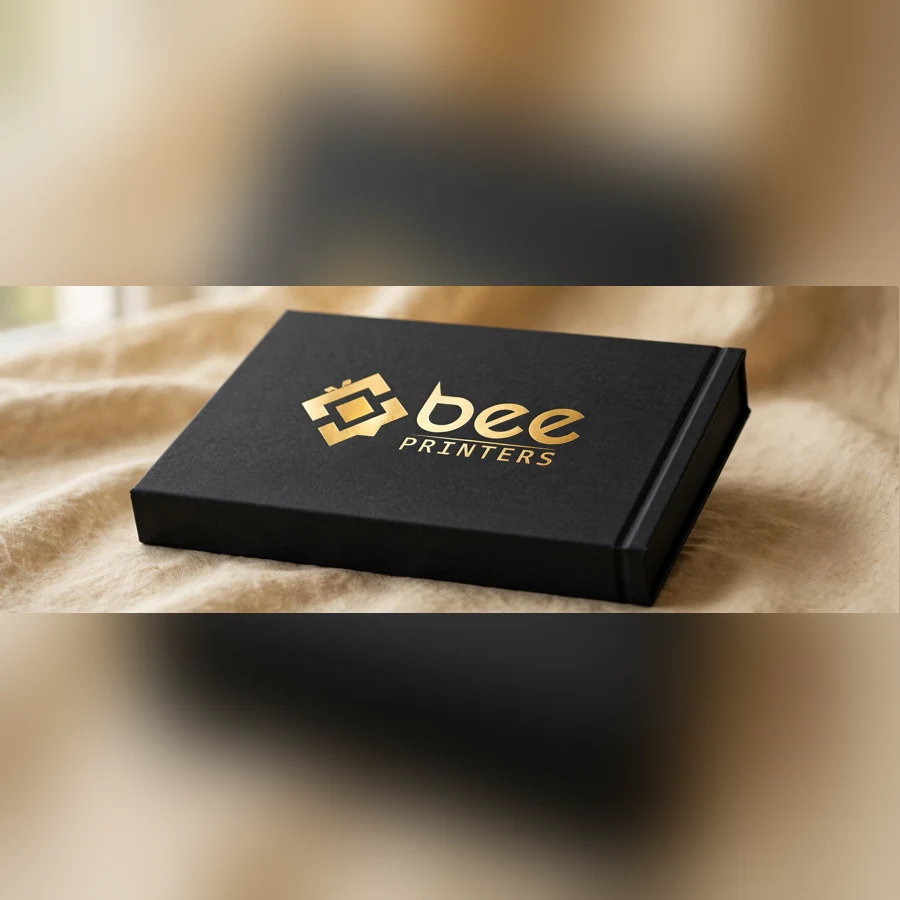
Opening a box should feel like an event, not a chore. Book style rigid boxes borrow their movement from a hardcover book: a cover attached at the spine swings open to reveal the contents, instead of lifting a separate lid away. That hinged opening is the reason luxury brands, gift companies and presentation-focused retailers keep coming back to the format — it turns access into a small ceremony. Bee Printers makes custom book style rigid boxes with rigid chipboard construction, magnetic closure options and fitted interiors, so the drama of the opening is matched by the quality of everything else.
The format sits within our custom rigid boxes collection, but it behaves differently from tray-and-lid designs. Because the cover stays attached, there is no lid to set down or misplace, and the box can be displayed partially open without anything falling over. When a brand wants packaging that customers photograph and keep, that difference matters.
The cover of a book style box is hinged along one edge, usually the left side like a book, though the hinge can be placed to suit the artwork. Inside the hinge, concealed magnets can pull the cover shut with a soft, satisfying snap, holding it aligned during shipping and shelf display while still opening with a gentle pull. The result is packaging that feels engineered — solid when closed, smooth when opened — and customers notice the difference between this and a lid that simply rests on a tray.
The attached cover also changes how the box is used after purchase. It becomes a keepsake case, a desk organizer or a memory box, which means the brand stays visible in the customer’s home long after the unboxing moment. Reusability is one of the quiet strengths of the format, and it is worth planning for: an interior worth keeping is an interior that keeps selling.
Underneath the cover art, book style boxes are built from rigid chipboard, sometimes called greyboard, wrapped in printed or textured paper. The board is thick enough to keep the cover flat and the tray square, even after repeated opening and closing, and it protects fragile or valuable contents during handling. The cover, spine and tray are engineered as one system, so the hinge flexes cleanly thousands of times without cracking the artwork or loosening the board.
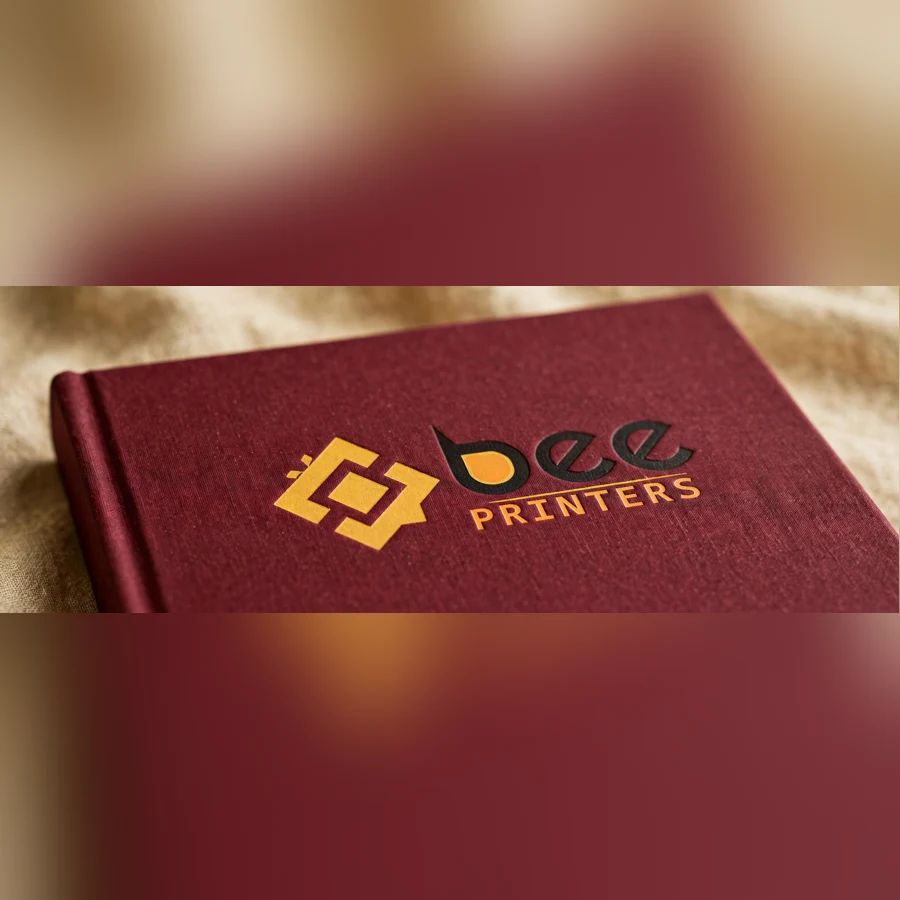
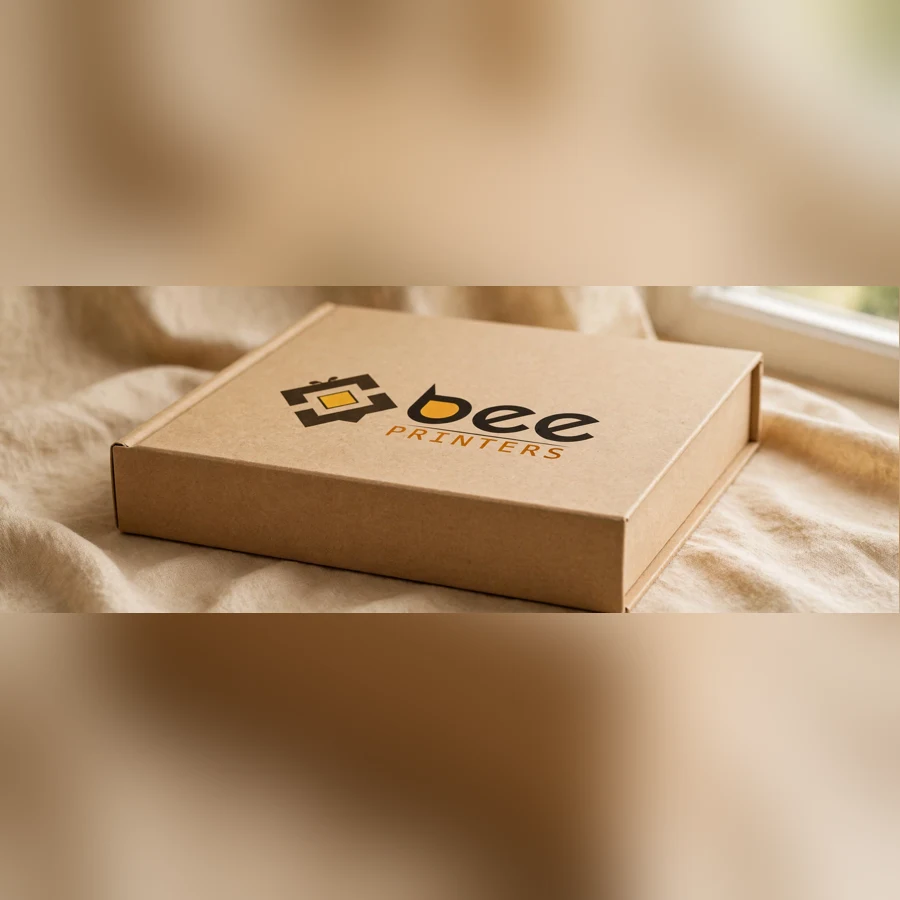
Wraps range from smooth art paper, which takes fine photographic detail beautifully, to linen-textured and other specialty papers that add a fabric-like tactility to the cover. Kraft-style wraps give a warmer, more natural character, and deep colors — forest green, burgundy, navy, classic black — carry the gravitas the format tends to attract. Whatever the wrap, corners are turned neatly and edges are finished cleanly, because a premium box is judged at its seams.
Printed book style rigid boxes give designers an unusually generous canvas: the front cover, the spine and the inside cover can be planned as one continuous design, the way a dust jacket flows across a book. Offset printing delivers the sharpness fine type and photographic imagery need, CMYK full-color printing keeps a palette consistent across a range, and digital printing suits shorter runs or editions whose artwork changes.
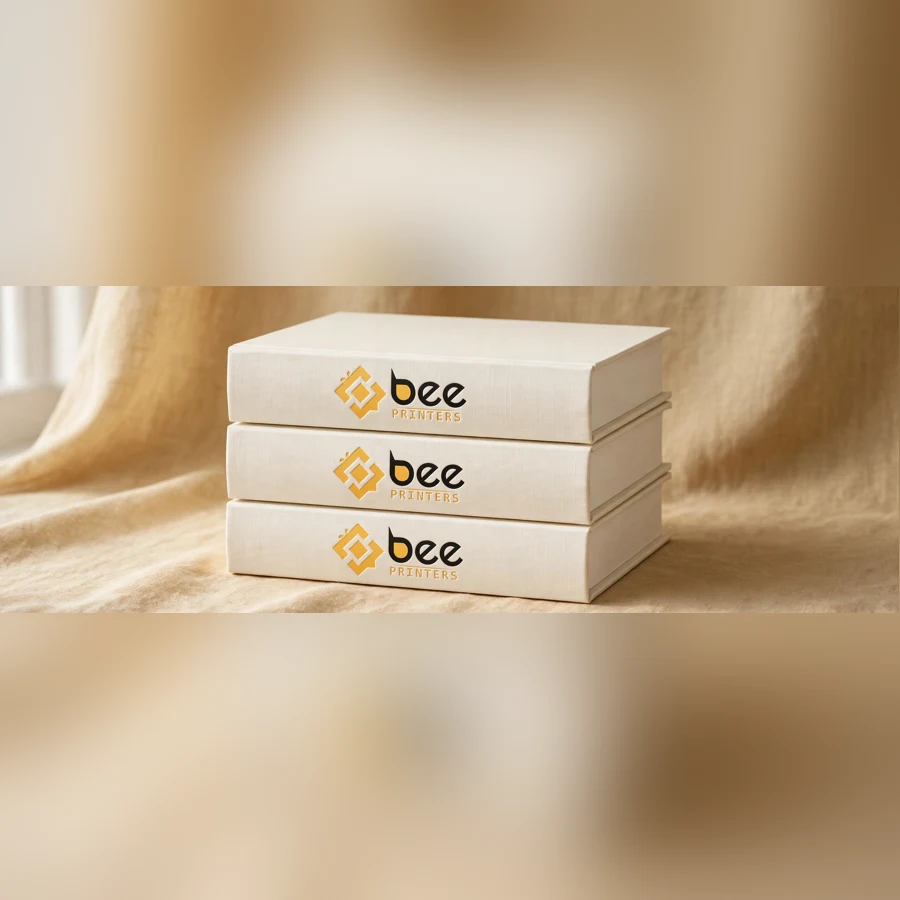
The inside of the cover is often the most underused surface in packaging, and this format invites you to use it — a printed message, brand story, product story or illustrated pattern turns the open box into a second advertisement. The spine, too, earns its space: when these boxes line a shelf or sit in a display, the spine carries the brand forward even when the cover is closed. Logo placement benefits from the same thinking, printed once on the cover for presence and again inside for the customer who keeps the box.
A magnetic closure is the natural partner for a hinged cover. Small magnets are concealed within the cover and tray so nothing shows on the surface, and the strength is tuned to the box size — firm enough to stay closed in a shipping carton, light enough to open one-handed. Where a different gesture suits the product, a ribbon tie or a simple tuck can replace the magnet, but most premium applications stay with the quiet, modern feel of a magnetic snap.
Finishing gives the cover its final character. Matte lamination keeps the look calm and sophisticated while protecting against scuffs and fingerprints; gloss lamination makes colors rich and reflective. Foil stamping — gold, silver, copper, holographic — lifts a logo or border out of the surface with real metal shine. Embossing raises artwork into relief and debossing presses it in, both of which reward touch as well as sight. Spot UV adds a glassy gleam to selected details against a matte field. The strongest results usually come from restraint: a deep matte cover with a single foiled emblem reads as far more luxurious than a surface trying to do everything.
Every box is made to measure from the product’s length, width and height, with clearance planned for inserts and any protective wrap. Small formats suit jewelry, cosmetics and small accessories; larger presentation formats carry gift sets, corporate kits and media packages. Because the tray is a separate component from the cover, depth can be tuned independently of the cover design.
Custom inserts turn the tray into a presentation stage. Foam inserts can be die-cut to hold bottles, devices or fragile items exactly; folded inserts create tiers and compartments; a ribbon pull lets the customer lift a product or a product tray out elegantly. Interior lining in a contrasting color — a charcoal tray inside a cream box, for example — makes the reveal sharper when the cover swings open. Brands weighing alternatives can also look at our booklet rigid boxes, a closely related book-inspired structure with its own interior logic.
Luxury goods brands use the format for items where the packaging is part of the value proposition — the box should feel like a gift before the product is seen. Jewelry and watches benefit from an interior that frames the piece. Cosmetics and fragrance houses package serums, perfumes and limited editions in a structure that photographs well and survives as a keepsake. Corporate buyers order them for welcome kits, client gifts and presentation sets, where the branded opening sequence doubles as a brand experience. Publishers and media companies use them for premium boxed sets, and electronics accessory brands for products that deserve better than a folding carton.
As a book style rigid boxes manufacturer and supplier, Bee Printers offers book style rigid boxes wholesale pricing on bulk orders, with practical guidance on board, wrap, closure and finish for your quantity and budget. Buy custom book style rigid boxes for your next launch or refresh — send your product dimensions, artwork and target quantity, and we will build the box around your product so that every opening feels exactly as intended.
| Material | Kraft, Cardboard, Corrugated, Rigid stock |
| Sizes | All custom sizes (any length × width × height) |
| Printing | CMYK / PMS, full-color, offset & digital |
| Finishing | Matte, Gloss, Soft-touch, Foil, Spot UV, Embossing |
| Add-ons | Window cut-outs, inserts, interior printing |
| Minimum Order | 100 boxes |
| Turnaround | 7 to 10 business days after design approval |
| Shipping | Free shipping across the US |