
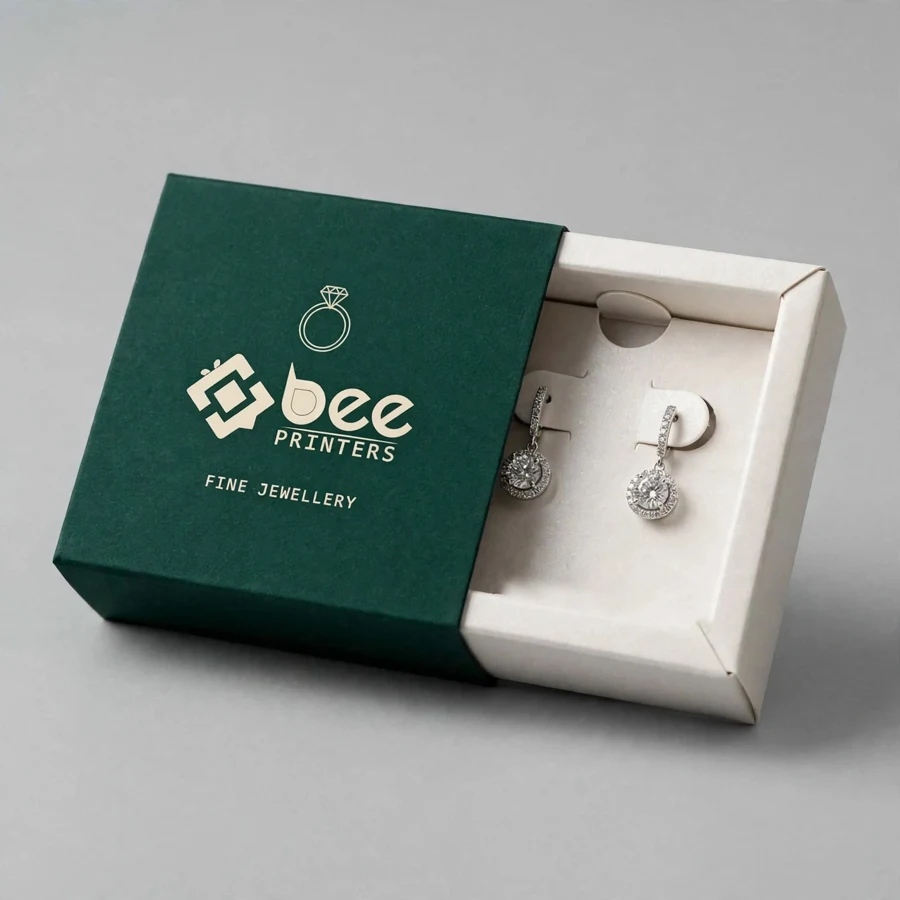
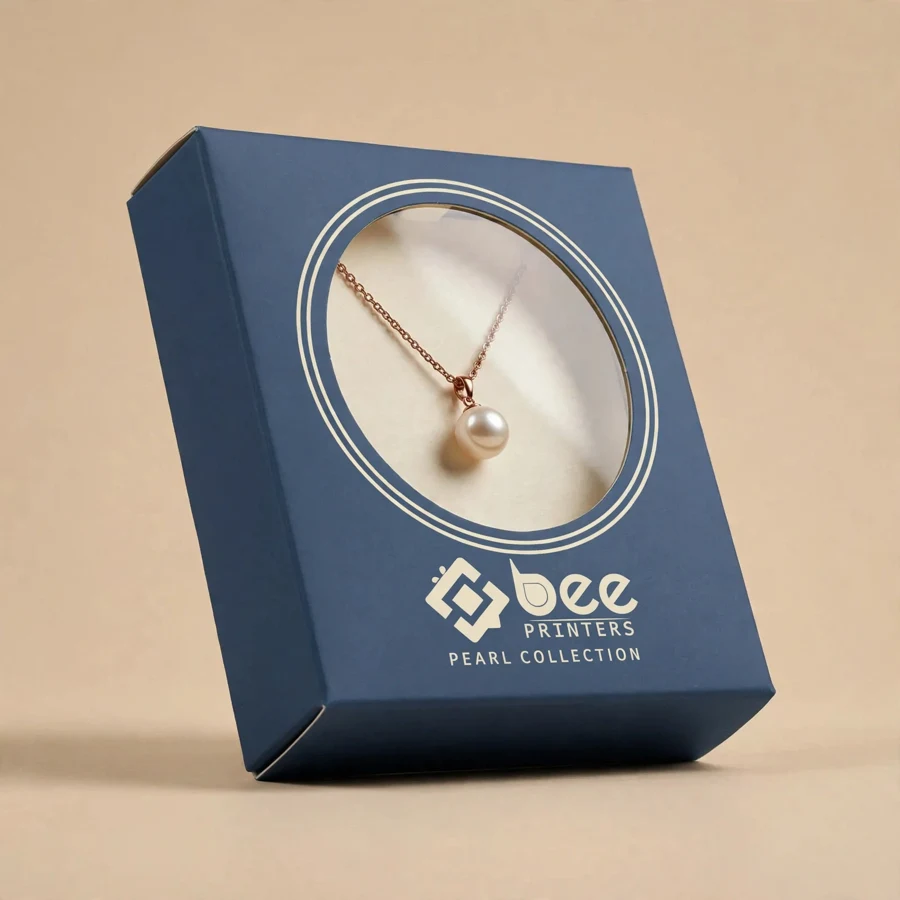
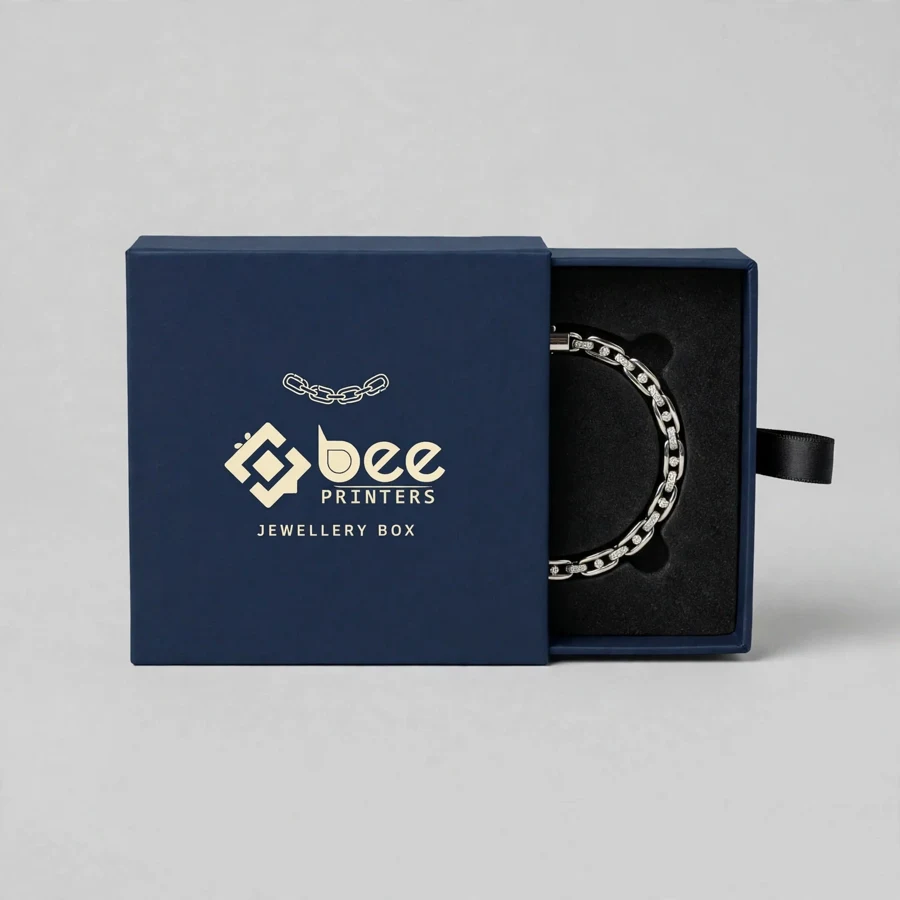
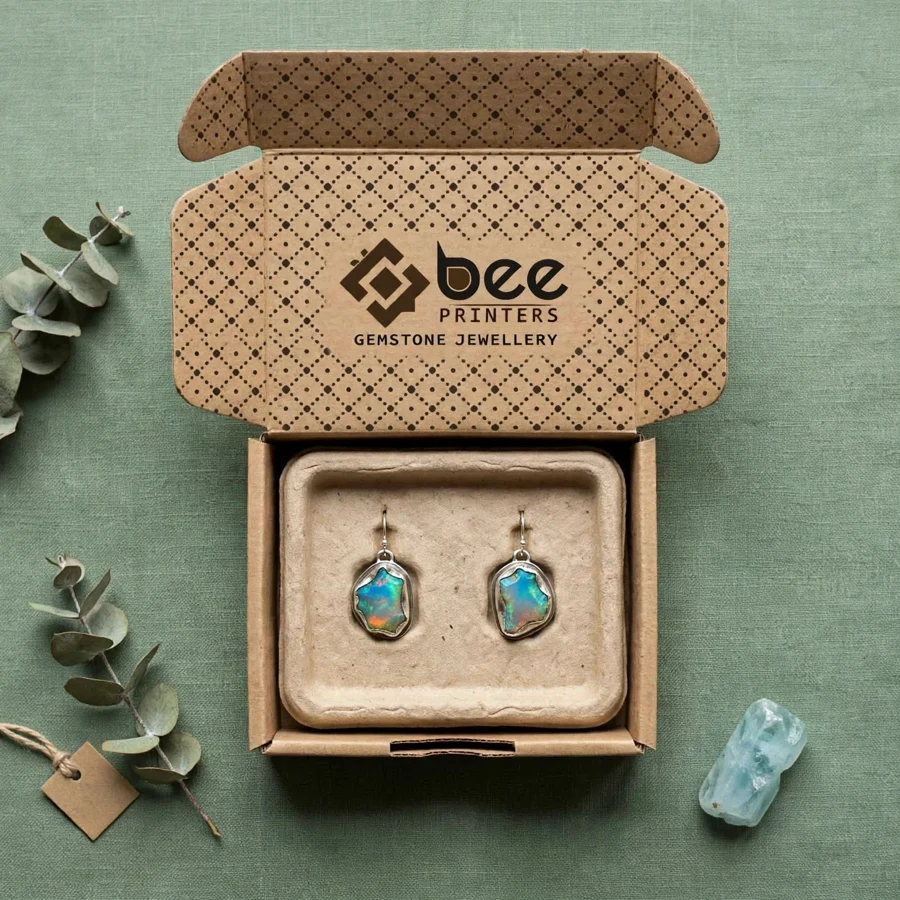
Jewelry is bought for the feeling as much as for the piece itself, and the box is part of that feeling. A customer who opens a well-made box remembers the moment, and a brand that gets the box right earns a second look the next time that customer is shopping. At Bee Printers, custom cardboard jewelry boxes combine a sturdy structure with a soft interior and elegant printed branding, so the piece inside is protected, presented beautifully, and unmistakably yours.
The interior is where a jewelry box earns its keep. A foam insert cut to the shape of a ring, a necklace, or a pair of earrings holds the piece still so it cannot slide, tangle, or scratch during shipping and handling. A soft velvet or satin lining adds a touch of luxury and protects delicate surfaces. A small cushion or a roll insert suits bracelets and necklaces, while a slotted insert keeps earrings paired and upright. The insert should be tested with the real piece before the full run, because a fit that is too tight makes the piece hard to remove and a fit that is too loose lets it move.
The box style follows the piece. A small two-piece box with a lift-off lid suits rings and earrings. A slightly larger box with a hinged lid suits necklaces and bracelets. A drawer-style box suits a set, with the drawer sliding out to reveal the pieces arranged inside. The size is always measured from the real piece and its insert, so the box closes cleanly and the piece sits exactly where it should.
Jewelry packaging rewards restraint. A small logo, a clean brand name, and one or two well-chosen colors usually say more than a busy design, and the box should look as good on a dressing table as it does on a shop shelf. The lid is the natural place for the logo, while the inside of the lid or the base can carry a short message, care notes, or contact details. Keeping the layout simple lets the materials and the finish do the talking.
Full-color CMYK printing reproduces brand artwork faithfully, from soft pastels to deep, rich tones. A matte finish gives a calm, refined feel that suits jewelry, while a gloss finish makes colors look deeper and adds a layer of surface protection. Spot finishes can highlight the logo: a metallic foil stamp adds shine, and embossing raises the logo off the surface so it can be felt as well as seen. These are small details, but they are the ones a customer notices when they pick the box up.
Color choice matters on a jewelry box because the box and the piece should work together. A dark box makes gold and bright stones stand out, while a pale box suits silver and pastel stones. A neutral interior lining keeps the focus on the piece, while a lining in a brand color adds a distinctive touch. A proof stage is the time to check the colors, the logo placement, and the spacing, because these are the details that are hardest to fix after printing.
Cardboard is the standard material for jewelry boxes because it is light, prints well, and holds a clean fold and a sharp edge. A thicker board gives a more solid feel and better crush resistance, which matters for a box that travels through the post or sits in a gift bag. Rigid board, made from thick chipboard wrapped in printed paper, gives the most premium feel and the strongest structure, and it suits gift packaging and high-value pieces. Kraft board gives a natural, earthy look that suits handmade and artisan jewelry brands.
Coatings protect the print and change the feel of the box. A matte lamination gives a soft, fingerprint-resistant surface. A gloss lamination adds shine and makes colors look deeper. A soft-touch lamination gives a velvety feel that suits jewelry packaging particularly well. For brands that want a lower-impact approach, recycled board is available and performs the same as virgin board at the same thickness, and the board choice can be described on the box in plain words about the material used.
The insert material deserves the same attention as the outer box. Foam inserts are light, hold their shape, and can be cut to any outline. Velvet-covered inserts add a soft, luxurious feel. Cardboard inserts with die-cut slots are simple, printable, and easy to recycle with the box. Whichever material is chosen, the insert should be tested with the real piece so the fit is right first time.
Rings suit a small, square box with a slotted foam insert that holds the ring upright and visible the moment the lid lifts. Earrings suit a similar box with two slots that keep the pair together and upright. Necklaces and bracelets suit a longer box with a roll or a cushion insert that keeps the chain from tangling. A set suits a larger box with a divided insert, so each piece has its own place and the set is presented as a whole.
Gift packaging is a natural extension of the jewelry box. A slightly larger outer box, a ribbon, or a printed sleeve turns the standard box into a gift-ready package without changing the box itself. A sleeve printed with a seasonal design or a short message is an easy way to offer gift packaging for holidays and special occasions. A window cut-out on the lid is another option, letting the customer see the piece without opening the box.
Sizes are cut to order, from a tiny ring box to a large set box. Standard sizes keep costs down for common pieces, while custom sizes suit a brand with a distinctive piece or a presentation idea that needs an exact fit. Measuring from the real piece and its insert, including any clasp or fastening, is the step that makes the finished box close cleanly.
Jewelry brands usually order boxes in the hundreds or thousands, and wholesale quantities bring the per-box cost down. Larger runs spread the setup cost across more units, so the price per box falls as the quantity rises. Small runs are still possible for a new collection or a limited edition, letting a brand test a design before committing to a larger order. Boxes arrive flat-packed or assembled depending on the style, which keeps storage simple and shipping costs reasonable.
Planning an order starts with four decisions: the box style, the size, the board, and the artwork, plus the insert. Once those are settled, a sample can be produced so the brand can check the piece fit, the feel of the board, and the print quality before the full run. Sampling is worth the small delay it adds, because it is the last easy chance to change anything, and testing the sample with the real piece is the surest way to confirm the insert works. After approval, the full run is printed, cut, folded, and packed for delivery.
Brands that sell more than one type of jewelry often order one design in several sizes, so the ring box, the necklace box, and the set box all share the same artwork. This keeps the brand consistent and simplifies reordering, since the artwork file stays the same and only the dimensions change. Over time, a brand can build a small family of boxes that customers recognize at a glance.
For brands building out a full jewelry packaging range, the jewelry boxes collection brings together the box styles that suit this market, from small ring boxes to larger set boxes, so a whole range can be planned in one place. And for a related look at a premium rigid jewelry box, the custom rigid jewelry boxes show how a sturdy rigid structure and elegant printed branding work together. Both pages give a useful starting point for planning a cardboard jewelry box that fits the piece, the brand, and the way it is sold.
| Material | Kraft, Cardboard, Corrugated, Rigid stock |
| Sizes | All custom sizes (any length × width × height) |
| Printing | CMYK / PMS, full-color, offset & digital |
| Finishing | Matte, Gloss, Soft-touch, Foil, Spot UV, Embossing |
| Add-ons | Window cut-outs, inserts, interior printing |
| Minimum Order | 100 boxes |
| Turnaround | 7 to 10 business days after design approval |
| Shipping | Free shipping across the US |