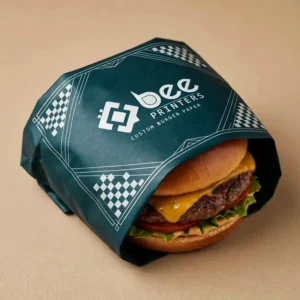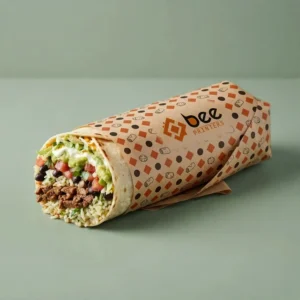
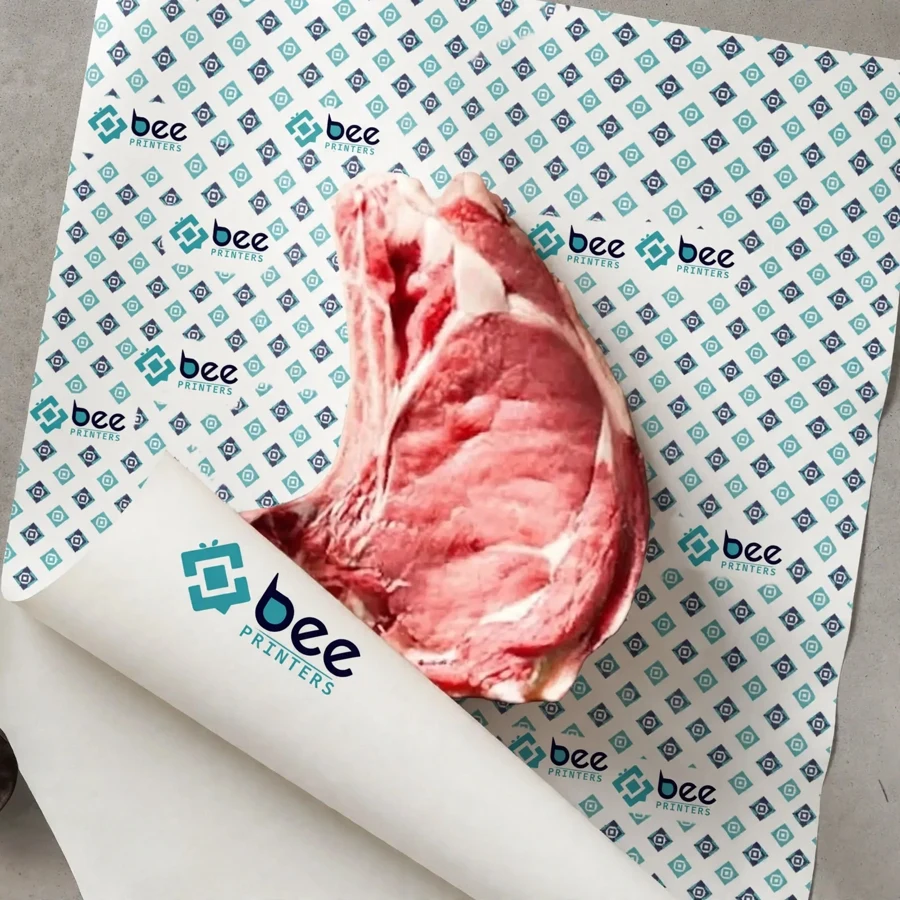
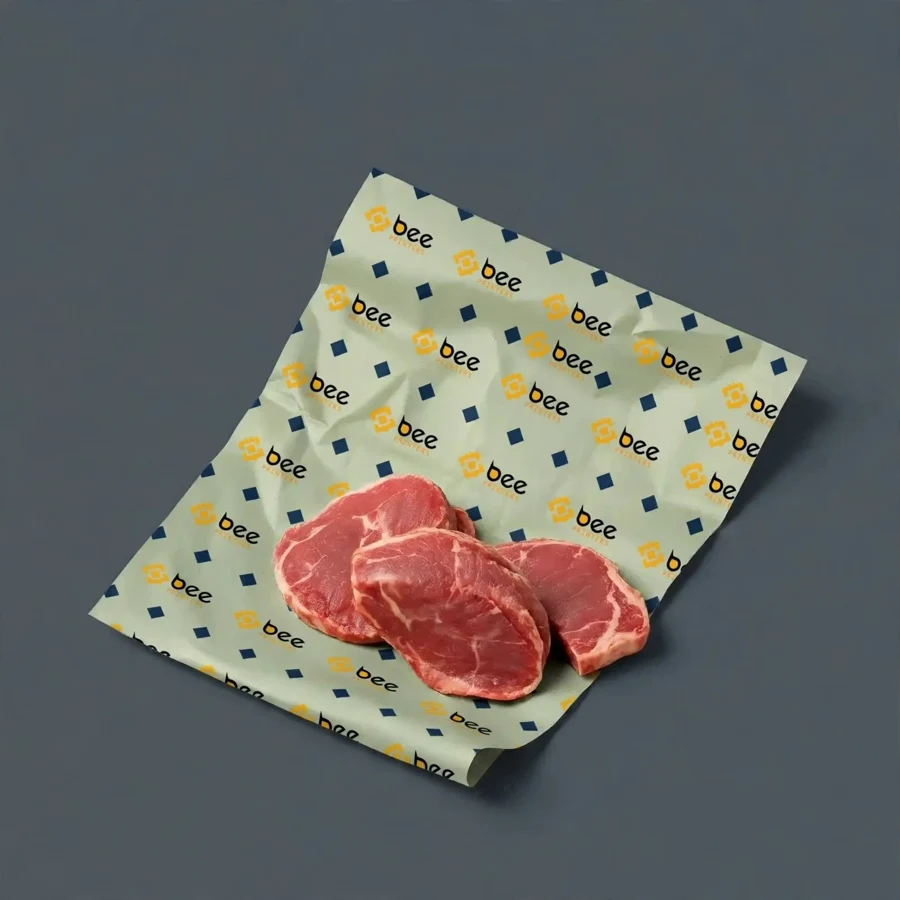
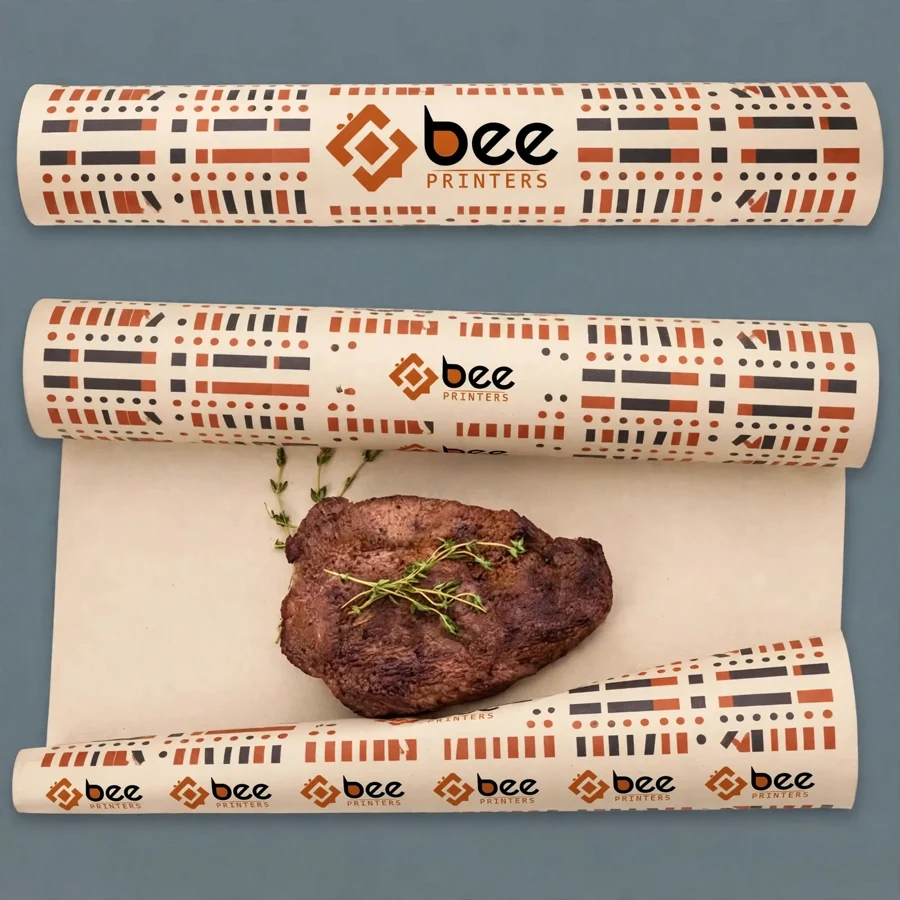
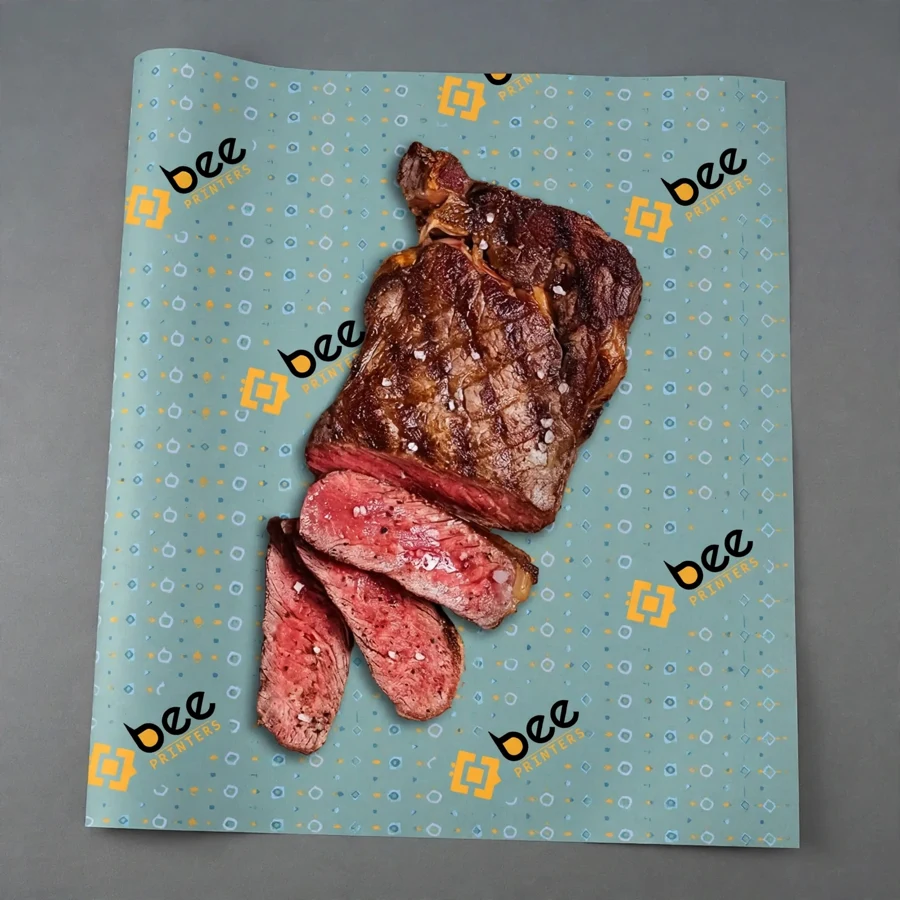
Butcher paper has wrapped meat for generations, and for good reason: it protects the cut, lets it breathe, and gives the butcher a clean surface to work with. Custom butcher paper is a food-grade paper supplied in rolls and sheets for wrapping meat, lining counters and serving barbecue. At Bee Printers, it can be printed with the shop’s logo and name, so even a simple parcel of steaks carries the butcher’s brand home.
A butcher’s day is built around this paper. It wraps joints and steaks for customers, lines display trays, covers cutting boards, and wraps brisket and ribs on the smoker. The paper has to be strong when wet, easy to tear or cut to length, and clean enough for direct food contact all day long. The full range sits in the custom printed papers collection.
The first reason is how the paper treats meat. Unlike plastic wrap, butcher paper lets a cut breathe, so a steak or a brisket does not sweat and go grey in its wrapping. For barbecue, that breathability is essential: wrapping brisket in butcher paper during the cook, the classic Texas crutch, lets the meat stay moist while the bark stays firm instead of turning soft.
The second reason is presentation. A parcel of meat wrapped in printed butcher paper, tied or folded neatly, looks like it came from a proper butcher rather than a supermarket shelf. The shop name on the paper reminds the customer where the meat came from, and that reminder brings them back for the next roast, the next barbecue and the next special occasion.
The paper is food-grade and eco-friendly, made for direct contact with raw and cooked meat. Printing uses safe inks, so the printed side can sit against food without concern, and the uncoated paper surface takes a clean print that stays readable even in a busy, damp shop environment.
In the hand, butcher paper feels substantial rather than flimsy. It tears cleanly along a straight edge, folds firmly around a joint, and holds up when it picks up moisture from the meat. It is strong enough to be used as a work surface liner and as a serving sheet for barbecue, where ribs and brisket are laid out on the paper and eaten straight from it.
Butcher paper comes in rolls for the counter and in pre-cut sheets for the display and the smoker. A roll on a dispenser lets the butcher pull exactly the length each cut needs, from a single steak to a whole leg of lamb, with no waste. Sheets suit barbecue service, where a brisket is wrapped to size, and catering, where portions are wrapped in advance.
Widths are chosen to match the work: a wide roll covers large joints and lines a full tray, while a narrower roll suits everyday counter wrapping. Because the paper is supplied in wholesale packs, a busy shop can keep a roll at every station without worrying about running out mid-service.
Printed butcher paper usually carries the shop name, logo and perhaps a phone number or address, printed in one or two colours. The design is kept bold and simple so it reads clearly on the natural paper surface, and the print is repeated across the roll so every parcel shows the brand no matter where the paper is cut.
Free design support helps turn an existing logo into a layout that repeats well across a roll. For shops that also sell frozen cuts, printed butcher paper works alongside custom freezer paper for longer storage, giving the shop a matching pair of papers for fresh and frozen meat.
Independent butchers and meat counters are the main users, wrapping every sale and lining their displays. Barbecue restaurants and smokehouses use it for wrapping brisket and ribs during cooking and for serving platters laid out on paper at the table. Delis and farm shops wrap cooked meats, cheeses and pies in the same paper.
Home barbecue enthusiasts, competition teams and catering businesses also buy butcher paper in rolls, and butchers who sell at farmers markets use printed paper to make their stall look like a proper shop. Any business that handles meat in volume will find a use for it.
Ordering starts with the format, rolls or sheets, the width, and the artwork. Wholesale packs suit busy shops, and low minimums make printed paper practical for a single independent butcher. Free design support helps prepare the print layout, and free US shipping keeps the delivered cost predictable. Share the width, the quantity and the logo, and a quote follows from there.
Keep butcher paper in a dry, clean store, with rolls on a dispenser at the counter and spare rolls on a shelf nearby, so the butcher never runs out in the middle of a sale. Paper stored in a damp cold room can pick up moisture and lose its strength, so keep the rolls wrapped until they are needed and keep the working roll away from sinks and wet trays. A roll that is easy to pull and tear keeps the counter fast.
Cut or tear the paper to the size of the cut, wrap the meat firmly, and fold the ends in so the parcel stays closed in the bag. For barbecue, wrap the brisket or ribs snugly so the paper sits against the meat, and for counter sales, tie or fold the parcel neatly so it looks like a proper butcher’s parcel. Clean, dry hands and a clean work surface keep the paper and the meat in good condition all day.
Yes. The paper is food-grade and printed with safe inks, so it is made for direct contact with raw and cooked meat.
Yes. Wrapping brisket in butcher paper during the cook is a standard barbecue method, and the paper lets the meat breathe while holding in moisture.
Rolls suit a butcher counter because each length can be cut to the cut. Sheets suit barbecue service and catering, where portions are wrapped to a set size.
| Material | Kraft, Cardboard, Corrugated, Rigid stock |
| Sizes | All custom sizes (any length × width × height) |
| Printing | CMYK / PMS, full-color, offset & digital |
| Finishing | Matte, Gloss, Soft-touch, Foil, Spot UV, Embossing |
| Add-ons | Window cut-outs, inserts, interior printing |
| Minimum Order | 100 boxes |
| Turnaround | 7 to 10 business days after design approval |
| Shipping | Free shipping across the US |