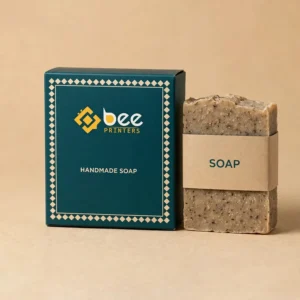
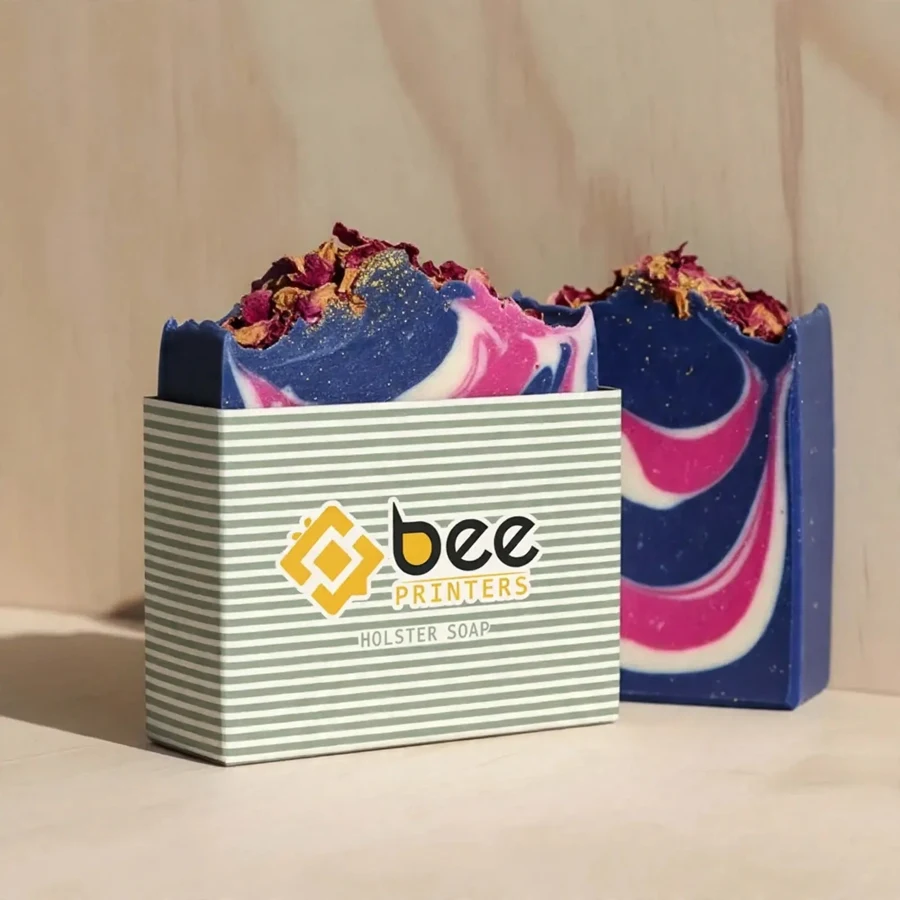
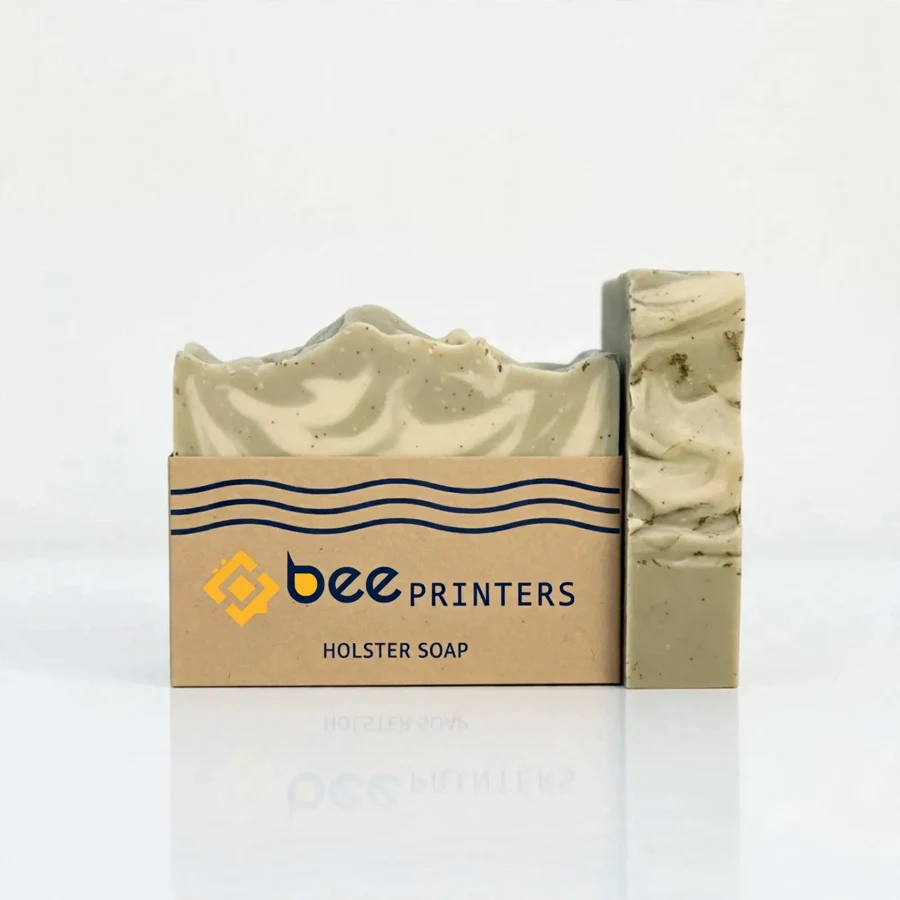
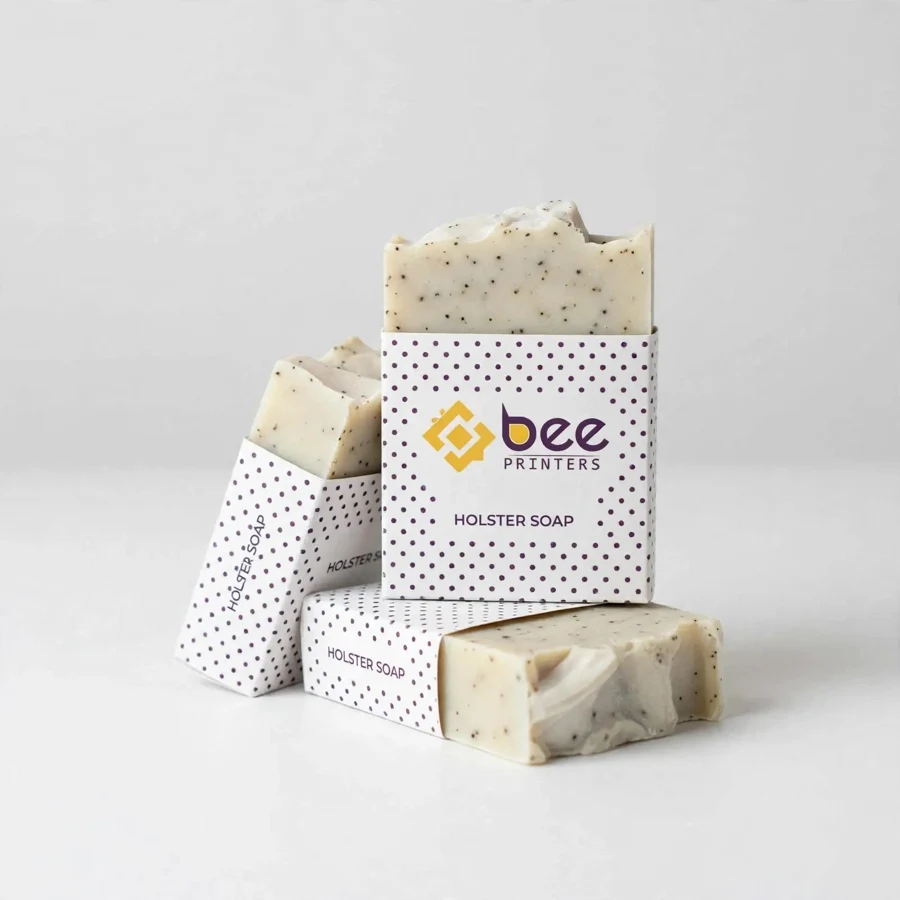
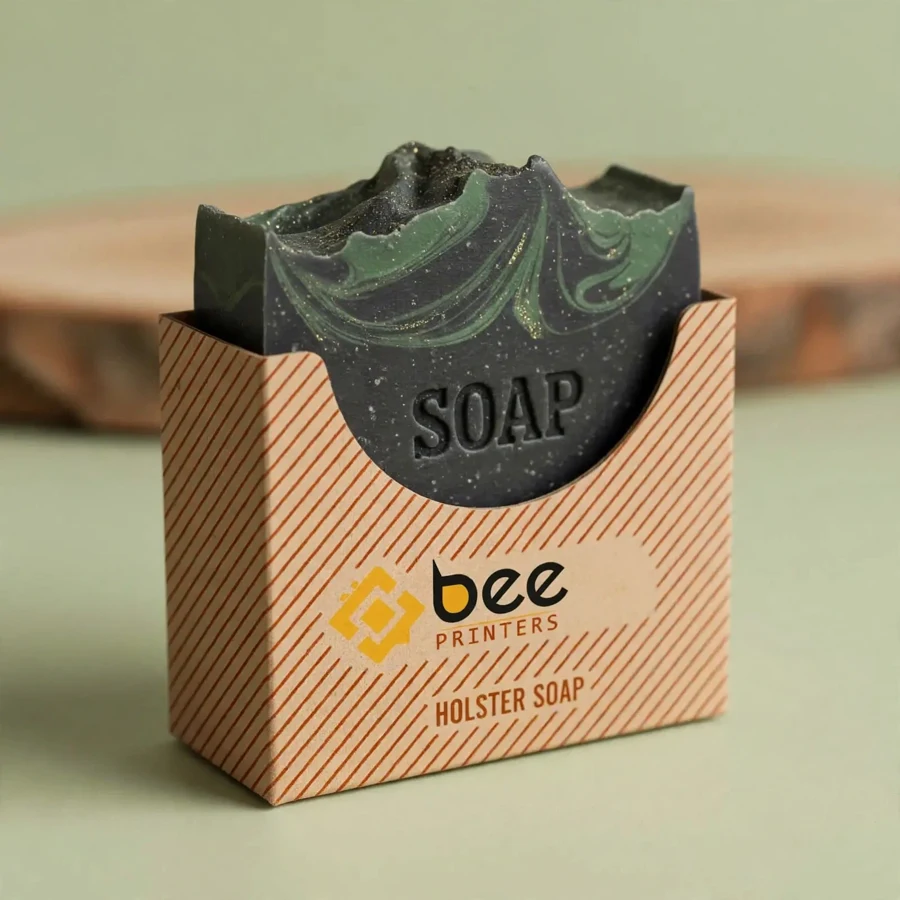
A holster soap box is a sleeve with a difference. Instead of enclosing the bar completely, a holster wraps around it like a case, holding it snugly while leaving the ends open so the soap can be seen and lifted out easily. The result is a pack that feels considered and a little luxurious, with the bar presented rather than simply contained. At Bee Printers, custom holster soap boxes are printed and die-cut to fit the bar, with finishes that suit a premium bar and a structure that makes opening the pack part of the experience.
The holster format is sometimes called a sleeve box or a slide box, and it works on a simple idea: a printed card sleeve folds around the bar, with a base or a tray holding the soap in place and the sleeve sliding over it. The bar sits inside the holster, visible from the open ends, and the printed sleeve carries the brand, the scent name, and the design. When the buyer slides the sleeve off or lifts the bar out, the pack opens in a way that feels deliberate, which is why the format is often described as giving an elegant unboxing experience. It suits gift bars, premium ranges, and soaps sold as presents, where the way the product is opened matters as much as the product itself. Our custom soap boxes range includes the holster format alongside tuck-end cartons and window boxes, so a brand can use it for its premium bars and a simpler carton for everyday ones.
Because the bar is partly visible, the holster format suits bars that look good: a smooth, even bar with a clean colour, a layered bar, or a bar with a decorative top. The open ends let a buyer see the bar’s shape and colour without opening the pack, and they let a little of the scent escape, which can help at a market stall or on a shop shelf. The sleeve itself must be cut accurately, because a holster that is too tight will be hard to slide, while one that is too loose will let the bar slip out. The fit is the whole point of the format, and it depends on measuring the bar properly before the box is made.
A holster soap box has two main parts: the tray or base that holds the bar, and the sleeve that slides over it. The tray is usually a shallow card base, folded up around the bar to keep it in place, sometimes with a small lip or a cut-out that makes the bar easy to lift. The sleeve is a printed band of card, folded into a tube that fits over the tray, with the design printed on the outside and a plain or printed inside. Some holsters add a thumb cut-out on the sleeve, a small notch that lets the buyer push the tray out easily, and some add a ribbon pull or a printed tab for the same purpose.
The board for a holster needs to be thick enough to hold its shape when the sleeve slides, usually in the 300 to 400 gsm range, with a smooth surface so the sleeve moves freely over the tray. A board that is too thin will crease or tear at the folds, while one that is too rough can catch and make the sleeve hard to slide. The folds must be scored cleanly so the sleeve sits square, and the glue joints must be neat, because the inside of the sleeve is visible when the tray is pulled out. A well-made holster slides smoothly, sits square on a shelf, and holds the bar firmly without squeezing it.
Holster soap boxes are usually printed in full colour, because the sleeve is the main branding surface and it needs to carry the design well. CMYK printing reproduces illustrations, photographs, and colour schemes across the sleeve, and the design can wrap around the whole tube so the box looks finished from every angle. A matte lamination gives the sleeve a soft, premium feel, while a gloss finish makes colours look richer. Soft-touch lamination is a popular choice for holster boxes, because it gives the sleeve a velvety texture that suits the premium feel of the format.
Foil stamping, embossing, and spot UV are all used on holster boxes, usually on one or two details: a logo in gold foil, an embossed pattern on the sleeve, or a spot UV gloss on the brand name. These finishes work best when they are used sparingly, so the detail stands out against the rest of the design. A foil logo on a matte sleeve, for example, catches the light and draws the eye without overwhelming the pack. The inside of the sleeve can also be printed, with a pattern, a message, or a continuation of the design, so the buyer sees something new when the tray is pulled out. That hidden detail is a small touch, but it adds to the sense that the pack was designed with care.
Holster boxes suit a shelf where the buyer picks the product up and looks at it. The sleeve should carry the brand name and the scent where they can be read at a glance, with the design facing forward when the box sits on a shelf. Because the bar is visible from the ends, the colour of the bar becomes part of the display, and a range of holster boxes in different scents can make a striking shelf block, with each sleeve a different colour and each bar visible at the ends. A matching display tray or a shelf strip can group the range together and keep the boxes tidy.
Gift sets are another natural use for the holster format. Two or three bars in matching holsters, packed in a printed gift box or tied with a ribbon, make a present that looks as good as the bars inside it. The holster format also suits subscription boxes and sample sets, where each bar needs its own pack and the pack needs to feel like part of a premium experience. In all of these uses, the holster’s job is the same: to present the bar, protect it, and make opening it feel like a small occasion.
The back and side panels of a holster sleeve carry the practical information: the bar’s weight, the scent, the ingredients, and directions for use. That text needs to be legible, with enough contrast against the background, and it should be checked carefully before printing. A barcode needs a clear area around it so it scans cleanly at the till. The sleeve should also be easy to slide, because a buyer who struggles to open the pack is unlikely to buy the same brand twice, and a sleeve that tears when it is pulled off reflects badly on the product.
Moisture is worth considering too. Soap bars are stored in bathrooms and used near water, so the board should resist damp, and a light lamination on the outside of the sleeve helps keep splashes off the print. The tray should hold the bar snugly so it does not slide out when the box is tipped, and the sleeve should fit the tray closely enough to stay in place on a shelf without being so tight that it is hard to open.
When you order custom holster soap boxes, start with the bar: measure its length, width, and height, including any uneven edges, and decide on the design, the board, and the finish. Ask for a proof so you can check the colours, the text, and the slide fit before the full run, and test the holster with a real bar to make sure the sleeve slides smoothly and the tray holds the bar firmly. Small orders suit a premium scent or a gift set, while larger orders suit a retail range. For a lighter wrap that shows more of the bar, see our paper soap sleeves, which use a printed card band around the bar without the tray.
A custom holster soap box turns a bar of soap into a small presentation. It protects the bar, carries the brand, and makes opening the pack feel deliberate rather than routine. Whether the bar is sold as a gift, as part of a premium range, or on its own, the holster format gives it a pack that looks and feels like it was made for the product inside.
| Material | Kraft, Cardboard, Corrugated, Rigid stock |
| Sizes | All custom sizes (any length × width × height) |
| Printing | CMYK / PMS, full-color, offset & digital |
| Finishing | Matte, Gloss, Soft-touch, Foil, Spot UV, Embossing |
| Add-ons | Window cut-outs, inserts, interior printing |
| Minimum Order | 100 boxes |
| Turnaround | 7 to 10 business days after design approval |
| Shipping | Free shipping across the US |