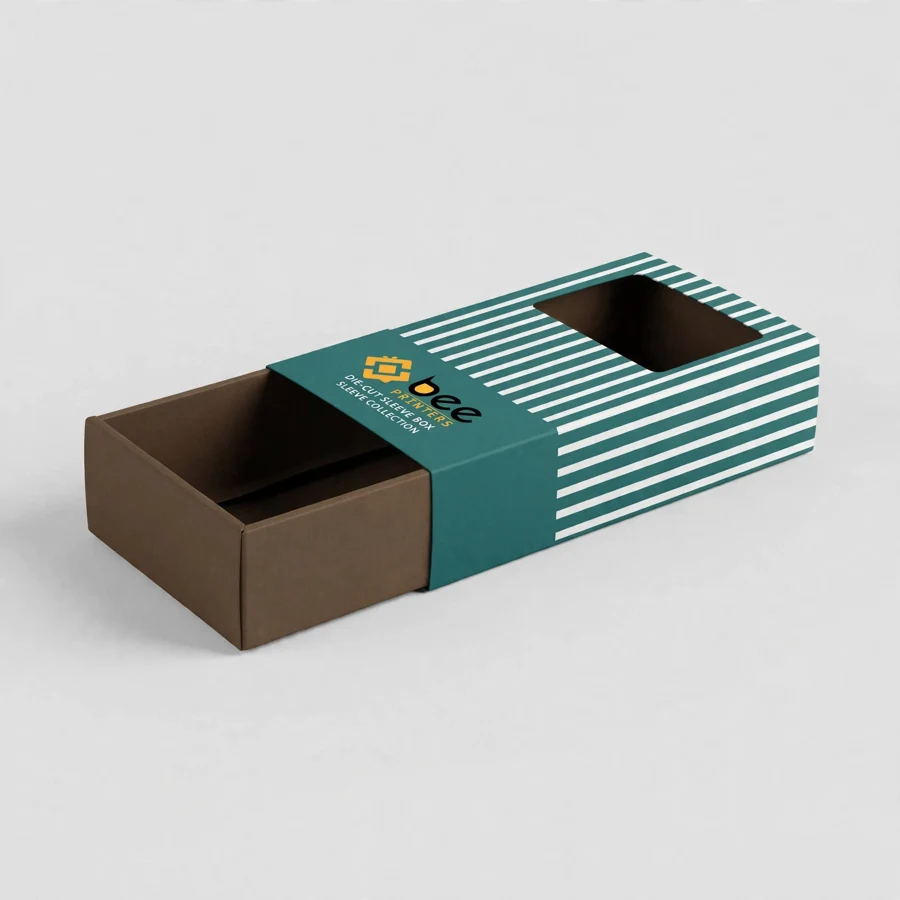
Die cut sleeve boxes pair a plain inner tray with a printed outer sleeve, and the sleeve carries the brand while the tray carries the product. The sleeve slides over the tray, covers it on four sides, and leaves the ends open so the tray can be pulled out like a drawer. At Bee Printers, custom die cut sleeve boxes are made to the tray size, printed with the brand artwork, and supplied at wholesale prices for retail-ready products of every kind.
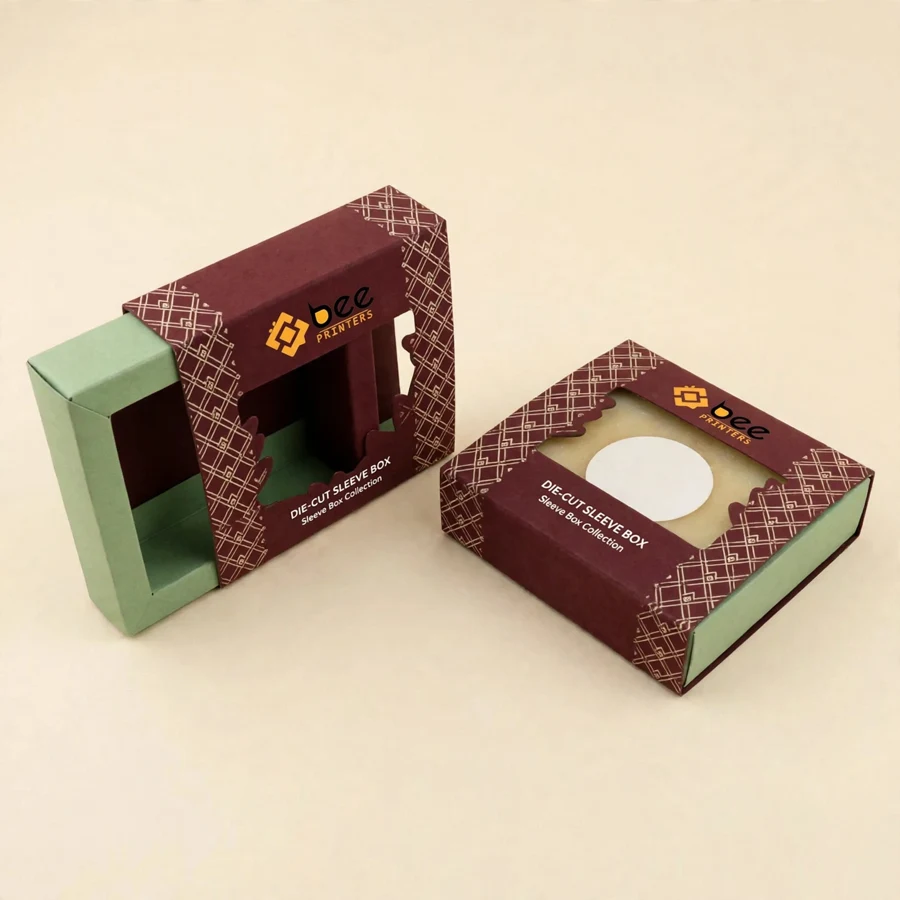
The die cut is what makes the sleeve more than a plain band. A die cut is a shape cut into the sleeve with a steel rule die: a window that shows the product inside, a notch that makes the sleeve easy to grip, a handle slot, or a decorative shape that matches the brand. The cut is made precisely, in the same position on every sleeve, so the window always lines up with the product and the shape always looks clean.
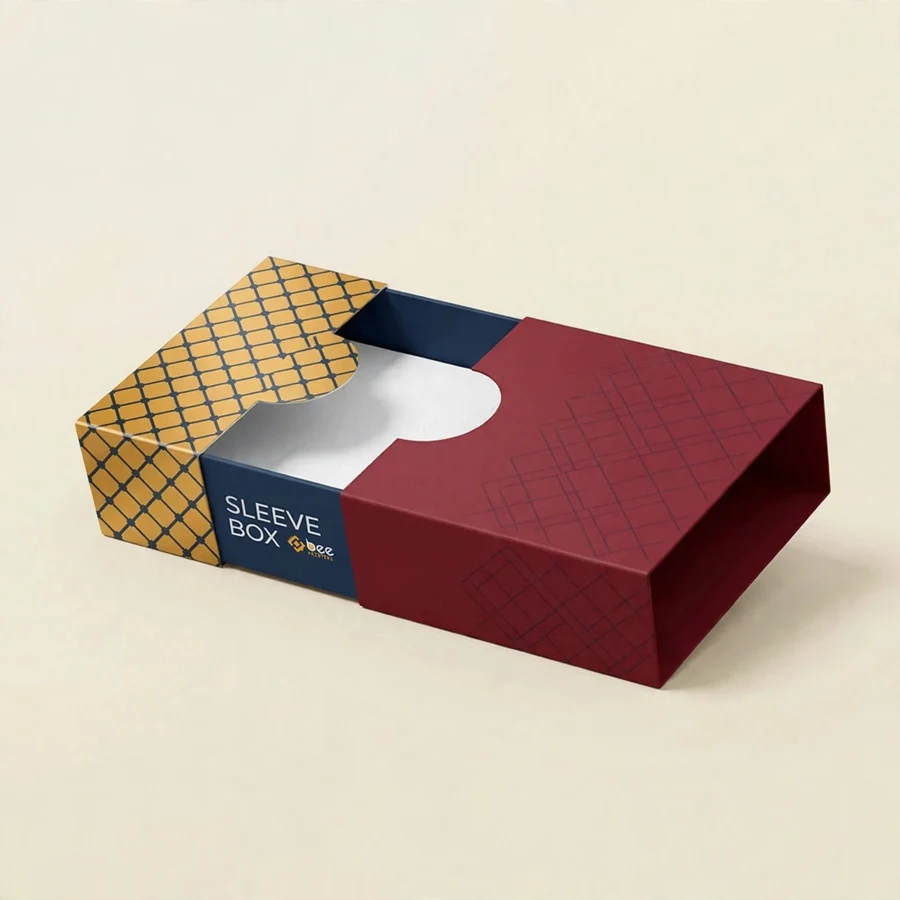
A tray and sleeve box has two parts. The inner tray is a shallow open box, usually made from plain board, that holds the product. The outer sleeve is a tube of printed board that slides over the tray and covers it. The customer pulls the tray out by a thumb notch or a ribbon pull, and the product is revealed. The sleeve can be slid off completely, or it can stay on the tray as a band that holds the product in place.
The structure has practical advantages. The tray protects the product from below and from the sides, while the sleeve protects it from above and carries the print. The two parts can be made from different boards: a strong plain board for the tray and a smooth printable board for the sleeve, which keeps the cost down without losing the print quality. The parts also pack flat, so a large quantity of trays and sleeves takes up little space in storage and shipping.
The opening experience is part of the appeal. Sliding a tray out of a sleeve feels deliberate and tidy, and it suits products where the reveal matters: gift sets, cosmetics, candles, food selections and small electronics. The sleeve can be printed on the inside too, so the customer sees a message or a pattern when the tray slides out.
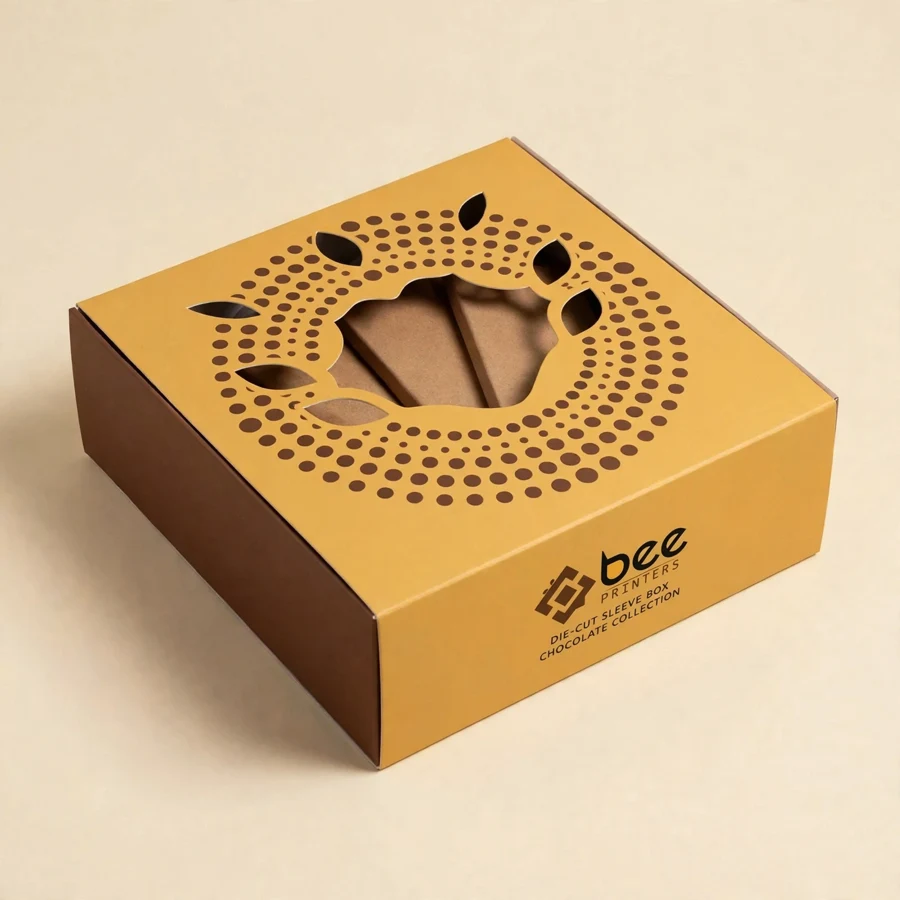
A die cut window is the most common cut on a sleeve box. A rectangular, circular or shaped window is cut into the front of the sleeve so the customer can see the product inside without opening the box. The window is often covered with a clear film, which keeps the product visible and protected at the same time. The window shape can match the product: a circle for a jar, a rectangle for a bar, an arch for a bottle.
Thumb notches are cut into the ends of the sleeve so the customer can grip the tray and pull it out. A notch that is too small is hard to use, and a notch that is too large weakens the sleeve, so the size is chosen around the tray and the product weight. A ribbon pull is an alternative: a ribbon attached to the tray sticks out of the sleeve end and gives the customer something to pull.
Decorative die cuts turn the sleeve into a design feature. A shaped edge, a cut-out pattern or a handle slot can make the sleeve recognizable from a distance, and the cut can be part of the brand: a leaf shape for a natural brand, a geometric pattern for a modern brand, a scalloped edge for a gift brand. The die cut is designed once and cut the same way on every sleeve, so the look stays consistent across the whole run.
Sleeve boxes are usually made from folding carton board or kraft board. Folding carton board takes full-color printing cleanly and gives a smooth surface for detailed artwork, while kraft board gives a natural, understated look that suits brands with an earthy or minimal identity. The sleeve board needs to be stiff enough to hold its shape when it slides over the tray, but flexible enough to slide without tearing.
Full-color CMYK printing covers the sleeve in the brand colors, the product name, the logo and the label information. The print runs across the four faces of the sleeve, and the inside can be printed too, so the reveal carries a message or a pattern. Matte lamination gives a soft, modern surface and resists fingerprints, while gloss lamination adds shine and makes the colors look deeper.
Finishing options include foil stamping for the logo, embossing for a raised texture, and spot UV for a glossy detail on a matte sleeve. These finishes are used sparingly on sleeves, because the sleeve is a narrow surface and a single foil logo or an embossed pattern is enough to lift the design. The tray is usually left plain, which keeps the cost down and puts the focus on the sleeve.
Sleeve box design starts with the tray size, because the sleeve must fit the tray snugly. A sleeve that is too loose slides off on its own, and a sleeve that is too tight is hard to slide and can tear. The sleeve is dimensioned around the tray with a small clearance, so it slides smoothly and stays put on the shelf.
The front of the sleeve carries the product name, the brand logo and the key details in type large enough to read from a normal shelf distance. The sides carry the ingredients, the directions and the brand details, and the back carries the volume, the batch details and the brand story. The die cut window is placed so it shows the best part of the product, and the artwork is designed around the window instead of fighting it.
Color carries the range. A brand with several products can give each one its own sleeve color, so the customer learns to find their product by the sleeve color, while the layout and the logo stay the same across the range so the products read as a family. A single-product brand can use one strong color and a clean layout, so the sleeve stands out on a shelf full of busy designs.
Die cut sleeve boxes are ordered by the quantity, the tray size, the board and the print coverage, and the unit cost falls as the quantity rises. Brands that sell through retail usually order in bulk and keep stock for each product in the range, so the packaging stays consistent across the shelf. A sample sleeve and tray is the simplest way to check the fit, the slide and the print before committing to a large run.
When ordering, it helps to know the tray dimensions, the product it holds, the board and finish preferences, the die cut shape, and the artwork files. A dieline and a printed proof confirm that the sleeve fits the tray, the window lines up with the product and the artwork sits where it should before the full run is printed. The wider sleeve range is listed in the custom packaging sleeves collection, where die cut sleeves sit alongside food and paper sleeves for comparison.
Brands that want a matching rigid sleeve format can look at kraft sleeve boxes, another sleeve packaging option from the same supplier for products that need a natural kraft look.
It is a printed sleeve that slides over an inner tray, with a shape such as a window, a notch or a decorative cut made into the sleeve with a steel rule die.
Yes. A die cut window can be cut in any shape and covered with clear film, so the customer can see the product inside without opening the box.
The sleeve is made to the tray dimensions, with a small clearance so it slides smoothly. Sharing the tray size is the fastest way to get the right fit.
Yes. The inside of the sleeve can carry a message, a pattern or a second color, so the customer sees it when the tray slides out.
Minimums depend on the sleeve size, the board and the print method. Sharing the tray size and the quantity gives a firm quote and a clear minimum for the chosen style.
| Material | Kraft, Cardboard, Corrugated, Rigid stock |
| Sizes | All custom sizes (any length × width × height) |
| Printing | CMYK / PMS, full-color, offset & digital |
| Finishing | Matte, Gloss, Soft-touch, Foil, Spot UV, Embossing |
| Add-ons | Window cut-outs, inserts, interior printing |
| Minimum Order | 100 boxes |
| Turnaround | 7 to 10 business days after design approval |
| Shipping | Free shipping across the US |