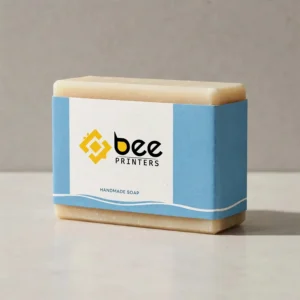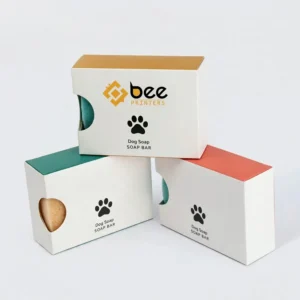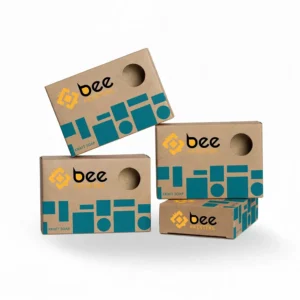
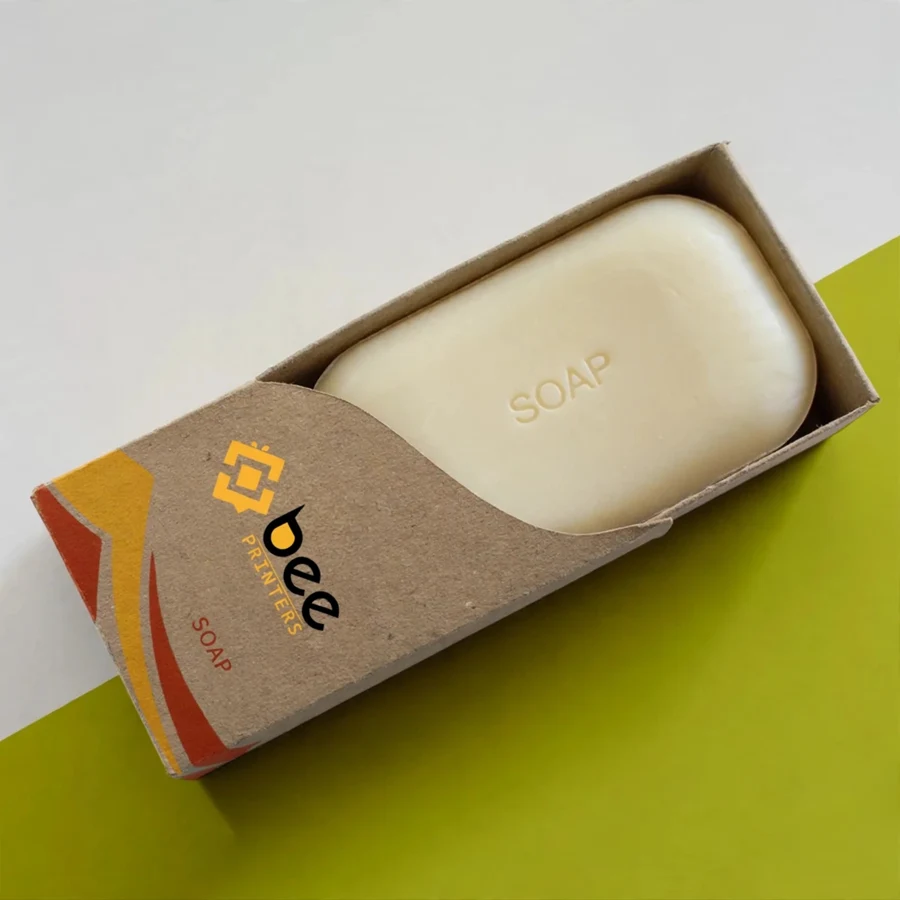
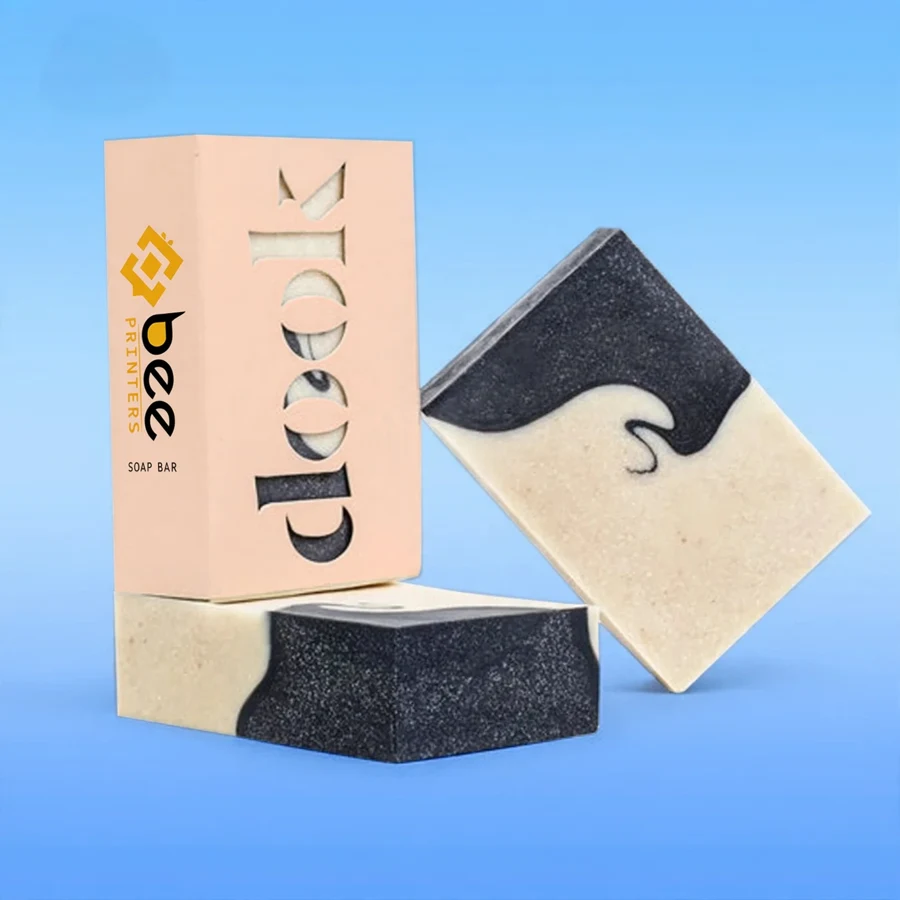
A die-cut soap box is a box that has been cut to a shape, not just folded from a rectangle. A window, a shaped flap, a patterned edge, or a cut-out that follows the logo can all be die-cut into the board, turning a plain carton into a pack with a shape of its own. At Bee Printers, die-cut soap boxes are made from sturdy kraft or cardboard, with custom sizes, clear windows, and finishes such as foil and embossing, printed to suit the bar and the brand.
Die-cutting is the process of cutting board with a steel rule die, a custom-made blade shaped to the design, which presses through the board to cut the outline, the windows, and the folds in one pass. It is what makes a window in the front of a box, a shaped flap on the top, or a box that opens in an unusual way. Once the die is made, it can be used for the whole order, so the cost of the die is spread across the run, and the same die can be used again for a repeat order. That makes die-cutting practical for a brand that wants a distinctive box and plans to reorder it. Our custom soap boxes range includes die-cut formats alongside standard tuck-end cartons, so a brand can use a die-cut box for its premium bars and a simpler carton for everyday ones.
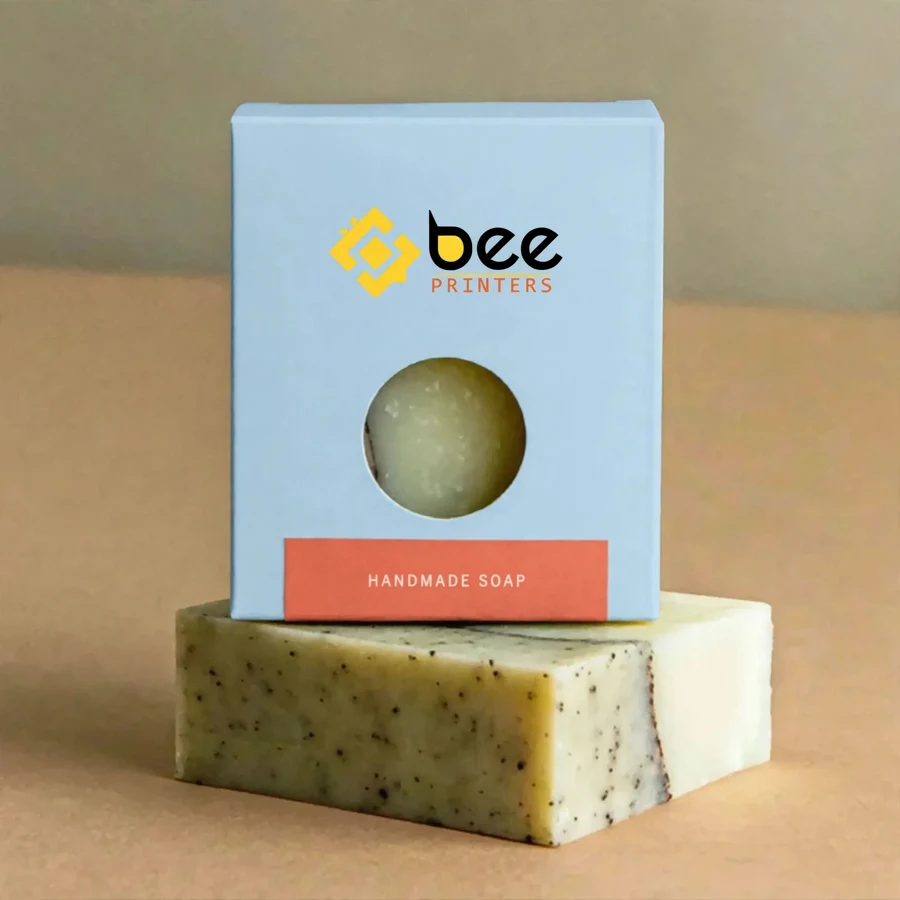
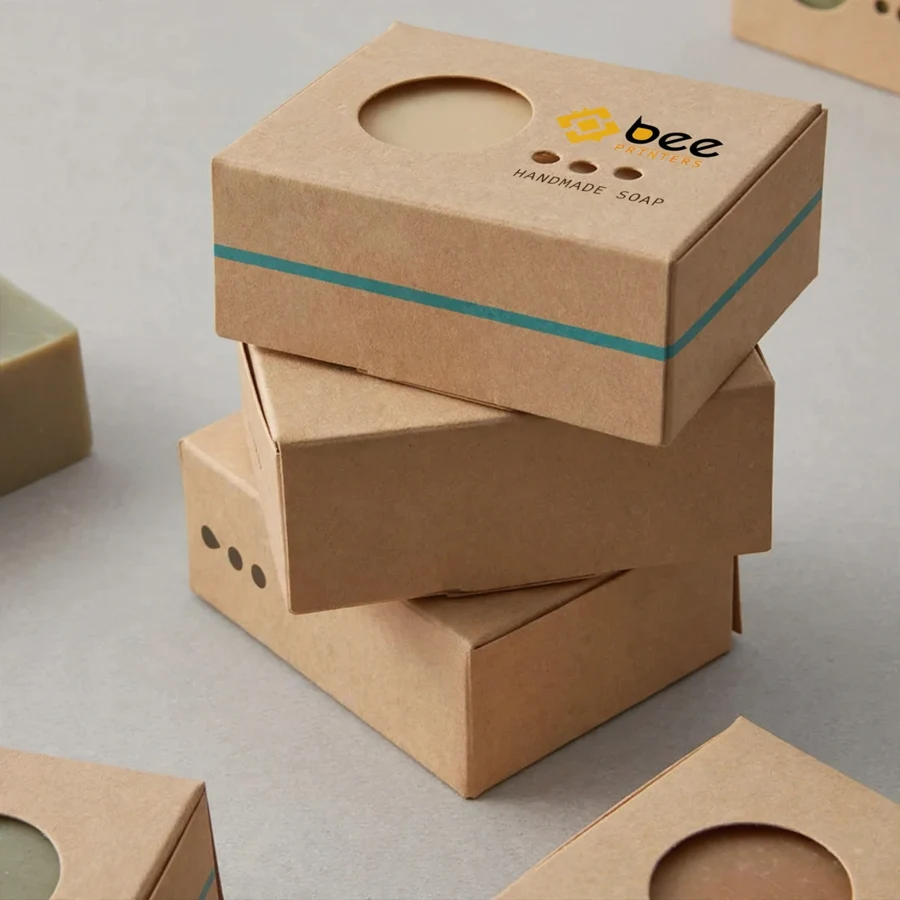
The most useful thing a die-cut box can do is show the bar. A clear window, cut into the front panel and covered with film, lets a buyer see the colour, the pattern, or the shape of the soap without opening the pack. The window can be a simple rectangle or oval, or it can be cut to a custom shape that follows the design, such as a leaf, a drop, or a frame around the logo. A window that is well placed frames the most attractive part of the bar, and a window that is too large can weaken the box, so the size and the placement need to be planned with the bar in mind.
Die-cut soap boxes are usually made from kraft board or cardboard, both sturdy materials that hold a cut edge cleanly. Kraft board gives a natural, rustic look, with a warm brown tone and a visible fibre that suits a handmade or natural brand. Cardboard, usually a white coated board, gives a smooth surface that prints in sharp, bright colours and suits a design with photography or detailed illustration. Both materials are available in the 250 to 400 gsm range, thick enough to hold the box’s shape and to keep a die-cut window from tearing, but light enough to fold neatly.
The board weight matters for a die-cut box, because a window or a shaped edge removes material from the panel, and a thin board can tear at the cut or sag around the opening. A thicker board holds the cut edge cleanly and keeps the box rigid, which is especially important for a box with a large window or a complex shape. The board should also resist moisture, because soap bars are stored in bathrooms, and a light lamination or coating on the outside of the box helps keep splashes off the print and the board dry.
A die-cut window is the most common feature of a die-cut soap box, and it can be made in almost any shape. A rectangular window suits a rectangular bar, an oval window suits a round bar, and a shaped window can follow the design of the box, such as a frame around the brand name or a cut-out that reveals a pattern on the bar. The film behind the window keeps dust out while letting light in, and it should sit flat so it does not distort the view. A window without film lets the buyer smell the bar, which can help at a market stall, though it leaves the bar more exposed.
Die-cutting can also shape the box itself. A shaped flap on the top of the box, a scalloped edge, or a cut-out handle can all be die-cut, giving the box a silhouette that stands out on a shelf. Custom sizes are another benefit: a die-cut box can be made to fit a bar that is not a standard size, whether it is a long, thin bar, a chunky round bar, or a set of small bars in one box. The box should be sized to the bar it holds, with a snug fit that keeps the bar from sliding around, and the die should be made from accurate measurements of the bar, including any uneven edges.
Die-cut soap boxes are often finished with foil stamping, embossing, or both, because the cut shape and the finish together give the box a premium feel. Foil stamping presses a metallic foil onto the board, usually in gold, silver, or copper, and it is used for a logo, a border, or a detail that should catch the light. Embossing raises a motif off the surface of the board, so it can be felt as well as seen, and it suits a logo, a pattern, or a simple shape. Both finishes work best when they are used on one or two details, so the box stays readable and the finishes stand out.
Spot UV is another finish used on die-cut boxes, adding a gloss coating to part of the design, such as the brand name or a pattern, while the rest of the box stays matte. The contrast between the gloss detail and the matte board draws the eye and gives the box a tactile quality. A matte lamination protects the whole box from handling, while a gloss lamination makes colours look richer. The finish should suit the design: a matte box with a foil logo suits a premium bar, while a gloss box with bright colours suits a playful one.
Die-cut soap boxes are often ordered in wholesale quantities, because the die is made once and used for the whole run, and a larger order spreads the cost of the die across more boxes. Wholesale orders suit a retail range, a gift shop, or a brand selling through several shops, and they can be made in a single design or in several scents with the same die and a different print. Small orders are still possible, though the die cost is a larger share of the total, so a maker ordering a small run should weigh the cost of the die against the benefit of the custom shape.
Design help is part of ordering a die-cut box, because the shape, the window, and the print all need to work together. A proof lets the maker check the colours, the text, and the cut before the full run, and a sample box with a real bar inside is the best way to check the fit and the way the window frames the bar. The die itself should be checked too, because a die that is slightly off can push a window or a fold out of place, and a box that does not fold squarely reflects badly on the product inside it.
When you order die-cut soap boxes, start with the bar: measure it, decide on the shape and the window, and choose the board and the finish. Ask for a proof so you can check the design, the cut, and the fit before the full run is printed, and test the box with a real bar to make sure it folds neatly and holds the bar firmly. For a related die-cut product in another range, see our die cut mylar bags, which use the same custom cutting for flexible packaging.
A die-cut soap box turns a simple carton into a pack with a shape of its own. It protects the bar, shows it off through a window, and carries the brand in a way that a plain box cannot. Whether the bar is sold in a shop, at a market, or as a gift, the right die-cut box helps it stand out on the shelf and look like it was made for the product inside.
| Material | Kraft, Cardboard, Corrugated, Rigid stock |
| Sizes | All custom sizes (any length × width × height) |
| Printing | CMYK / PMS, full-color, offset & digital |
| Finishing | Matte, Gloss, Soft-touch, Foil, Spot UV, Embossing |
| Add-ons | Window cut-outs, inserts, interior printing |
| Minimum Order | 100 boxes |
| Turnaround | 7 to 10 business days after design approval |
| Shipping | Free shipping across the US |