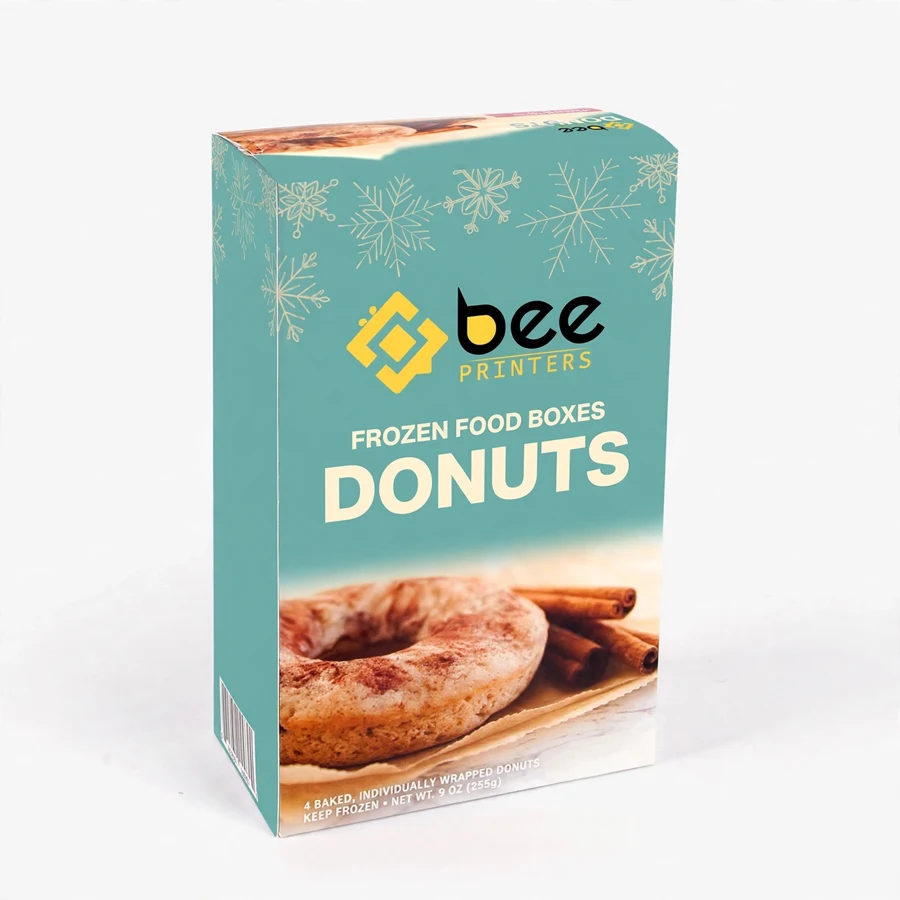
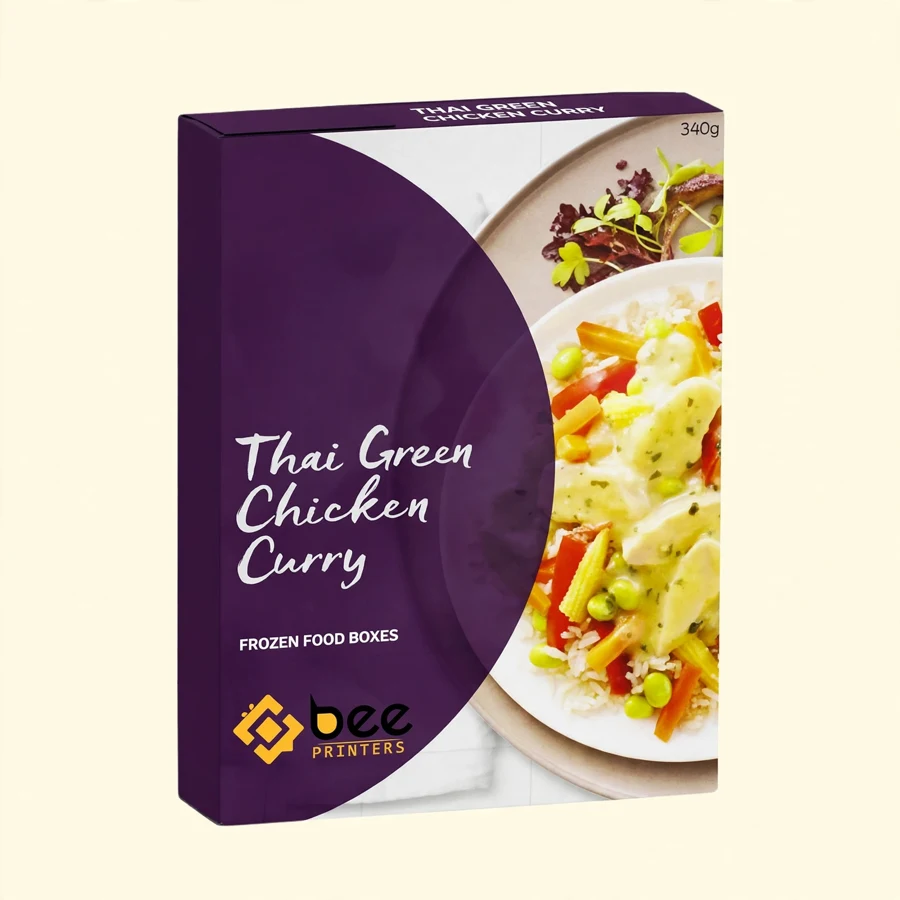
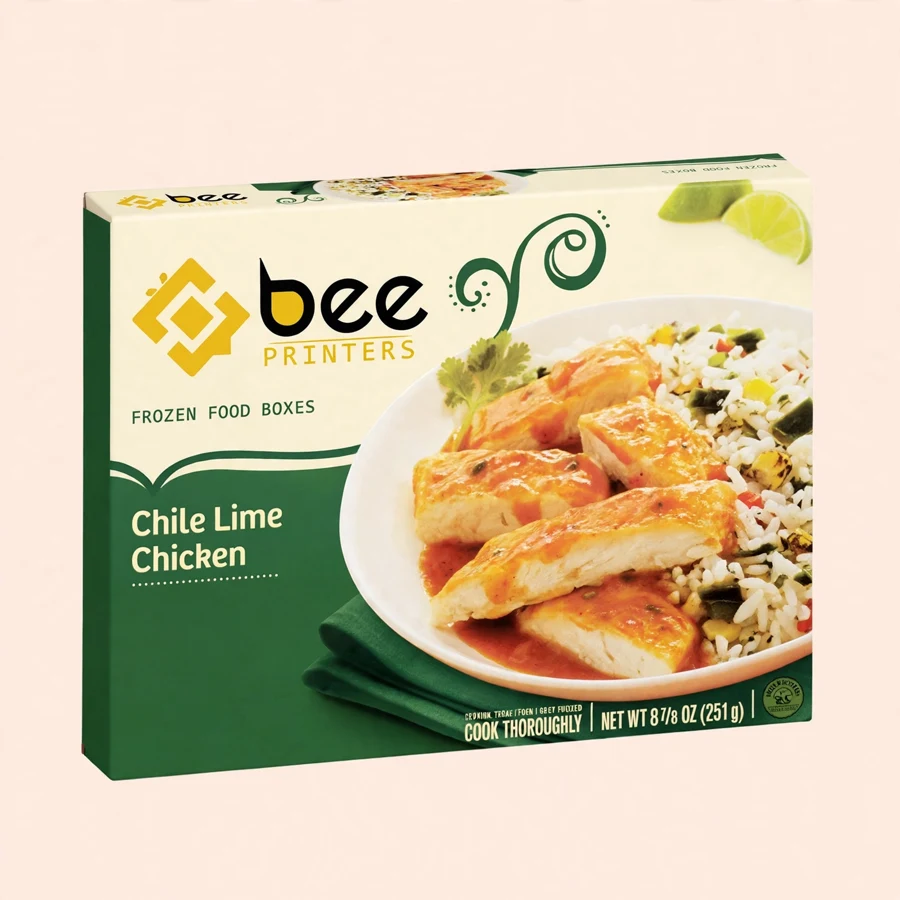
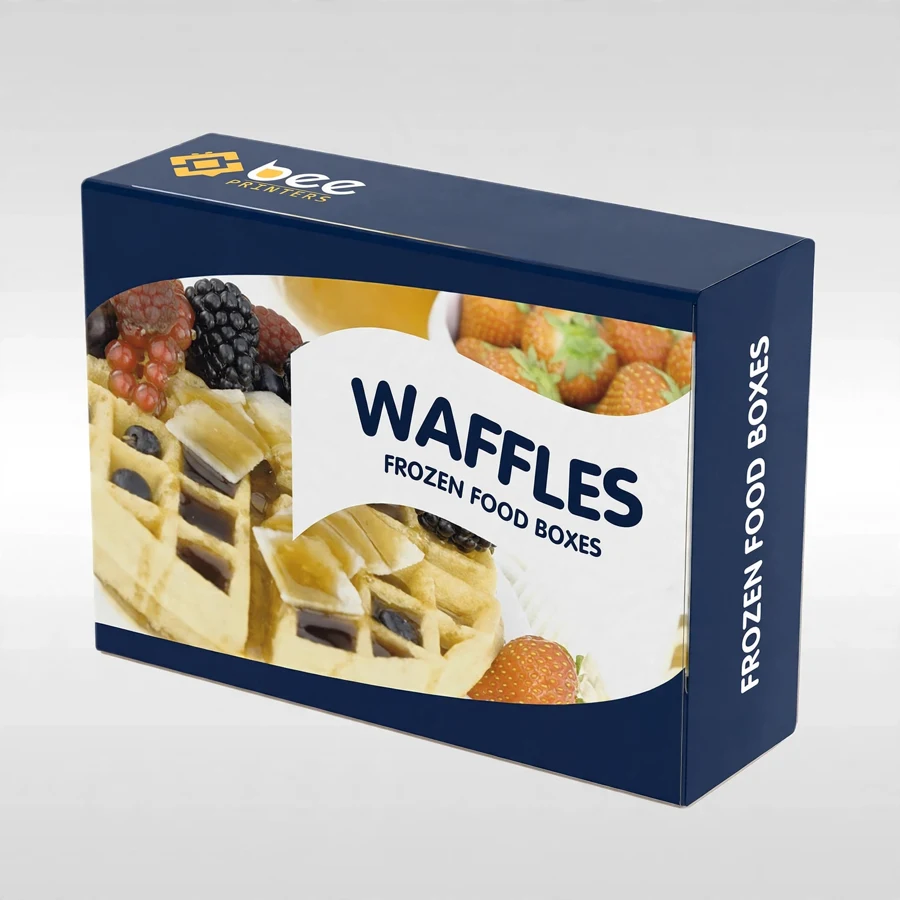
Frozen food lives in a harsh place. A freezer is cold, damp and crowded, and a box that is not made for it will go soft, peel or fall apart before the customer ever gets it home. Bee Printers makes custom frozen food boxes for meal brands, seafood producers, vegetable packers, ice cream makers and grocery retailers who need packaging that stays rigid in the freezer, prints cleanly, and looks good on a retail shelf. A frozen food box has to protect the food, survive the cold chain, and sell the product, all at the same time.
The box is also the main way a frozen product communicates with the shopper. A freezer aisle is full of similar boxes, and the one with the clearest photograph, the most readable name and the most appetising colours is the one that gets picked up. A well-printed frozen food box does not just hold a meal; it tells the customer what is inside, how to cook it and why it is worth buying, all in the few seconds before they open the freezer door.
Frozen food boxes sit in our custom food boxes collection for chilled and frozen retail, next to meal trays and food pouches.
Ordinary cardboard absorbs moisture and goes limp in a freezer, so our frozen food boxes use food-grade board with a water-resistant coating that stands up to condensation and cold storage. The board stays rigid at freezer temperatures, the corners hold their shape, and the box does not warp or split when it is moved from a freezer to a shopping bag to a home freezer. That strength matters because a damaged box makes the food inside look damaged too, even when it is perfectly fine.
The coating also protects the print. Condensation forms on a frozen box every time the freezer door opens, and a box without a moisture barrier will show water marks, smudged ink and peeling edges within days. Our coating keeps the surface dry and the print sharp, so the box looks as good on the last day of its shelf life as it did on the first. The board is food-safe and suitable for direct contact with frozen food packaging, and it is recyclable where facilities exist.
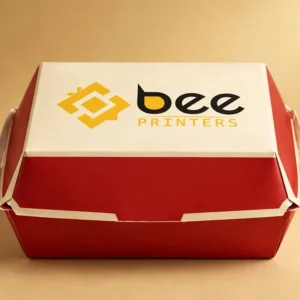
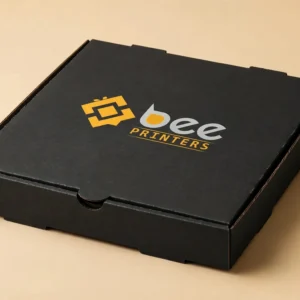
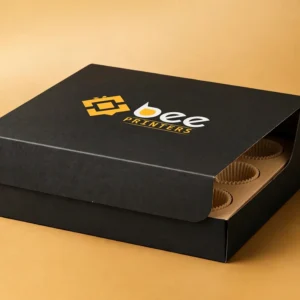
The most common frozen food box is a tuck-end carton: a rectangular box with flaps that tuck closed at each end. It is simple, strong and easy to open, and it suits single-serve meals, frozen vegetables, seafood fillets and ice cream tubs. A reverse tuck-end carton closes in opposite directions at each end, which gives a slightly stronger seal for heavier products. A sleeve box slides over an inner tray, which suits ready meals and products that need a tray inside the outer carton.
Some frozen products need a window, so the customer can see the food inside before they buy. A windowed box works well for premium meals, seafood and baked goods, where the appearance of the food is part of the selling point. The window is cut cleanly and covered with a clear film that stays flexible in the cold, so it does not crack or cloud over in the freezer. Whichever style you choose, the box is designed to be opened easily at home, because a customer who struggles with the packaging remembers the frustration.
Frozen food comes in many portion sizes, and the box has to match. A single-serve box suits a ready meal for one person, a lunch portion or a small pack of vegetables. A two-serving box covers a couple’s dinner or a shared side dish, and a family pack holds a full meal for four or more, with enough depth to stack well in a home freezer. We also make slim boxes for flat products such as frozen pizza bases, fish fillets and pastry sheets, which need a wide, shallow format rather than a tall one.
Custom sizing is available, so the box can be matched to your exact product and your inner tray. A box that fits too loosely lets the food slide and break, while a box that fits too tightly is hard to load on a packing line. We size the box to your product, and the same artwork can be scaled across sizes, so a single-serve meal and a family pack both carry the same branding and the customer recognises your range at a glance.
The print on a frozen food box has to work in a cold, brightly lit freezer aisle. Full-colour printing lets you use a photograph of the cooked meal, which is the single most important image on the box, because it shows the customer what dinner will look like. Your logo and product name go where they are seen first, and the photograph takes up the largest panel, so the box reads clearly even through a frosted freezer door.
Cooking instructions and nutrition information need just as much care. The instructions should be easy to follow, with clear times for an oven, a microwave or a hob, and the nutrition panel should be legible at a small size. We use clean typefaces and enough contrast between the text and the background, so the information can be read in a kitchen as well as in a shop. A short line about the ingredients, the origin or the preparation adds a human touch, and it is the kind of detail that makes a customer choose your product over a plainer competitor.
Ready meal brands are the biggest users, and they use frozen food boxes for single-serve dinners, family meals and meal kits sold through grocery stores and online. Seafood producers use them for fillets, prawns and prepared fish dishes, where the box has to protect a delicate product and show it off at the same time. Vegetable and fruit packers use them for frozen produce, and ice cream makers use them for tubs and novelty items that need a sturdy outer box.
Bakeries and patisseries use frozen food boxes for pastries, dough and desserts that are sold frozen and baked at home, where the box carries the baking instructions and the brand. Meal kit companies use them for frozen components that are shipped to customers in insulated boxes, and the outer carton is the first thing the customer sees when they open the delivery. For a flexible frozen food format, our mylar food bags use the same moisture-resistant approach in a pouch, and they pair well with a printed carton in a shared frozen range.
Frozen food boxes are available at wholesale prices, and bulk orders bring the cost per box down, which matters when a brand ships thousands of units a month. Low minimum order quantities are available, so a small producer or a new brand can order a modest run for a first retail listing without committing to a huge stock. Free shipping is included, so the price you agree is the price you pay, and you can plan your packaging budget without worrying about delivery costs.
To start an order, send us your logo, your product size and the box style you prefer. We will prepare a proof showing the box, the print and the information panels, and we will adjust the size until your product fits snugly. Once you approve the proof, printing begins, and your boxes arrive flat-packed and ready to load. A good frozen food box protects the food, survives the freezer and sells the product, and that is a lot of work for a single piece of cardboard.
| Material | Kraft, Cardboard, Corrugated, Rigid stock |
| Sizes | All custom sizes (any length × width × height) |
| Printing | CMYK / PMS, full-color, offset & digital |
| Finishing | Matte, Gloss, Soft-touch, Foil, Spot UV, Embossing |
| Add-ons | Window cut-outs, inserts, interior printing |
| Minimum Order | 100 boxes |
| Turnaround | 7 to 10 business days after design approval |
| Shipping | Free shipping across the US |