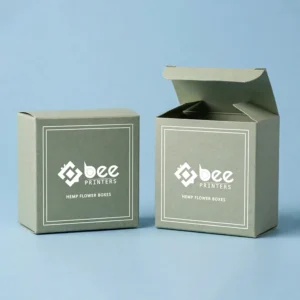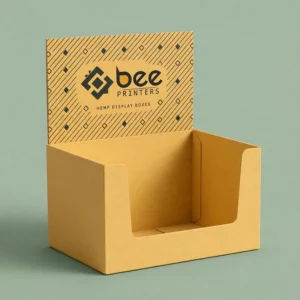
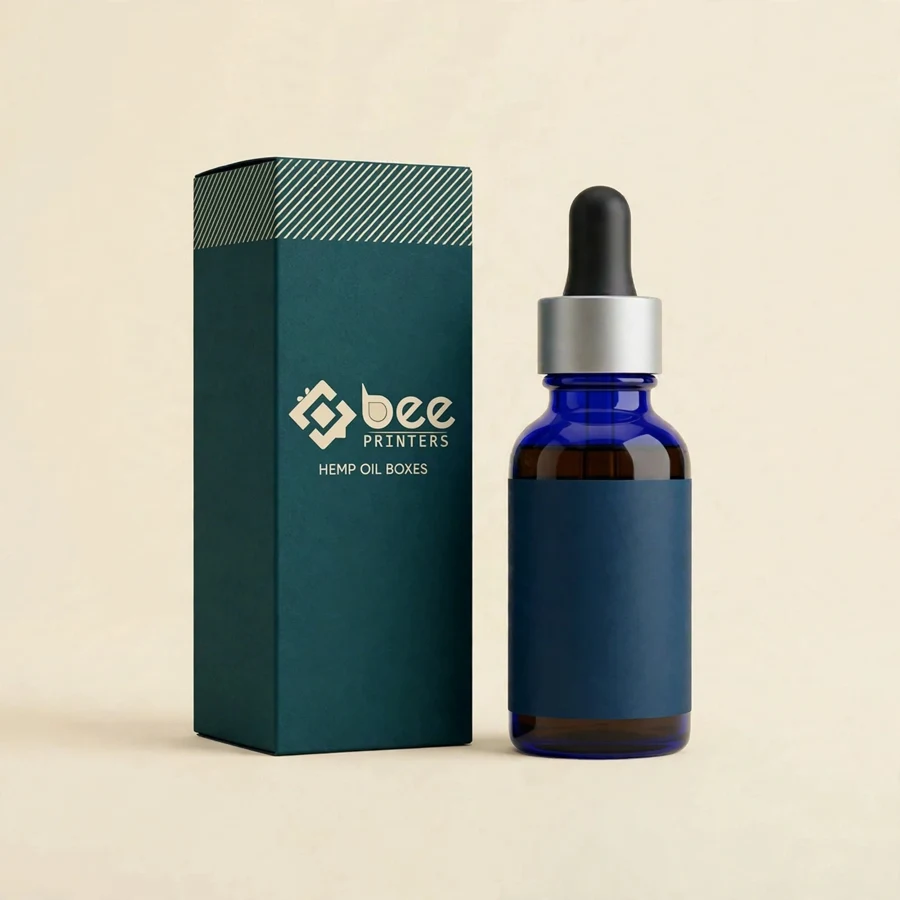
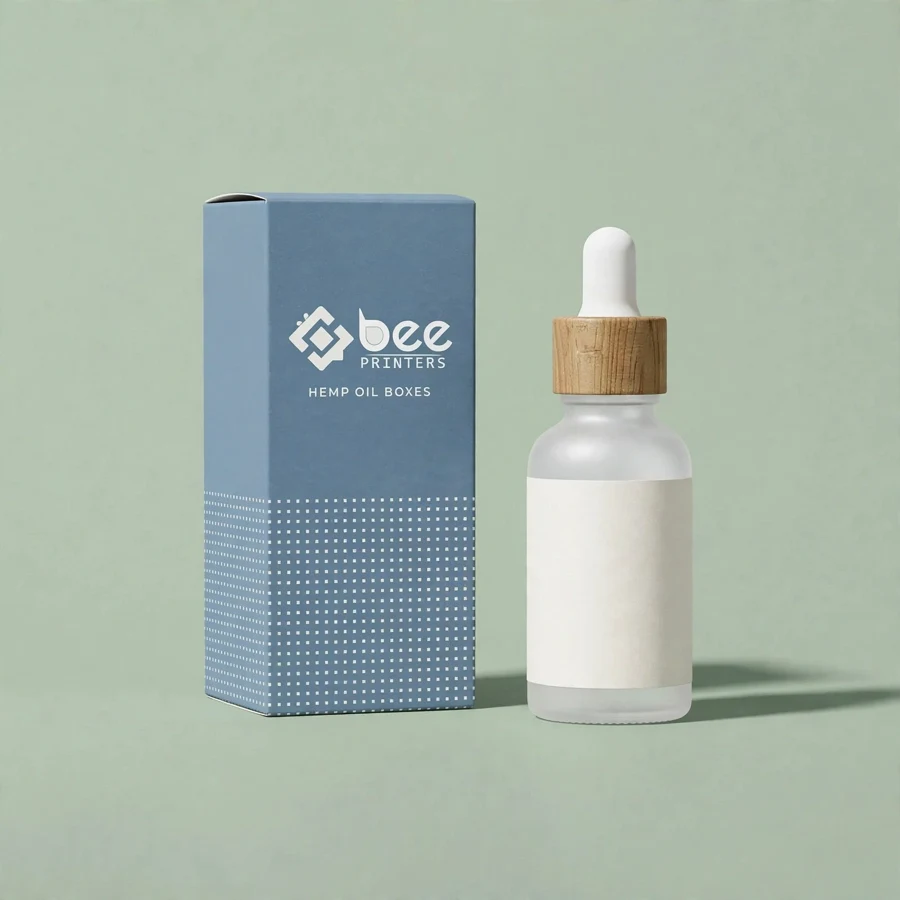
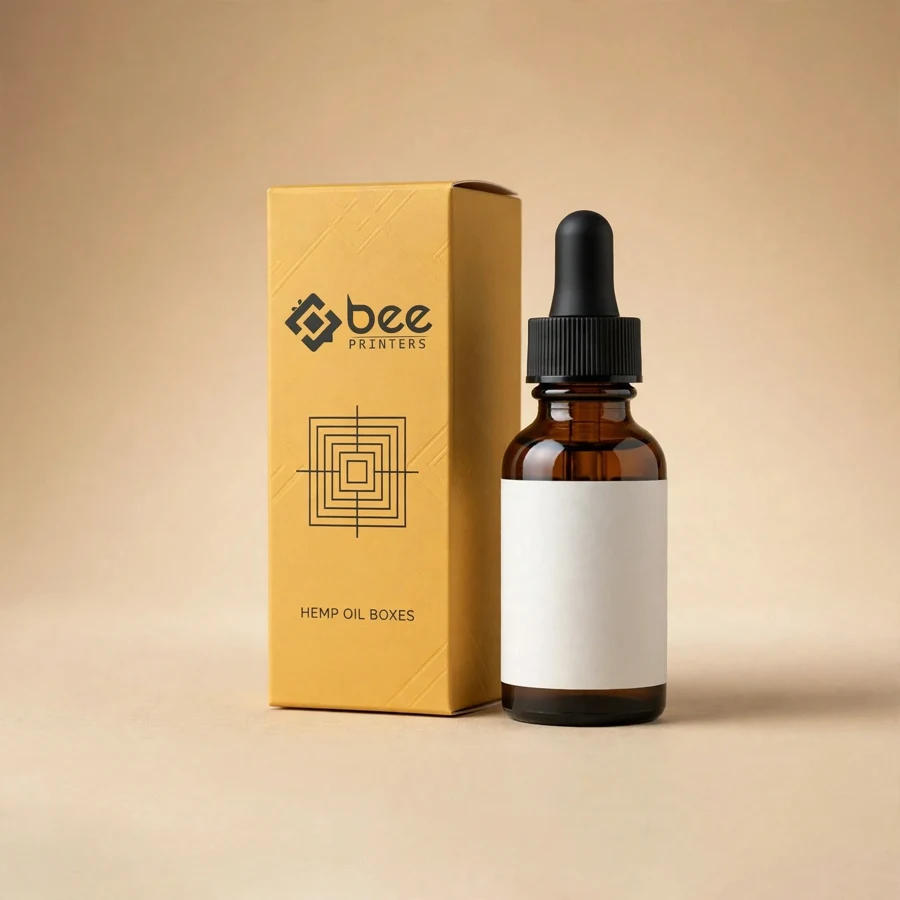
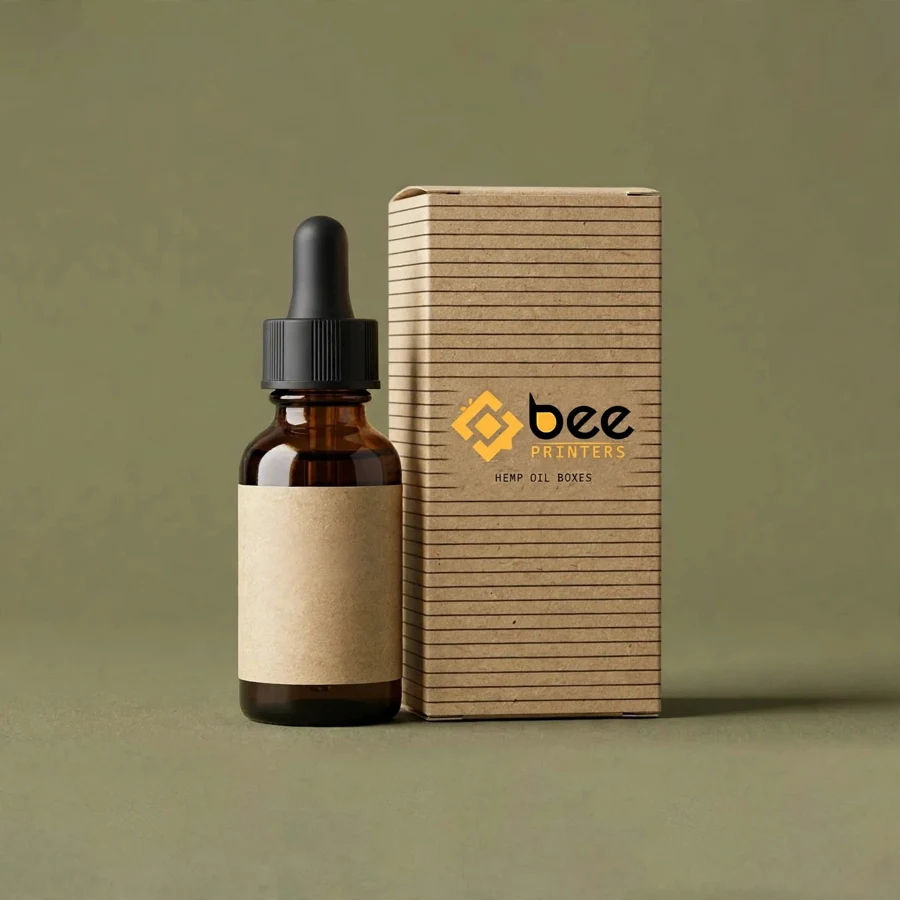
A hemp oil bottle is small, glass, and easy to break, so the box around it has to do real work. It must hold the bottle still, protect it from knocks, and present it well on a shelf or in a delivery parcel. At Bee Printers, custom hemp oil boxes are designed from the bottle outward: the insert is cut to the bottle’s shape, the board is strong enough to survive handling, and the print carries the brand clearly. The result is packaging that looks considered and arrives intact.
Most hemp oil is sold in dropper bottles, and those bottles have a shape that a good insert can grip firmly. A die-cut cardboard insert with a hole sized to the bottle’s body holds it upright and stops it from tipping, while a foam insert does the same job with a softer grip. Either way, the bottle should not be able to move sideways or slide up and down inside the box. When the bottle is held still, the cap stays tight, the label stays clean, and the customer receives a product that looks exactly as it did when it was packed.
The box style follows the bottle. A tuck-end box is the standard choice for a single retail bottle: it is compact, stands upright on a shelf, and opens easily for the customer. A rigid box suits a premium presentation or a gift set, and a two-bottle or multi-bottle set needs a wider box with a divider or a multi-cavity insert. The size is always measured from the real bottle, including the dropper cap, so the box closes without pressing on the cap or leaving the bottle loose.
Hemp oil boxes carry a lot of printed information, so the panel layout deserves thought. The front panel holds the brand name, the logo, and the product name in type that reads at shelf distance. The side panels are the natural place for the bottle size, the quantity, and a short description of the product. The back panel can hold longer text, such as directions for use, storage notes, ingredient details, a barcode, and contact information. A clear hierarchy keeps the box readable instead of crowded, and consistent type sizes across a product range make the whole line look professional.
Full-color CMYK printing reproduces brand artwork faithfully, whether the design is a soft botanical style or a bold, high-contrast look. A matte finish gives a calm, understated feel, while a gloss finish makes colors look richer and adds a layer of surface protection. Spot finishes can highlight the brand name or the logo, and embossing adds a tactile detail that customers notice when they pick the box up. The print should match the approved artwork, with colors that stay consistent across the whole run.
Small type needs care. The text on a hemp oil box is often small, so the typeface should stay legible at the printed size and the contrast between text and background should be strong enough to read easily. A proof stage is the time to check this, along with spelling, spacing, and alignment. Once the proof is approved, the artwork is kept on file, so repeat orders print the same way every time.
Cardboard is the standard material for hemp oil boxes because it prints well, folds cleanly, and holds a die-cut insert accurately. A thicker board adds crush resistance, which matters for a glass bottle travelling through the post or sitting under other stock on a shelf. Kraft board gives a natural, earthy look and pairs well with simple printing, while a rigid board wrapped in printed paper gives the strongest and most premium feel for gift packaging and high-value presentations.
Coatings add a layer of protection to the print. Matte lamination gives a soft, fingerprint-resistant surface. Gloss lamination adds shine and makes colors look deeper. An aqueous coating is a lighter option that protects against scuffs during handling. For brands that want their packaging to reflect a lower-impact approach, recycled board is available and performs the same as virgin board at the same thickness. The board choice can be described on the box in plain words about the material used.
The insert material deserves the same attention as the outer box. Cardboard inserts are light, printable, and easy to recycle with the box. Foam inserts grip the bottle more softly and suit heavier glass bottles. Either material can be cut to the exact bottle shape, and the insert should be tested with the real bottle before the full run so the fit is right first time.
Retail shelves suit a compact tuck-end box that stands upright and shows the front panel to the customer. Online orders suit a slightly stronger box, or a tuck-end box packed inside a mailer, so the bottle survives the courier network. Gift sets suit a rigid box with a lift-off lid, often with a printed inner lid or a fitted insert that presents the bottle as part of a set. Choosing the style for the channel keeps the packaging practical instead of decorative.
Multi-bottle sets need a wider box with a divider or a separate cavity for each bottle, so the bottles cannot knock against each other. A window cut-out is another option: a small die-cut window lets the customer see the bottle without opening the box, which works well on a retail shelf. The window can be covered with clear film for extra protection. Like any structural detail, a window should be planned into the artwork from the start.
Sizes are cut to order, so a box can be made for a single small dropper bottle, a larger bottle, or a set of two or three. Standard sizes keep costs down for common bottle shapes, while custom sizes suit a brand with a distinctive bottle or a presentation idea that needs an exact fit. Measuring from the real bottle, including the dropper cap and any seal, is the step that makes the finished box close cleanly.
Hemp oil brands usually order boxes in the hundreds or thousands, and wholesale quantities bring the per-box cost down. Larger runs spread the setup cost across more units, so the price per box falls as the quantity rises. Small runs are still possible for a new product launch or a limited edition, letting a brand test a design on the shelf before committing to a larger order. Boxes arrive flat-packed and ready to assemble, which keeps storage simple and shipping costs reasonable.
Planning an order starts with four decisions: the box style, the size, the board, and the artwork. Once those are settled, a sample can be produced so the brand can check the bottle fit, the feel of the board, and the print quality before the full run. Sampling is worth the small delay it adds, because it is the last easy chance to change anything. After approval, the full run is printed, cut, folded, and packed for delivery.
Brands that sell more than one hemp oil product often order one design in several sizes, so the shelf pack, the online pack, and the gift set all share the same artwork. This keeps the brand consistent and simplifies reordering, since the artwork file stays the same and only the dimensions change. Over time, a brand can build a small family of boxes that customers recognize at a glance.
For brands building out a full hemp packaging range, the hemp packaging collection brings together the box styles that suit this market, from display boxes to retail packs, so a whole range can be planned in one place. And for a related look at printed boxes for a similar product category, the custom cannabis boxes show how bold, full-color print and sturdy board work together on the shelf. Both pages give a useful starting point for planning a hemp oil box that fits the bottle, the brand, and the way it is sold.
| Material | Kraft, Cardboard, Corrugated, Rigid stock |
| Sizes | All custom sizes (any length × width × height) |
| Printing | CMYK / PMS, full-color, offset & digital |
| Finishing | Matte, Gloss, Soft-touch, Foil, Spot UV, Embossing |
| Add-ons | Window cut-outs, inserts, interior printing |
| Minimum Order | 100 boxes |
| Turnaround | 7 to 10 business days after design approval |
| Shipping | Free shipping across the US |