Mushrooms are a fresh, delicate product, and their packaging has to do two things at once: protect them from bruising and drying out, and tell the buyer they are fresh, natural and worth the price. Custom mushroom packaging made from plant-based materials answers both needs. At Bee Printers, mushroom boxes, trays and punnets are produced from compostable and recyclable plant-based board and fiber, printed with the grower’s or brand’s own artwork. For mushroom farms, grocers and fresh-produce brands, packaging that is itself grown from plants is a natural fit for a product customers already associate with nature.
Fresh mushrooms bruise easily, lose moisture quickly and go soft if they are packed in the wrong material. A good mushroom pack gives them a firm base, a little air circulation and a lid or film that keeps them fresh without trapping condensation. The pack also has to survive the journey from farm to shop to kitchen, stacked in crates and chilled cabinets, without collapsing or going soggy. Plant-based fiber and board handle these conditions well, and they break down after use instead of sitting in landfill.
The first reason is the match between product and pack. Customers who buy mushrooms often care about natural food and low-waste packaging, and a compostable punnet or box signals that the grower shares those values. The packaging becomes part of the product story rather than a contradiction of it, and that story supports the price on the shelf.
The second reason is freshness. Mushrooms need to breathe. Packaging that allows a small amount of airflow helps prevent condensation, which is one of the main causes of spoilage in sealed packs. Vented lids, perforated film and breathable fiber trays all help mushrooms stay firm and dry for longer, which means less waste for the retailer and a better product for the customer.
The third reason is practical: plant-based punnets and boxes are light, stackable and easy to handle at packing speed. Growers packing hundreds of punnets a day need a format that assembles quickly, holds its shape when filled, and stacks neatly in crates. A well-designed mushroom pack does all of that while carrying the farm’s name on every unit sold.
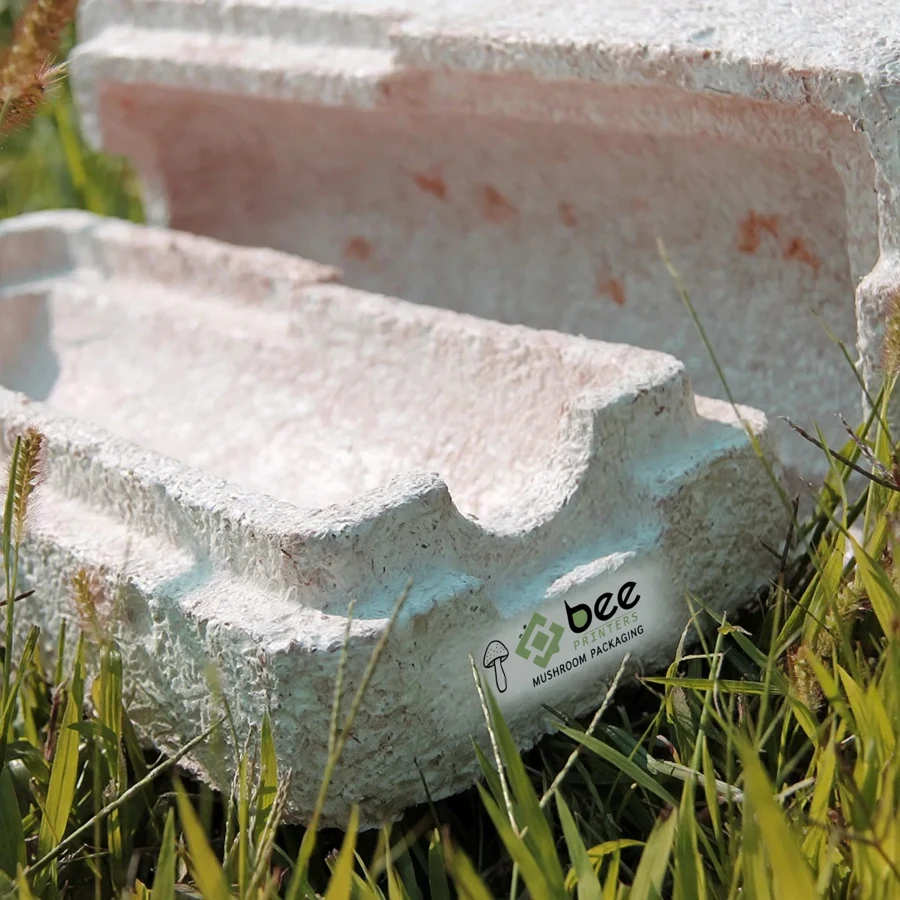
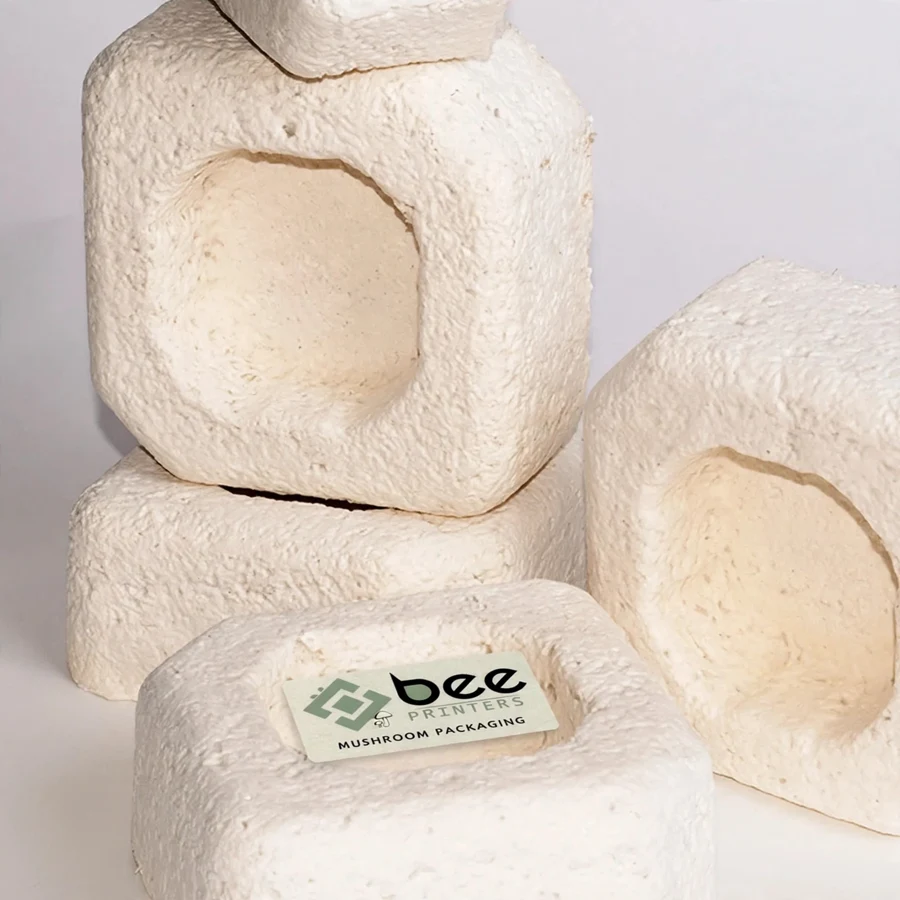
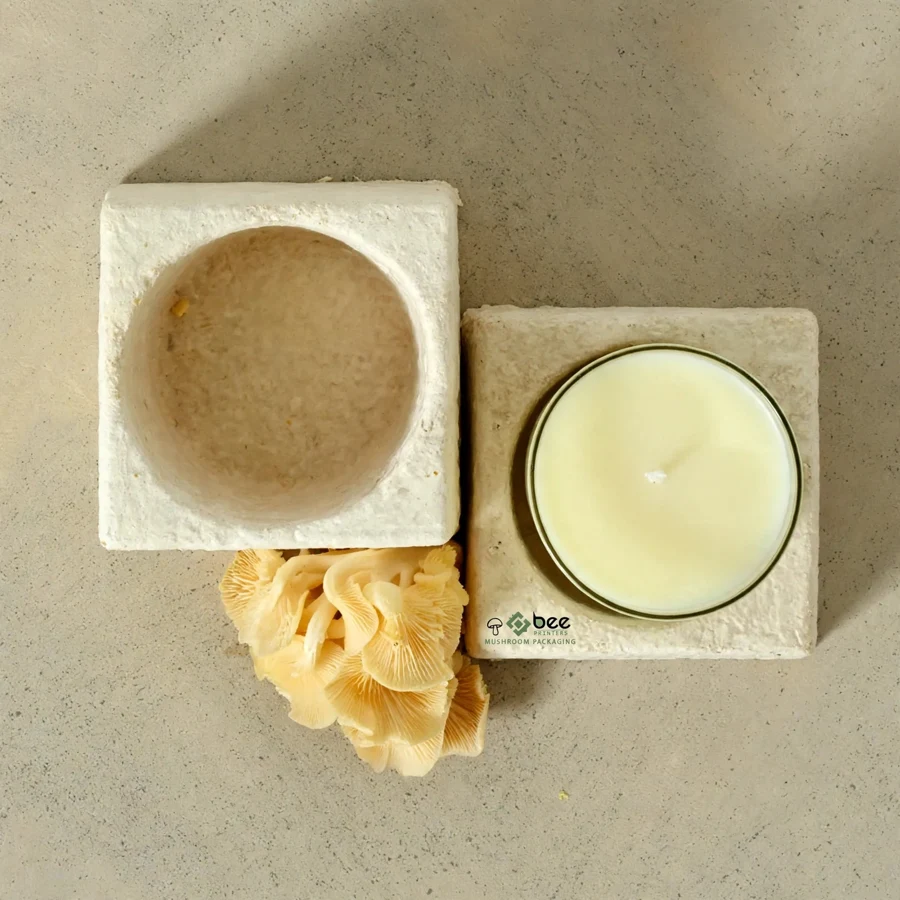
Custom mushroom packaging uses plant-based materials such as molded fiber, kraft board and paperboard made from renewable sources. Molded fiber punnets are formed from plant fiber into a shallow tray shape with a firm base and a slightly textured surface that grips the mushrooms gently. Paperboard boxes and sleeves give a smooth printable surface for branding, while kraft board offers a natural, unbleached look that suits farm brands.
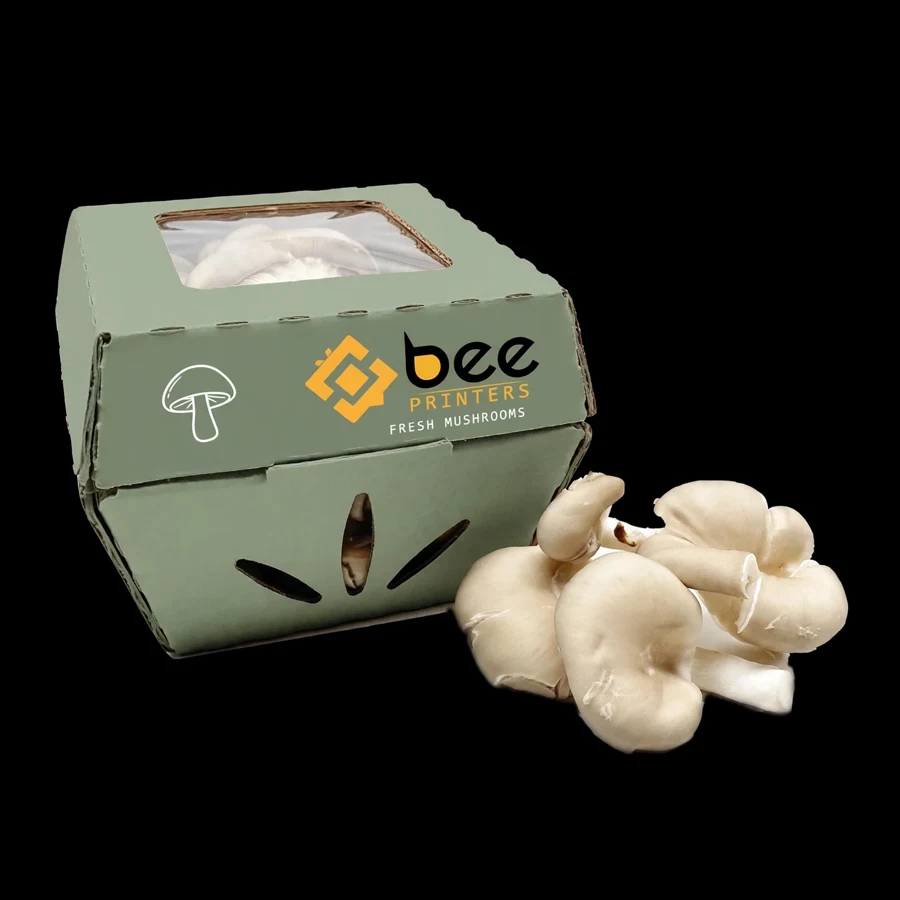
Compostable films and lids can be used where a clear top is needed so shoppers can see the mushrooms inside. A clear lid shows the quality of the produce, which is often the deciding factor at the shelf. Vented options let air move through the pack, reducing condensation and keeping the mushrooms dry.
Because the materials are plant-based and compostable, the packaging can be presented honestly as part of a low-waste offer. Growers should still check local composting guidance before making specific claims on the pack, and the box design can carry simple, accurate wording about the material rather than overstated promises.
The classic mushroom punnet is a shallow open tray, often with a clear lid, sized to a standard weight such as 200 grams or 250 grams. It is the format shoppers recognize instantly in supermarkets and farm shops. The tray depth is matched to the mushroom size so the pack is full without crushing the produce, and the lid keeps the contents in place during transport.
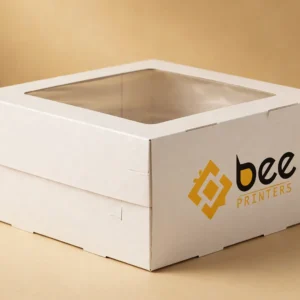
Cardboard boxes with a printed sleeve are a popular alternative for premium and branded mushrooms. The box protects the mushrooms, the sleeve carries the full brand design, and a window in the sleeve can show the product inside. This format suits dried mushrooms, mushroom kits and gift sets as well as fresh packs, and it gives more room for recipes, cooking tips and brand information.
For larger volumes, bulk trays and crates hold several kilos for wholesale buyers, restaurants and food processors. These are usually plain or lightly printed, with the focus on strength and stackability rather than shelf display. Growers selling both retail and wholesale often use the same brand artwork across punnets and bulk trays so the two formats are visibly from the same farm.
Button mushrooms, chestnut mushrooms, shiitake, oyster and portobello all come in different sizes, and each needs a pack dimensioned to fit. A punnet for small button mushrooms is shallow and compact; a pack for large portobello caps needs more depth and a wider base. Custom sizing is available so the pack fits the variety being sold, rather than forcing every mushroom into one generic tray.
Weight is the other sizing factor. Retail punnets are usually built around a fixed weight, and the tray volume is set so that weight fills the pack neatly. Overfilling crushes the mushrooms; underfilling makes the pack look poor value. Getting the volume right is a detail that experienced growers notice immediately, and it is set when the pack is specified.
For dried mushrooms and mushroom powders, the packaging changes: sealed boxes, pouches and jars protect the product from moisture, and the design shifts toward shelf life and labeling rather than airflow. The same brand artwork can be carried across fresh and dried formats so customers recognize the range.
Full-color printing on a mushroom pack usually features the farm name, the mushroom variety, the weight, and a simple image or illustration of the mushroom itself. Earthy colors, greens and kraft browns are common, because they match the natural character of the product, but a bold, modern design can also stand out in a produce aisle full of similar greens. The best designs are clean and readable at a distance, with the variety name large enough to read from the shelf.
Finishing is kept practical: a matte coating suits kraft and natural designs, while a light gloss helps colors stay vivid in chilled cabinets where condensation can dull a print. The inside of the pack is left plain and food-safe, with no inks in direct contact with the produce.
The pack can also carry useful information for the buyer: storage advice, a simple recipe, or a note about the farm. This kind of content adds value without adding cost, and it encourages customers to try a variety they have not cooked with before.
Mushroom farms and growers are the main users, packing their harvest for supermarkets, farm shops, markets and box schemes. Fresh-produce wholesalers use branded punnets to give their mushroom range a consistent identity across different farms. Grocery retailers use printed packs for their own-label mushrooms, and specialty food shops use them for premium varieties such as shiitake, oyster and wild mushrooms.
Meal-kit companies and recipe-box brands order mushroom packs sized to their portion requirements, and dried-mushroom and mushroom-powder brands use printed boxes for the shelf-stable side of the range. Grow-your-own mushroom kit sellers use a larger printed box that holds the growing block, the instructions and the branding together as one product.
Mushroom packaging sits within the wider fresh-food range. Growers who also sell other produce often coordinate their mushroom packs with other printed packaging from the custom food boxes collection, so the whole farm range carries one consistent brand from the field to the shelf.
Mushroom packaging is produced to specification, so pricing depends on the material, the pack size and style, print coverage and order quantity. Larger quantities reduce the unit cost, which matters for growers packing every day through the season. Smaller runs suit new growers, trial varieties and seasonal lines.
To order, share the mushroom variety, the pack weight or size, and the artwork or logo. A specification and quote follow, with a proof of the pack design before production so the grower can check the fit, the colors and the text. Free design support can help build a punnet or box design from the farm’s name and a few ideas.
For brands that sell mushrooms in more than one format, matching flexible packaging completes the range. Mushroom mylar bags are a useful companion for dried mushrooms and mushroom powders, where a sealed, moisture-resistant bag protects the product on the shelf.
Plant-based materials such as molded fiber, kraft board and paperboard, with compostable films or clear lids where the mushrooms need to be visible.
Yes. Vented lids, perforated film and breathable fiber trays allow a small amount of airflow, which helps prevent condensation and spoilage.
Yes. Punnets, trays and boxes are sized to the variety and the pack weight, from small button mushrooms to large portobello caps.
Yes. The full exterior can be printed in full color with the farm name, variety, weight and any artwork or information for the buyer.
| Material | Kraft, Cardboard, Corrugated, Rigid stock |
| Sizes | All custom sizes (any length × width × height) |
| Printing | CMYK / PMS, full-color, offset & digital |
| Finishing | Matte, Gloss, Soft-touch, Foil, Spot UV, Embossing |
| Add-ons | Window cut-outs, inserts, interior printing |
| Minimum Order | 100 boxes |
| Turnaround | 7 to 10 business days after design approval |
| Shipping | Free shipping across the US |