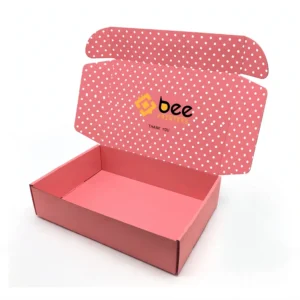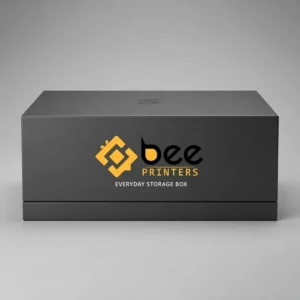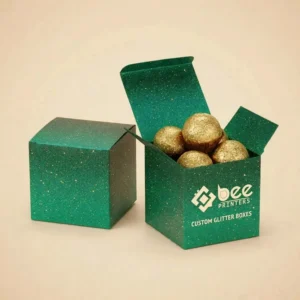
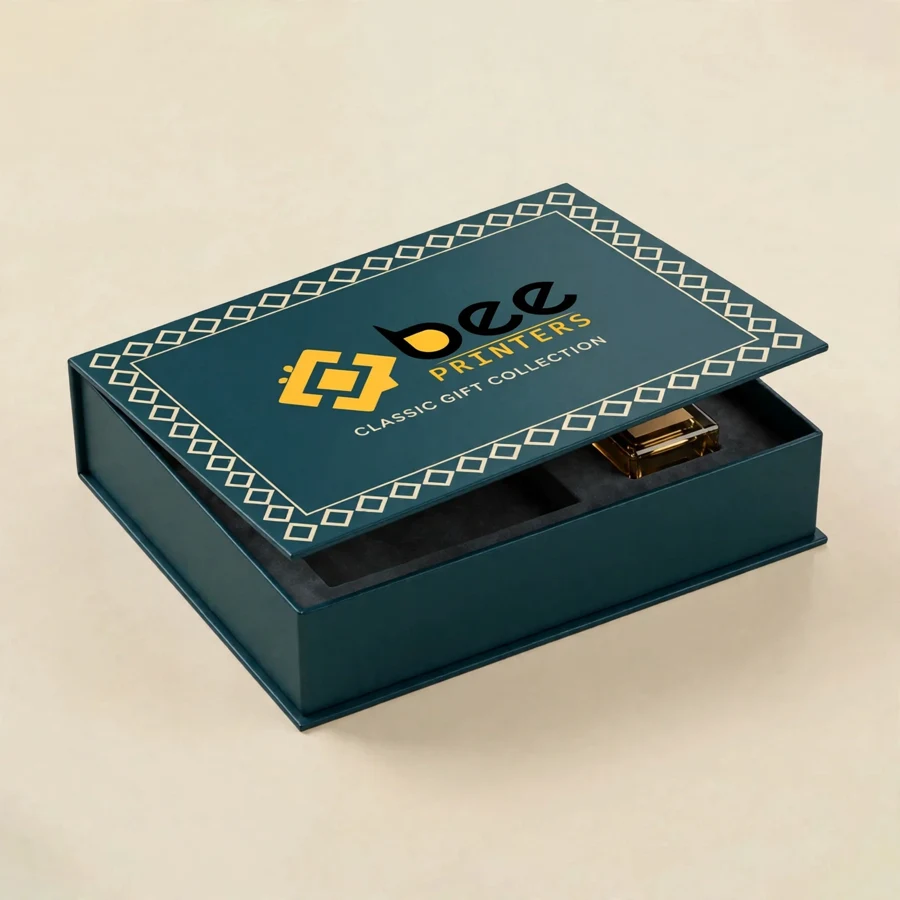
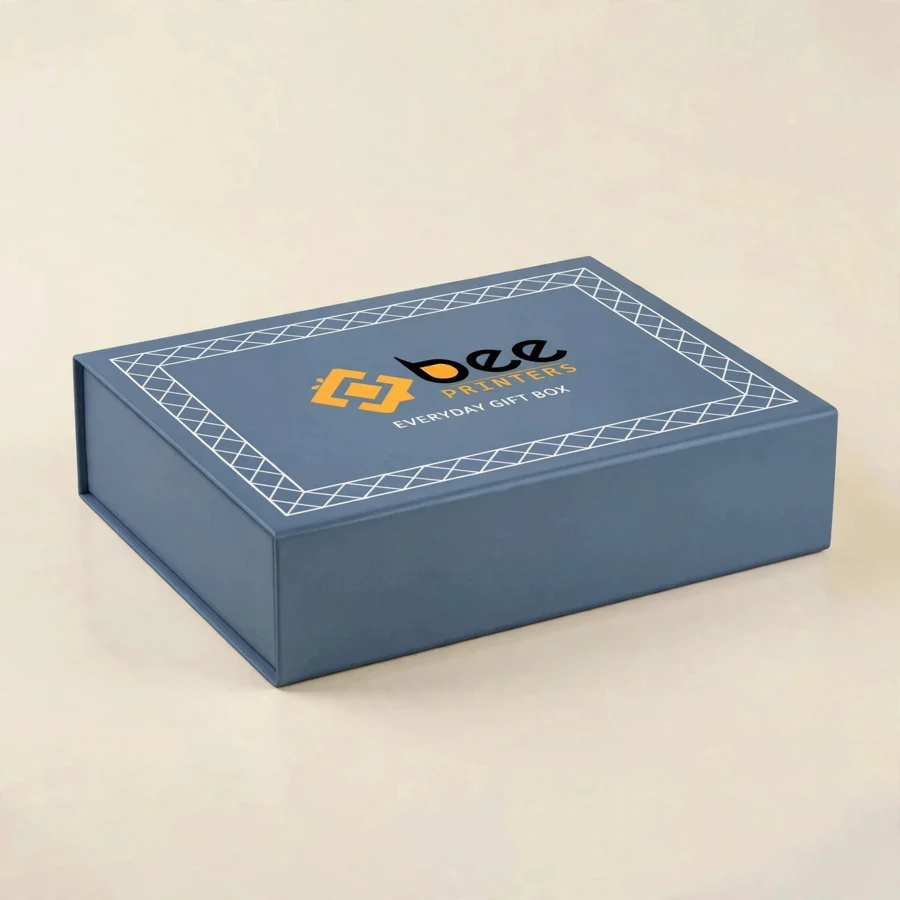
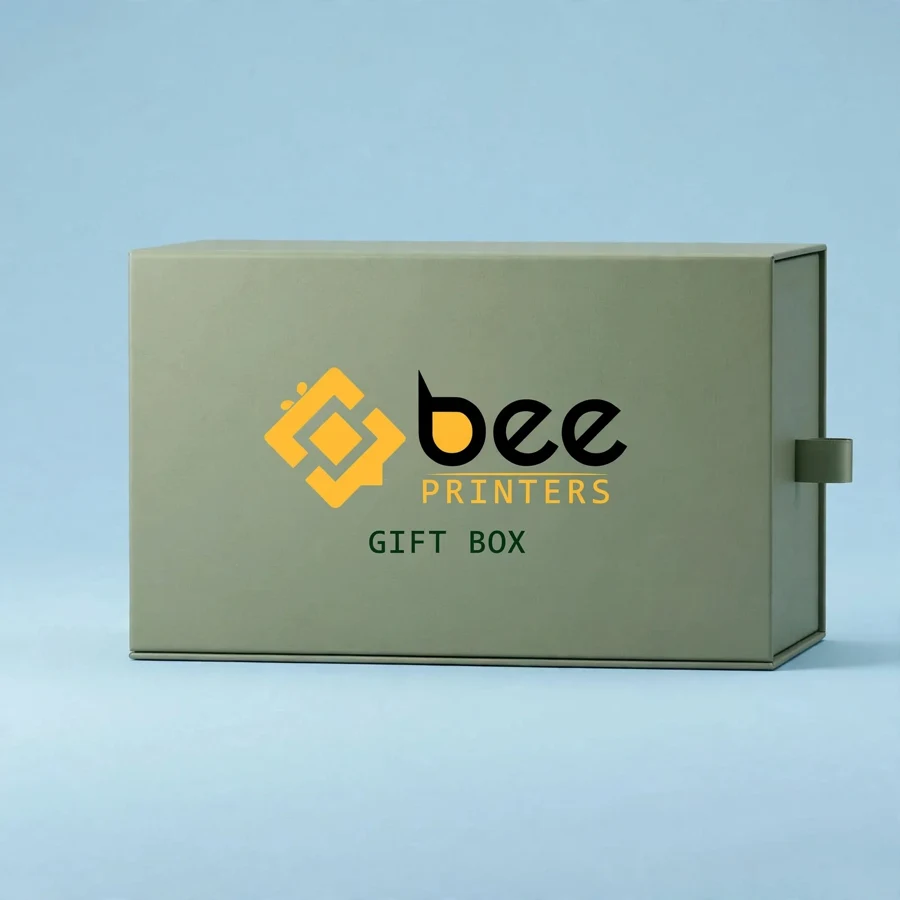
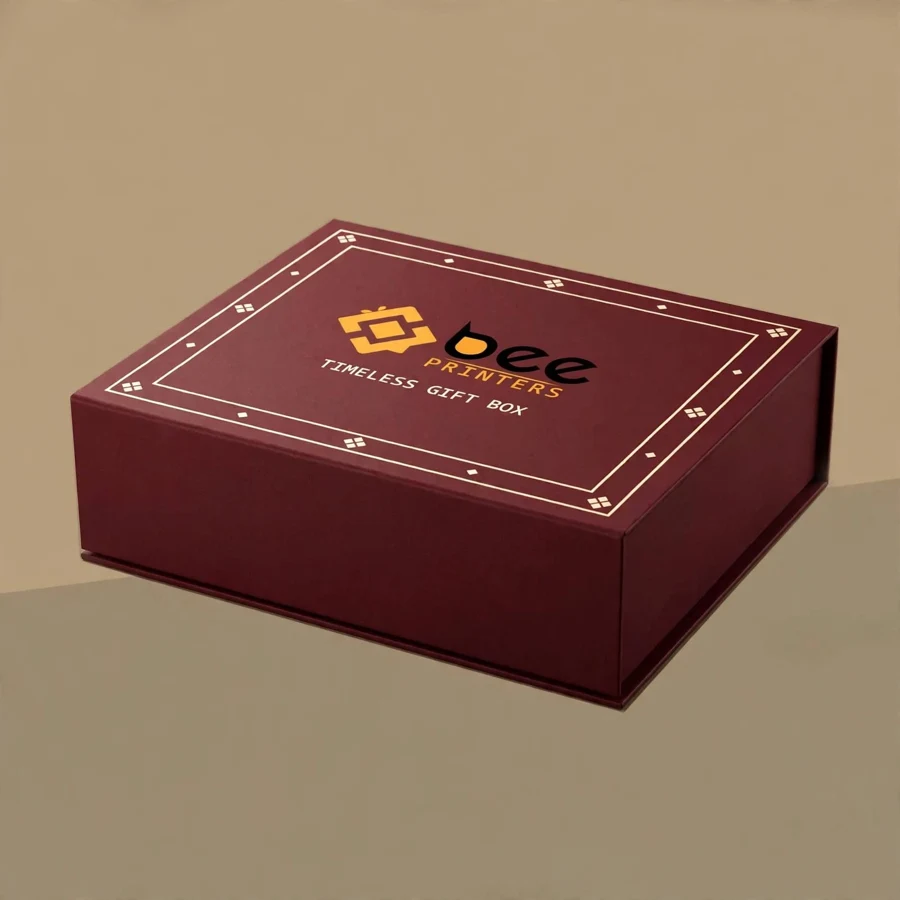
A gold foil finish does something ordinary print cannot do: it catches the light and tells a customer, before a single word is read, that the product inside matters. For gifts, jewelry, candles, chocolates, cosmetics, and special editions, that first flash of gold is often the reason a shopper picks one box up and leaves the others on the shelf. At Bee Printers, custom gold foil boxes pair a bright metallic foil finish with full brand printing, so the box carries your logo, your colors, and your message while the gold does the work of getting noticed.
Gold foil is applied by hot stamping, a process that presses a thin metallic foil onto the board with heat and a shaped die. The foil bonds to the surface and leaves a crisp, reflective area that stands out against the printed board around it. It can cover a logo, a border, a pattern, or a single word, and because the foil sits on top of the print, the two work together instead of competing. A little foil goes a long way: a foiled logo on a plain lid often looks stronger than a box covered in gold from edge to edge, because the contrast is what the eye notices.
The choice of board matters as much as the foil. A smooth coated board gives the foil a clean, even surface to bond to, which keeps the edges of the stamped area sharp. A matte board creates a different effect, with the bright foil standing out even more against a soft, non-reflective background. Kraft board can be used too, for a warm, handmade feel where the gold sits against the natural brown of the board. The size and structure are always measured from the real product, including any insert, padding, or tissue, so the box closes cleanly and the product sits securely inside.
Gold foil boxes are a natural fit for products that are bought as gifts or for special occasions. Jewelry, watches, perfumes, candles, chocolates, and premium teas all benefit from packaging that looks considered before it is even opened. A foiled box also suits limited editions and seasonal releases, where the packaging needs to signal that this version is different from the regular range. For a small business, a foiled box can make a handmade product look as polished as anything from a large brand, which matters when the product sits on a market stall or a boutique shelf next to established names.
Retailers notice the difference too. A shelf full of plain printed boxes can blur together, but a gold foil logo or border breaks up the row and draws the eye. That matters in gift shops, department stores, and anywhere a customer is choosing between similar products. The foil does not need to shout: even a small foiled mark on the lid is enough to change how the box reads from a distance of a few feet, which is usually the distance that decides a purchase.
Gold foil also photographs well, which matters for online selling. A product photo with a bright foil detail stands out in a grid of listings, on social media, and in a marketplace search. Customers who buy online judge the product by its pictures, and packaging that looks careful in a photo builds confidence before the order is placed. The same box that works on a shelf works on a screen, which makes it a practical choice for brands that sell through both channels.
Simple artwork works best with foil. A bold logo, a clear brand name, and one or two strong colors usually beat a crowded design, because the foil itself is already doing much of the visual work. The lid is the natural place for the main foiled element, while the sides and base can carry a short message, care details, or contact information. Keeping the layout simple lets the gold and the printed branding work together instead of fighting for attention.
Full-color printing reproduces brand artwork on the box, and the print sits alongside the foil so the colors stay true while the metallic area shines. A rose gold option is available for brands that want a softer, warmer metallic tone instead of classic yellow gold. The foil can also be combined with embossing, which raises the foiled area slightly off the surface and adds a tactile detail that customers notice when they pick the box up. A sample is the best way to judge the effect, because foil looks different under shop lighting than it does on a screen.
Text on a foiled box should be kept short and legible. Small text in foil can be hard to read, so fine print, ingredients, and instructions are usually printed in ink rather than stamped. The foil is best reserved for the elements that deserve attention: the logo, the product name, or a short phrase. This is a practical rule as much as a design one, and it keeps the box looking clean instead of busy.
The structure follows the product. A rigid two-piece box with a lift-off lid suits jewelry, watches, and gift sets, where the unboxing is part of the experience. A tuck-end folding box suits smaller retail items and stands upright on a shelf. A drawer-style box with a sleeve suits sets and collections, because the drawer slides out and presents the contents in one movement. A magnetic-close lid suits products that will be opened and closed more than once, since the lid stays shut in a bag or on a shelf.
Inside the box, an insert keeps the product in place and protects it in transit. Foam, molded pulp, and folded card inserts can all be cut to the shape of the product, and the insert can be covered in a plain color so it does not compete with the foiled lid. For fragile items, the insert is as important as the box itself: a product that moves around inside its packaging arrives scratched or broken, no matter how good the outside looks. Getting the insert right is part of getting the box right.
Wholesale ordering keeps the cost of a foiled box manageable. Foil stamping has a setup step for the die, so the cost per box falls as the quantity rises, which makes larger runs the sensible choice for brands that sell steadily. Smaller runs are still possible for a launch or a seasonal edition, and the per-box cost is easy to weigh against the shelf impact the foil delivers. Ordering in the quantity you actually sell avoids both waste and reordering delays.
Ordering starts with the product and the quantity. The product’s size, weight, and shape decide the box structure, and the quantity decides the most economical run size. From there, the artwork is prepared: the logo and brand colors are set for print, and the foil area is marked out as a separate layer so the stamping die matches the design exactly. A proof shows how the print and the foil sit together before anything is produced, which is the point where changes are cheap and easy.
The Metalized Boxes range covers the full family of metallic finishes, so if a design needs a different tone, the same structure and artwork can be adapted to another foil. For brands that want the gold effect on a flexible pouch instead of a rigid box, Custom Gold Mylar Bags carry the same bright gold look in a lighter, resealable format. Choosing between a box and a bag comes down to the product: a box protects a shape, a bag suits loose or soft contents.
Once the proof is approved, production runs to the agreed schedule, and the boxes are packed flat or assembled depending on the structure. Flat-packed boxes save on shipping and storage, and they fold up quickly when needed. Assembled boxes arrive ready to fill, which suits businesses that pack orders daily and want to skip the folding step. Either way, the foil arrives bright and the print arrives sharp, ready for the product to go inside.
Gold foil is durable in normal use, but a few simple habits keep it looking new. Store flat-packed boxes in a dry place away from direct heat, since damp and heat can dull the foil over time. Handle finished boxes by the edges where possible, because the oils on hands can mark a bright foil surface. For display, a box kept out of direct sunlight holds its shine longer than one left in a sunny window. None of this needs special equipment, just the same care you would give any printed packaging.
When a customer receives a gold foil box, the packaging becomes part of the product experience. A box that looks good is often kept, reused, or photographed, which means the branding keeps working long after the sale. That is the real return on a foil finish: it is not only decoration, it is a reason for the customer to remember the brand. A well-made gold foil box earns its place on the shelf, in the gift bag, and in the customer’s memory.
| Material | Kraft, Cardboard, Corrugated, Rigid stock |
| Sizes | All custom sizes (any length × width × height) |
| Printing | CMYK / PMS, full-color, offset & digital |
| Finishing | Matte, Gloss, Soft-touch, Foil, Spot UV, Embossing |
| Add-ons | Window cut-outs, inserts, interior printing |
| Minimum Order | 100 boxes |
| Turnaround | 7 to 10 business days after design approval |
| Shipping | Free shipping across the US |