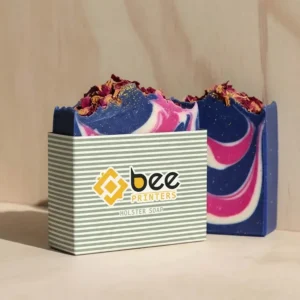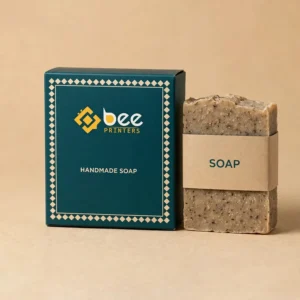
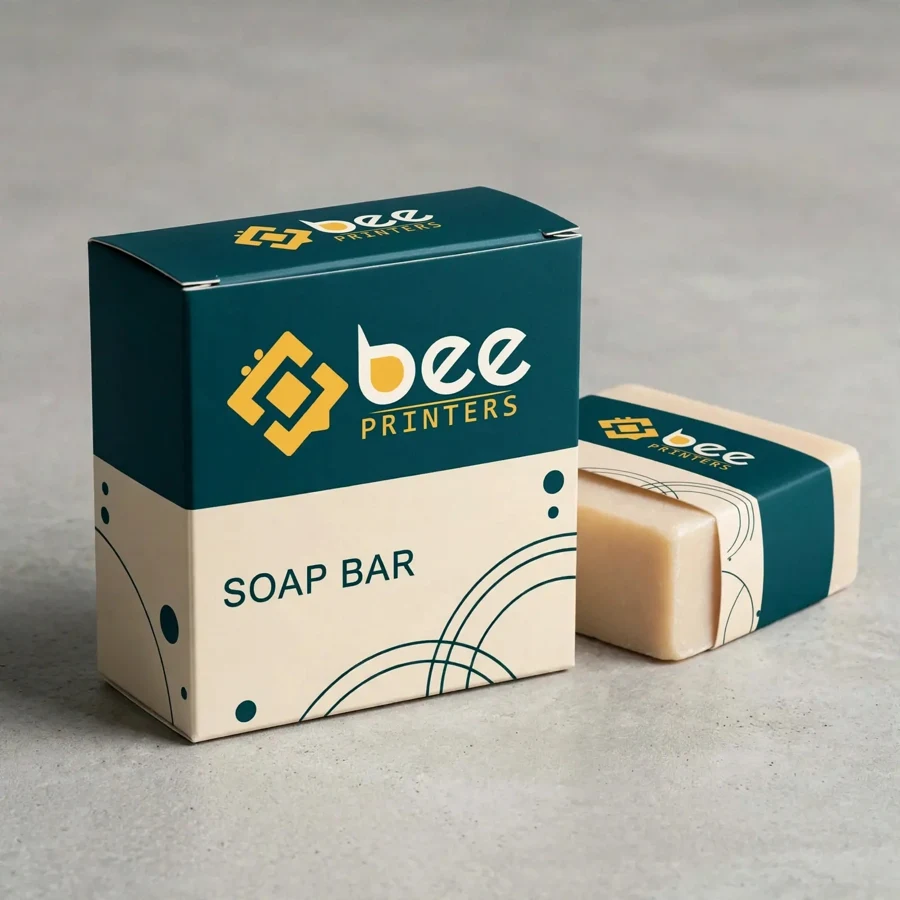
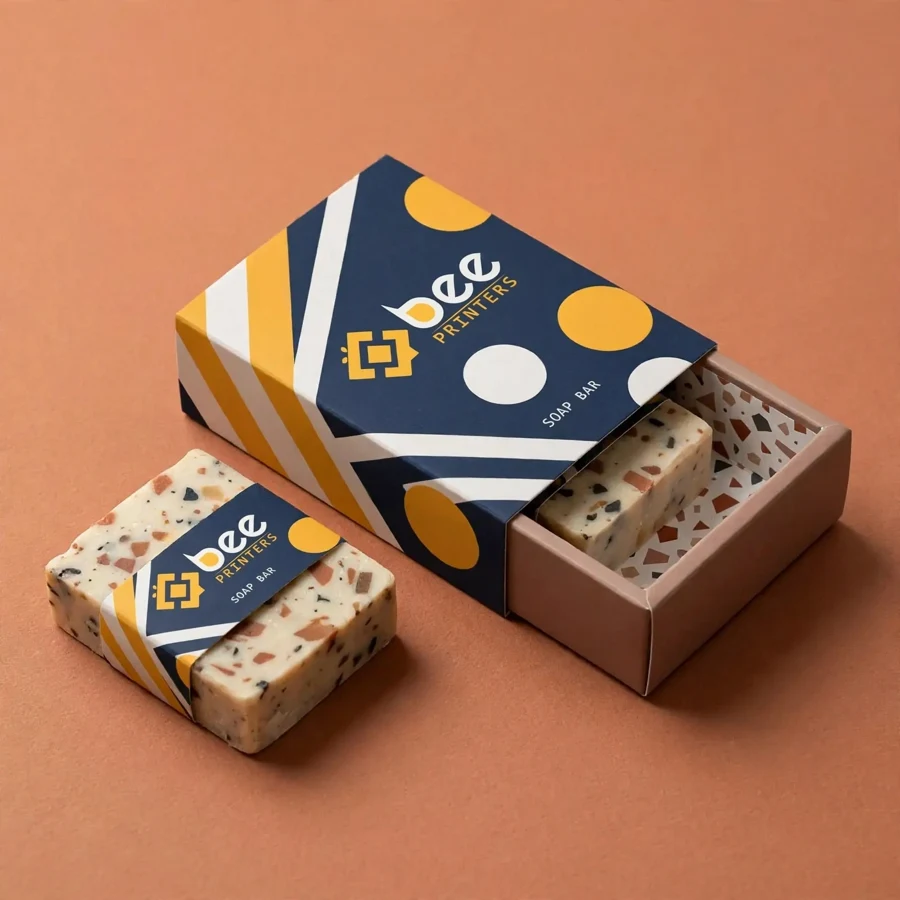
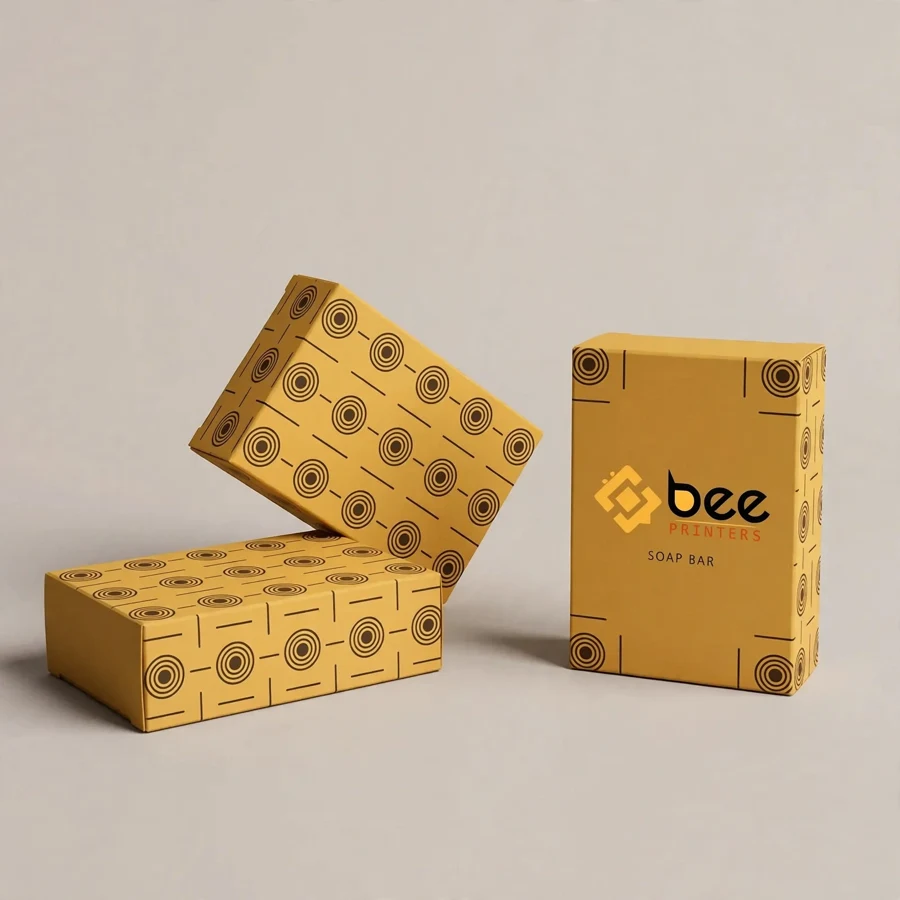
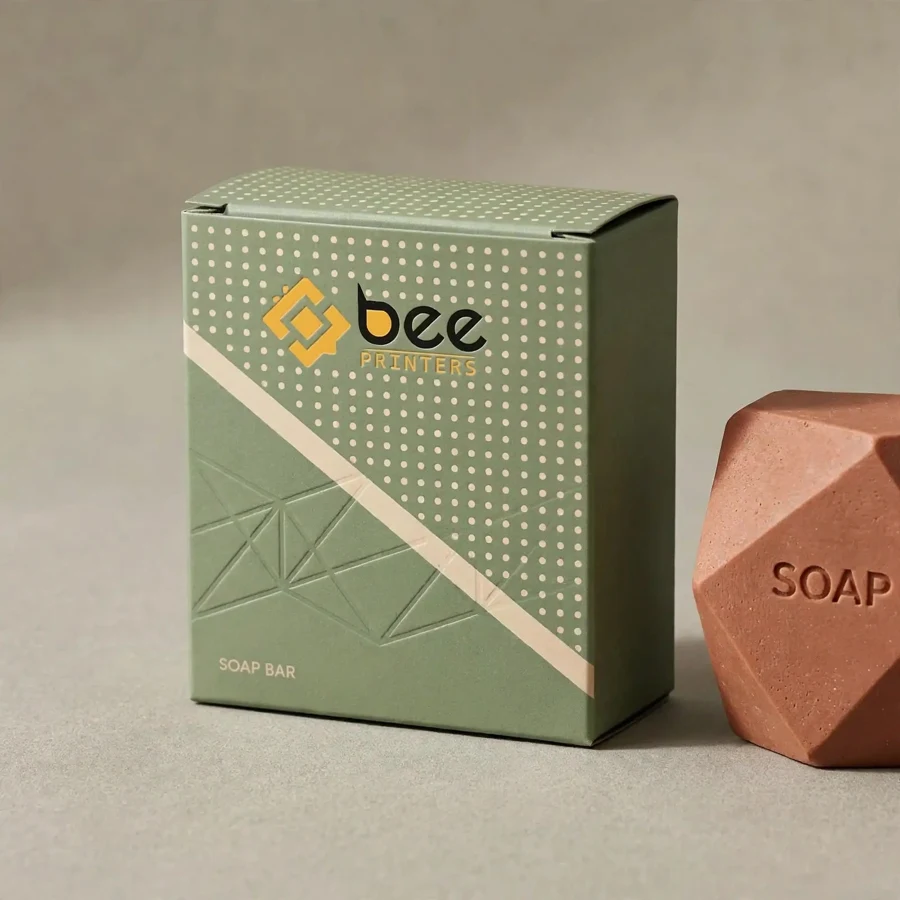
A soap bar box has a straightforward job: hold the bar, protect it, and present it so a buyer picks it up. A custom soap bar box does that job with the brand printed on it, in a size and structure that fits the bar and the place it will be sold. At Bee Printers, soap bar boxes are made to order in kraft or SBS board, with the print, the finish, and the structure chosen to suit the bar and the shelf it will sit on.
Soap bars are sold in supermarkets, gift shops, pharmacies, market stalls, and online, and each setting asks something different of the box. A supermarket shelf needs a box that stands upright, stacks neatly, and can be read at a glance. A gift shop needs a box that looks good enough to give as a present. An online order needs a box that protects the bar in a postal bag and still looks tidy when it is opened. The box has to do all of that while keeping the bar dry, clean, and undamaged, which is why the board, the structure, and the fit matter as much as the print. Our custom soap boxes range covers the same bar sizes in a range of structures, so a brand can keep its packaging consistent across its range.
The most important thing a soap bar box can do is fit. A box that is too large lets the bar slide around, which can mark the bar and make the pack look empty, while a box that is too small can squeeze the bar or make it hard to get out. Soap bars vary in size and shape, from a standard rectangular bar to a chunky round or an uneven hand-cut bar, and the box should be sized to the bar it holds, with a little room for the bar to be lifted out easily. Measuring the bar, including any uneven edges or decorations, is the first step in ordering a box that fits properly.
Soap bar boxes are usually made from kraft board or SBS board, and each has its own strengths. Kraft board is unbleached, with a warm brown tone and a visible fibre that gives the pack a natural, rustic look. It is strong for its weight, widely recyclable, and it suits brands that want a simple, honest pack. SBS board, short for solid bleached sulfate, is a white coated board with a smooth surface that prints in sharp, bright colours. It suits designs with photography, detailed illustrations, or bright colour schemes, and it gives the box a clean, premium feel.
Board weight for a soap bar box is usually in the 250 to 350 gsm range, thick enough to hold its shape on a shelf but light enough to fold neatly and keep postage down. A tuck-end box needs the upper end of that range to keep its flaps crisp, while a sleeve or a belly band can be made from lighter card. The board should resist moisture, because soap bars are stored in bathrooms and used near water, and a light lamination or coating on the outside of the box helps keep splashes off the print and the board dry.
Many soap bars are sold hanging from a peg hook rather than sitting on a shelf, and a peg-hook cutout makes that possible. A die-cut hole or slot near the top of the box lets it hang from a hook in a shop, keeping the bar visible and easy to reach. The cutout must be placed so the box hangs straight and the front of the box faces the shopper, and it must be strong enough to hold the weight of the bar without tearing. A reinforced cutout, with a second layer of board around the hole, lasts longer under the weight of a full bar.
Peg-hook boxes suit small shops, pharmacies, and gift shops, where shelf space is limited and hanging displays make the most of the wall. They also suit a range of scents, because several boxes can hang side by side on a single hook, letting a buyer compare scents without taking each one down. The front of a peg-hook box should carry the brand and the scent where they can be read while the box hangs, with the design facing forward and the text large enough to read from a step away.
Some soap bars are sold with a wrapper around the bar as well as a box, and a wrapper-fit cavity is an interior that holds the wrapped bar snugly inside the carton. The cavity can be a simple folded insert, a die-cut tray, or a shaped piece of board that cradles the bar and keeps it from moving. A snug interior protects the bar during shipping, keeps it centred behind a window, and makes the pack feel solid when it is picked up. It also stops the bar from sliding to one end of the box, which can make the pack look lopsided on a shelf.
Inserts and cavities need to be designed for the bar they hold. A rectangular bar needs a rectangular cavity, while a round or oval bar needs a shaped insert that follows its curve. The insert should hold the bar firmly without squeezing it, and it should be easy to lift the bar out without tearing the insert. A well-made cavity makes the box feel like it was designed for the bar, which is exactly what a buyer notices when they open it.
Soap bars are a popular subscription product, with a new bar or a set of bars arriving each month, and a subscription-ready box is built for that use. It needs to survive the postal system, protect the bar inside, and look good when the subscriber opens it. A sturdy tuck-end box in kraft or SBS board, with a snug fit and a clean print, suits a single-bar subscription, while a larger carton can hold two or three bars, with an insert keeping each one in place. The box should be light enough to keep postage down, but strong enough to arrive undamaged.
Subscription boxes also benefit from a design that makes the unboxing feel like part of the experience. A printed inside, a simple message, or a colour that changes with the season can all make a monthly delivery feel special, and a consistent look across months helps the subscriber recognise the brand. The box should also be easy to open, because a subscriber who struggles with the pack is unlikely to stay subscribed, and it should be easy to recycle or reuse once the bar is out.
Full-colour CMYK printing is the standard for soap bar boxes, reproducing the brand, the scent name, and the design across the front, back, and sides. A matte lamination gives a soft, modern feel, while a gloss finish makes colours look richer. Foil stamping can pick out a logo or a detail in gold or silver, and embossing can raise a motif off the surface. These finishes work best when they are used on one or two details, so the design stays readable and the box does not look over-decorated.
The back and side panels carry the practical information a buyer looks for: the ingredients, the bar weight, the scent, and directions for use. That text needs to be legible at a small size, with enough contrast against the background to read easily, and it should be checked carefully before printing. A barcode needs a clear area around it so it scans cleanly at the till. The box should also be easy to open, with a tuck flap that lifts cleanly rather than a glued seam that has to be torn.
When you order custom soap bar boxes, start with the bar: measure it, decide on the board and the structure, and choose any extras such as a peg-hook cutout, a window, or an insert. Small orders suit a new scent or a market stall, while larger orders suit a retail range or a subscription. Ask for a proof so you can check the colours, the text, and the fold before the full run, and test the box with a real bar to make sure the fit is right. For a printed carton with a clear window that shows the bar, see our window soap boxes, which pair printed card with a display window.
A custom soap bar box is a simple, hardworking pack. It protects the bar, carries the brand, and presents the soap in a way that suits the shelf, the hook, or the postal bag. Whether the bar is sold in a shop, at a market, or by subscription, the right box helps it reach the buyer in good condition and looking like it belongs there.
| Material | Kraft, Cardboard, Corrugated, Rigid stock |
| Sizes | All custom sizes (any length × width × height) |
| Printing | CMYK / PMS, full-color, offset & digital |
| Finishing | Matte, Gloss, Soft-touch, Foil, Spot UV, Embossing |
| Add-ons | Window cut-outs, inserts, interior printing |
| Minimum Order | 100 boxes |
| Turnaround | 7 to 10 business days after design approval |
| Shipping | Free shipping across the US |