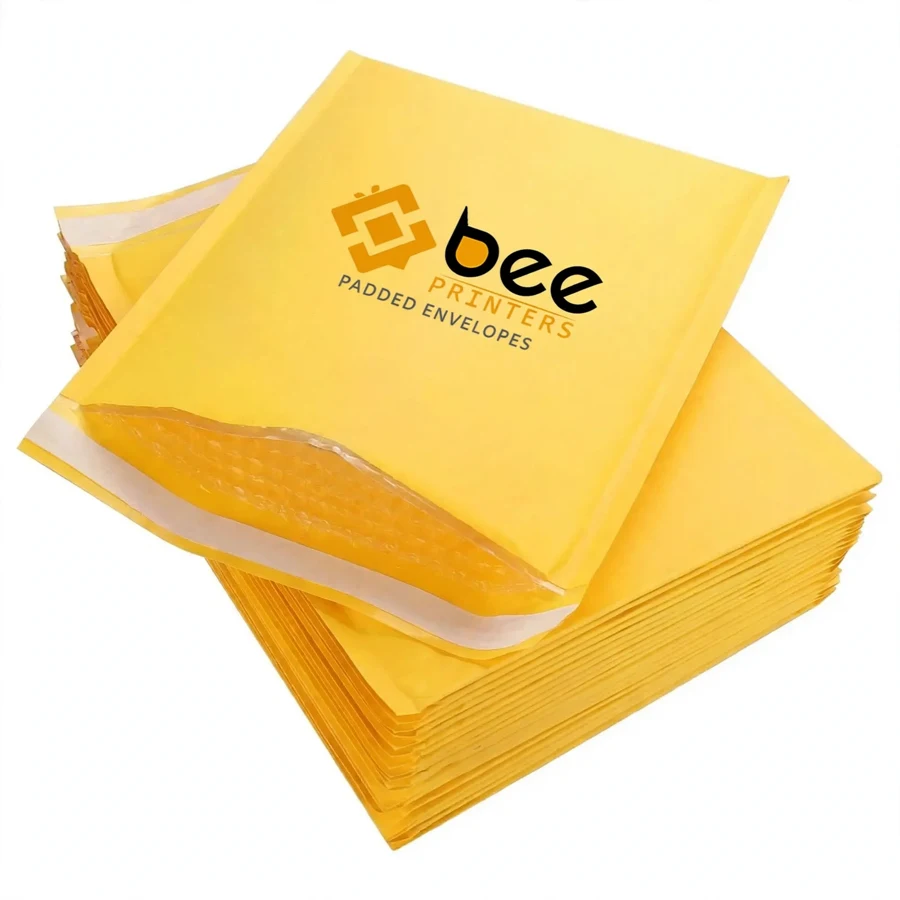
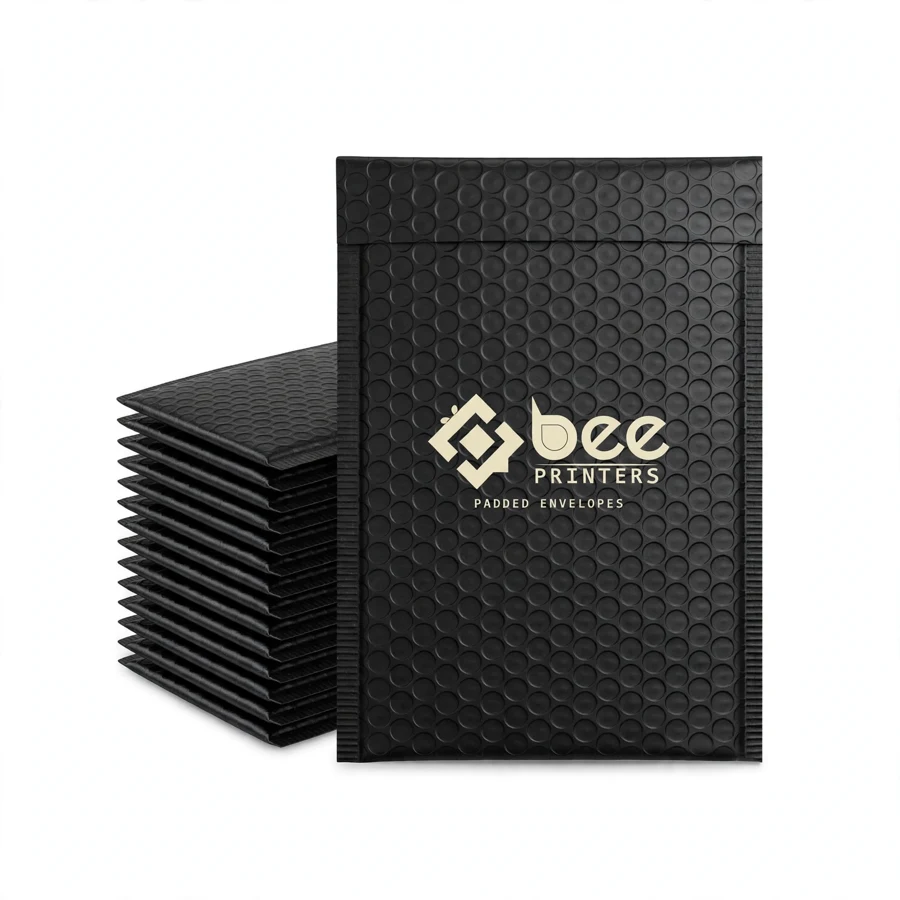
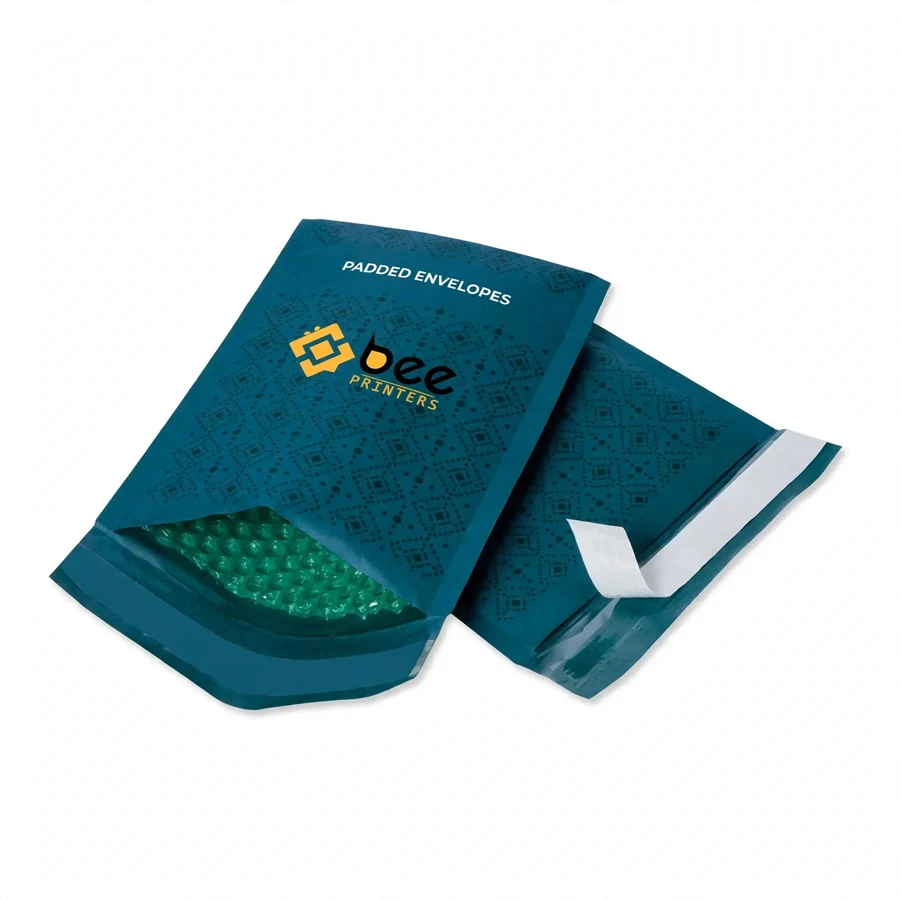
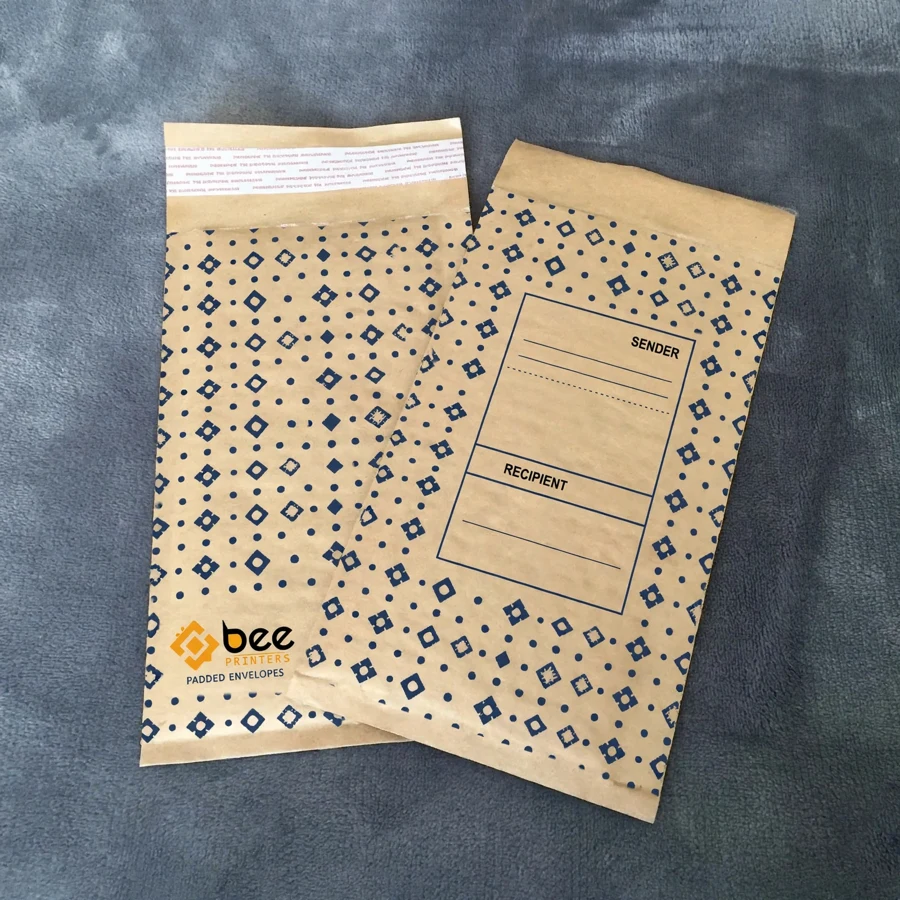
A padded envelope is the simplest way to post something small and fragile without putting it in a box. Bee Printers supplies custom padded envelopes in all sizes, bubble-lined for safe and secure shipping, lightweight enough to keep postage low, and available in bulk for online sellers, offices, and businesses that post small items every day. A padded envelope cushions its contents against the knocks of sorting and delivery, protects them from bending and scratching, and arrives looking like a proper parcel rather than a letter that was forced to carry something it was not built for.
A padded envelope is a paper or plastic envelope with a layer of bubble lining bonded to the inside. The outer layer gives the envelope its shape, its printable surface, and its seal; the bubble layer gives it its cushioning. Together they make a mailer that is light, flexible, and protective: light enough to post cheaply, flexible enough to fit a range of small items, and protective enough to keep those items safe through the postal system. Padded envelopes are made in a wide range of sizes, from small envelopes for jewellery and phone accessories to large envelopes for books, clothing, and multi-item orders.
The most common outer is kraft paper, which is strong, printable, and familiar, or white paper, which looks cleaner and suits printed branding. Some padded envelopes have a plastic outer with a bubble lining inside, which is water-resistant and tear-resistant, and suits items that travel in wet weather or over long distances. The choice between paper and plastic depends on the look you want and the conditions the envelope will travel in; paper is the more common choice for businesses that want their mail to look like mail, while plastic suits purely practical shipping.
Bubble lining works because it absorbs impact. Each bubble is a small pocket of air, and when the envelope is knocked or dropped, the bubbles compress and spread the force instead of passing it straight to the contents. That is enough to protect most small items — a phone case, a packet of cosmetics, a piece of jewellery, a small electronic accessory — from the everyday knocks of sorting machines, delivery vans, and doorsteps. The lining also stops the contents from being scratched by the envelope itself or by other items in the same mailbag, which matters for items with a polished or printed surface.
The weight of the bubble lining can be chosen to suit the contents. A light lining suits flat or robust items that need a little protection. A heavier lining suits fragile or valuable items that need more cushioning. The lining is bonded to the outer layer, so it stays in place and does not shift or bunch up inside the envelope, which keeps the protection even across the whole surface. That even coverage is the difference between a padded envelope and a plain envelope with a loose piece of bubble wrap tucked inside: the padded envelope protects the whole item, not just the part that happens to be covered.
Online sellers are the biggest users of padded envelopes, because so much of what is sold online is small: phone accessories, cosmetics, jewellery, craft supplies, small electronics, books, and clothing accessories. A padded envelope is the cheapest safe way to post those items, and it is fast to pack: put the item in, seal the flap, stick the label on, and it is ready to go. That speed matters when an online seller is packing dozens of orders a day, and the low weight matters when postage is charged by the gram.
Offices use padded envelopes for photographs, samples, and small items sent to clients. Photographers use them for prints. Publishers use them for books and booklets. The common thread is an item that is too valuable or too fragile for a plain envelope, but too small to justify a box. A padded envelope fills that gap exactly, and it does so at a fraction of the cost and weight of a box.
Padded envelopes are made in a standard range of sizes, usually named by a size code, and the rule for choosing is simple: pick the smallest envelope that fits the item comfortably, with a little room to spare. An envelope that is too tight is hard to seal and risks tearing at the seams; an envelope that is too large lets the item slide around, which is where most transit damage starts, and it costs more to post. Measure the item at its widest and longest points, add a small margin, and choose the envelope that matches. For items that are flat, such as a book or a photograph, a padded envelope that fits flat is the right choice; for items that are bulky, such as a small product in its own box, a slightly larger envelope with room for the bulk is better.
It is worth keeping two or three sizes in stock rather than one, because a single size is either too big for small items or too small for large ones. A small, a medium, and a large padded envelope cover most small-item shipping, and the cost of stocking three sizes is small compared with the postage saved by using the right size every time.
Most padded envelopes have a self-seal flap: a peel-off strip that reveals a strong adhesive, so the envelope closes with a firm press and no moisture. Self-seal is fast, clean, and consistent, which is why it is the standard for padded envelopes used in volume. Some also have a tear strip or a perforated edge so the recipient can open the envelope easily without scissors, which is a small courtesy that customers appreciate. A strong seal matters more for a padded envelope than for a plain one, because a padded envelope is heavier and its contents press against the seal in transit.
Custom printing turns a padded envelope into a branded parcel. A logo and return address printed on the outside, in one or two colours, makes the envelope recognisably yours and helps undelivered mail find its way back. Full-colour printing is available for brands that want the envelope to match their other packaging exactly. Because the outer is paper, the print quality is good, and the branding reads clearly even at a distance. For online sellers, a printed padded envelope is a simple way to make every order feel like it came from a real brand rather than a generic warehouse.
Padded envelopes are a bulk product, and the price per envelope improves with quantity, so online sellers and offices order them by the hundred or the thousand. Before ordering, decide on the sizes you need, the outer material — kraft or white paper — and whether you want the envelopes printed. You can compare the full range in our Envelopes collection to see the sizes and styles available. Store padded envelopes flat and dry, away from heat, because heat can affect the bubble lining and the adhesive. A steady stock of the right sizes means every order can be packed and posted without delay, and every parcel that leaves your business arrives protected.
Padded envelopes are often the smallest mailer in a range that runs up to larger boxes and mailers for bigger orders. Our Paper Padded Mailer is a closely related option for sellers who want a paper-based padded mailer with the same protective lining, and it can carry the same printed branding. When you are ready to order, bring your logo file, your return address, and a note on the sizes you post most often, and your padded envelopes can be printed and delivered ready to use — safe, secure shipping in an envelope that weighs almost nothing.
| Material | Kraft, Cardboard, Corrugated, Rigid stock |
| Sizes | All custom sizes (any length × width × height) |
| Printing | CMYK / PMS, full-color, offset & digital |
| Finishing | Matte, Gloss, Soft-touch, Foil, Spot UV, Embossing |
| Add-ons | Window cut-outs, inserts, interior printing |
| Minimum Order | 100 boxes |
| Turnaround | 7 to 10 business days after design approval |
| Shipping | Free shipping across the US |