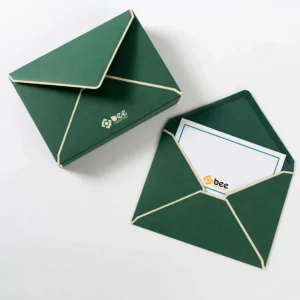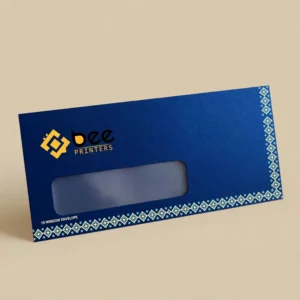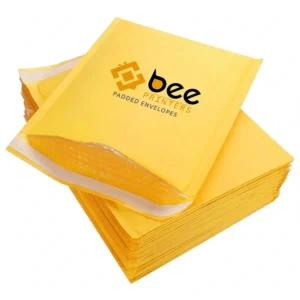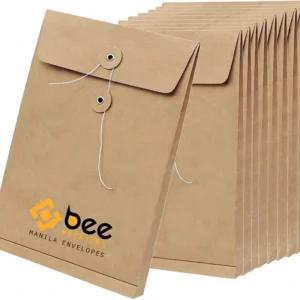
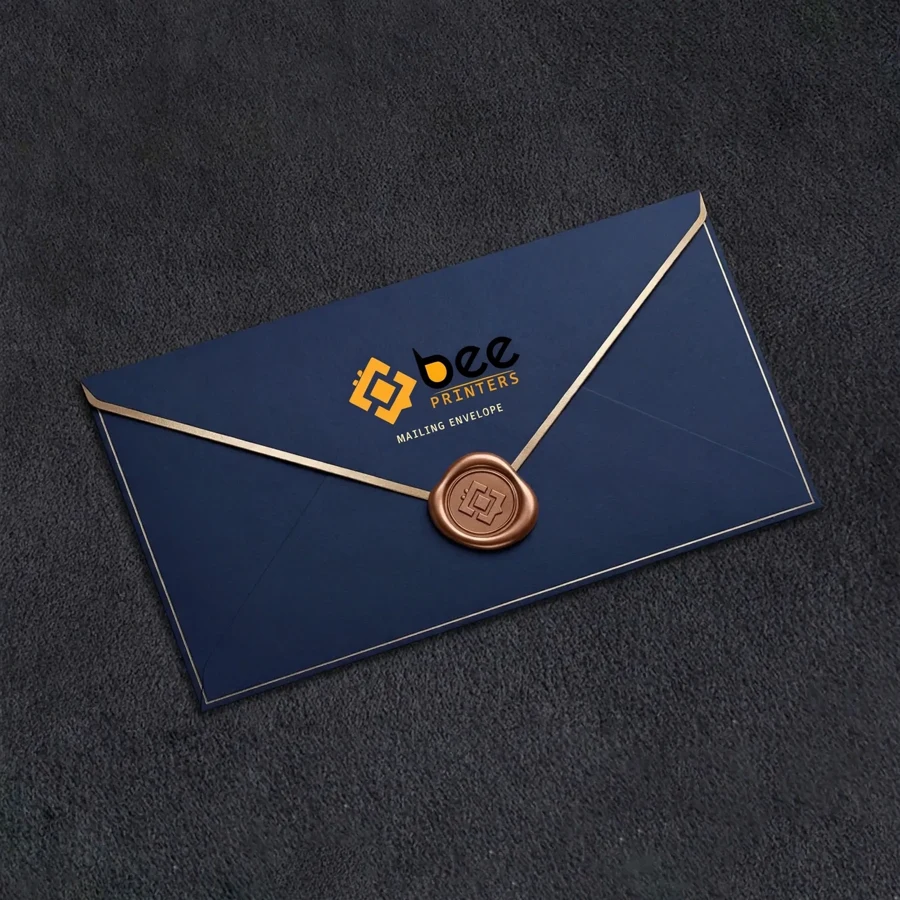
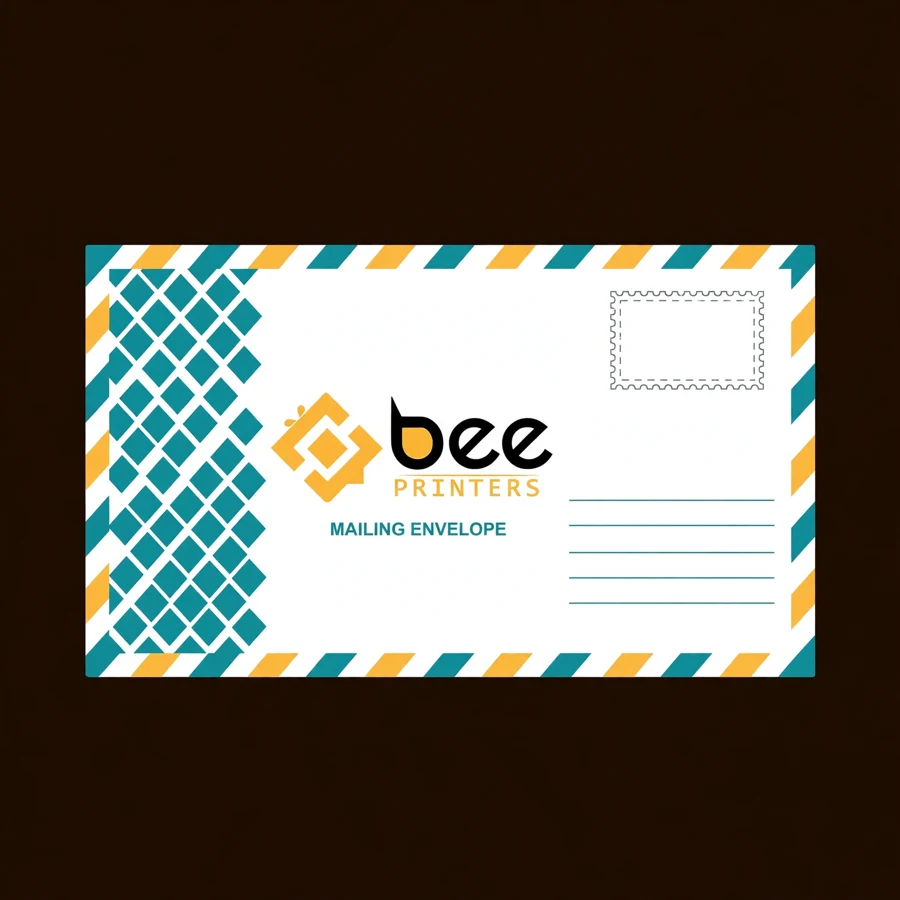
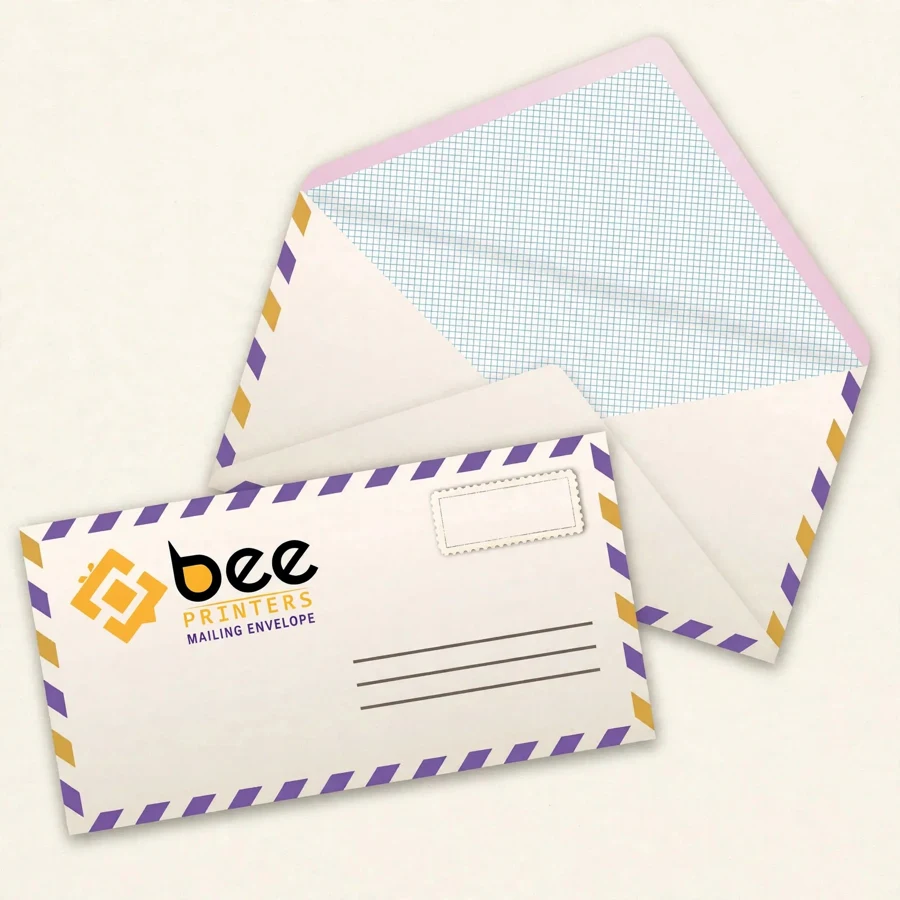
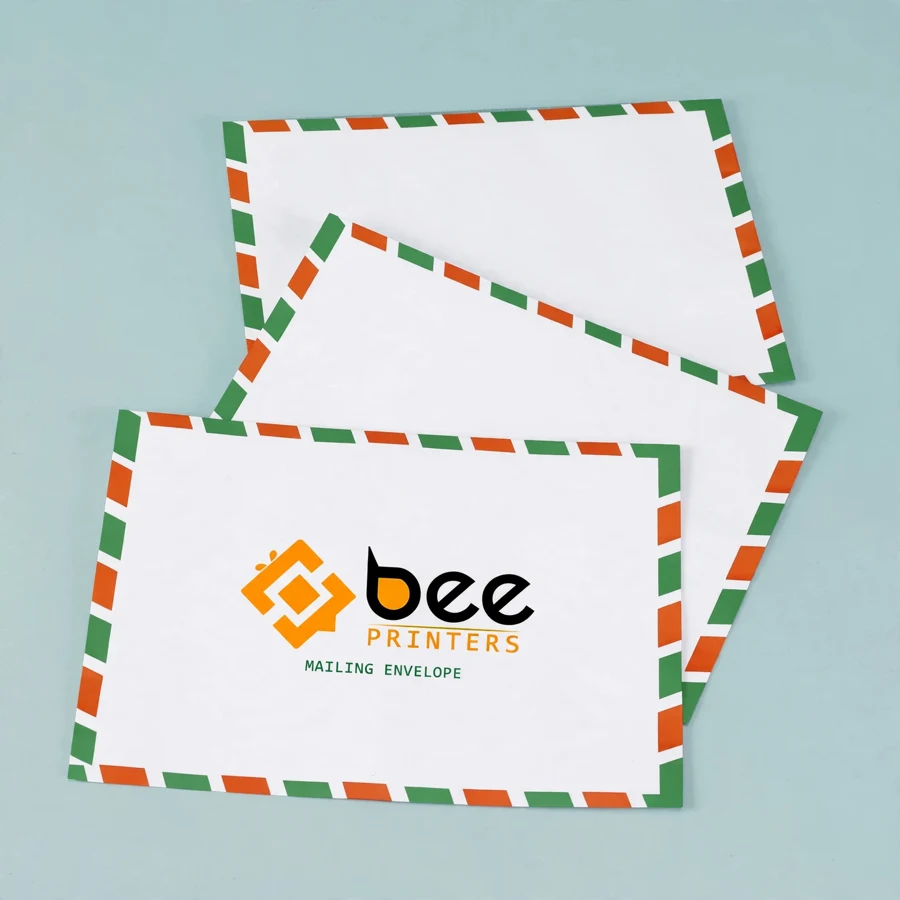
Everything that is posted — a letter, a document, a small product, a catalogue — travels in a mailing envelope, and the envelope is what stands between the contents and the journey. Bee Printers supplies custom mailing envelopes for every shipping need, from plain paper envelopes for letters to padded and bubble-lined envelopes for items that need cushioning. A good mailing envelope is light enough to keep postage down, strong enough to survive sorting machines and delivery vans, and easy to seal, address, and open. Whether you post ten envelopes a week or ten thousand, the right envelope makes the whole job simpler.
A mailing envelope is any envelope designed to carry something through the post, and the range is wide because the post carries such different things. A plain paper envelope suits letters and documents. A padded envelope suits photographs, small products, and anything that should not be bent or scratched. A bubble-lined envelope suits items that need cushioning on all sides, such as cosmetics, electronics accessories, or jewellery. A large kraft envelope suits catalogues, booklets, and flat items that are too big for a standard letter envelope. The common thread is that each one is built for the journey: strong seams, a reliable seal, and paper or lining that protects what is inside.
The size range matters as much as the style. Small mailing envelopes suit greeting cards and single sheets. Medium sizes suit documents, booklets, and catalogues. Large sizes suit flat items, artwork, and multi-page mailings. Choosing the right size is a matter of matching the envelope to the contents: too small and the contents are forced in, which damages both the contents and the envelope; too large and the contents slide around, which is where most transit damage starts.
Padded envelopes have a layer of bubble lining bonded to the inside of the paper, which cushions the contents against knocks and drops. They are the standard choice for small items that are posted on their own: a phone case, a packet of seeds, a piece of jewellery, a small electronic accessory. The bubble lining absorbs the small impacts that happen in sorting and delivery, and the paper outside gives a surface that can be printed, addressed, and sealed like a normal envelope. Because they are light, padded envelopes keep postage low compared with a box, which is why online sellers use them for so many small orders.
Bubble wrap styles come in different weights. A light bubble lining suits flat or robust items that need a little protection. A heavier bubble lining suits fragile or valuable items that need more cushioning. The envelope itself is usually made from kraft paper or a white paper, with a self-seal flap that closes firmly and a tear strip or an easy-open notch for the recipient. Some padded envelopes are also made from a plastic outer with a bubble lining inside, which is water-resistant and suits items that travel in wet weather — though paper padded envelopes are the more common choice for businesses that want their mail to look like mail rather than a parcel.
For letters and documents, a plain mailing envelope is the economical choice. A standard paper envelope in white or kraft, in sizes from #10 to large document sizes, carries a letter or a set of pages safely through the post. The paper weight matters: a heavier paper resists tearing and protects the contents better, while a lighter paper keeps postage down. A security tint on the inside stops the contents from showing through, which matters for letters that contain personal or financial information. A self-seal flap speeds up the sealing when mail is prepared in volume, while a gummed flap is the economical choice for general use.
Plain mailing envelopes are also the ones that carry a business’s branding most often. A printed logo and return address in the top left corner makes the envelope recognisably yours, helps undelivered mail find its way back, and gives every letter a professional appearance. For businesses that post every day, a stock of printed mailing envelopes in the sizes they use most is one of the simplest ways to make their mail look consistent.
Start with the contents. A letter needs a paper envelope. A photograph needs a padded envelope or a rigid mailer. A small product needs a bubble-lined envelope. A catalogue needs a large flat envelope. A set of documents needs an envelope that fits them flat, without folding more than necessary. Then consider the journey: a local delivery needs less protection than a long-distance or international one, and an item that travels in a sorting machine needs a stronger envelope than one that is hand-delivered. Then consider the presentation: a printed envelope looks better than a plain one, and a consistent look across your mailings builds recognition over time.
Weight is a practical factor that is easy to overlook. A padded envelope weighs more than a plain one, and a large envelope weighs more than a small one, and postage is charged by weight and size. Choosing the smallest envelope that fits the contents properly is usually the cheapest option, and it also reduces the amount of packaging material used. That is good for the budget and good for the recipient, who has less packaging to dispose of.
A mailing envelope should be easy to seal, easy to address, and easy for the recipient to open. Self-seal flaps close with a press and are the fastest option for volume mailing. Peel-and-seal flaps give a stronger seal for heavier contents. Clasp closures suit envelopes that are reused between offices, because they open and close without tearing. For addressing, a clear, smooth paper surface takes ink and labels well, and a window option is available for bulk mailings where the address is printed on the enclosed document. For the recipient, a tear strip or a perforated opening edge makes the envelope easy to open without scissors or a letter opener, which is a small courtesy that is appreciated.
It is also worth thinking about how the envelope behaves in a sorting machine. An envelope that is too thick, too lumpy, or too unevenly filled can jam or be rejected, so contents should be packed flat and evenly. A padded envelope with a small item inside should have the item centred, not bunched at one end. Those small packing habits make the difference between mail that flows through the system and mail that comes back.
Mailing envelopes are a bulk product, and the price per envelope improves with quantity, so it pays to order the sizes and styles you use most in a single run. Before ordering, list the kinds of mail you send — letters, documents, small products, catalogues — and match each one to an envelope style. You can compare the full range in our Envelopes collection to see the sizes and styles side by side. Store envelopes flat and dry, away from heat, and the paper and the adhesive will stay in good condition. A steady stock of the right envelopes means no one in the office is ever stuck without the right mailer, and every parcel that leaves the building looks like it came from the same business.
For larger parcels and online orders, mailing envelopes are often the first step in a range that runs from a padded envelope up to a full shipping box. Our Ecommerce Mailer Boxes cover the parcel end of that range and can carry the same printed branding, so your mail looks consistent from the smallest envelope to the largest box. When you are ready to order, bring your logo file, your return address, and a note on what you post most often, and your mailing envelopes can be printed and delivered ready to use.
| Material | Kraft, Cardboard, Corrugated, Rigid stock |
| Sizes | All custom sizes (any length × width × height) |
| Printing | CMYK / PMS, full-color, offset & digital |
| Finishing | Matte, Gloss, Soft-touch, Foil, Spot UV, Embossing |
| Add-ons | Window cut-outs, inserts, interior printing |
| Minimum Order | 100 boxes |
| Turnaround | 7 to 10 business days after design approval |
| Shipping | Free shipping across the US |