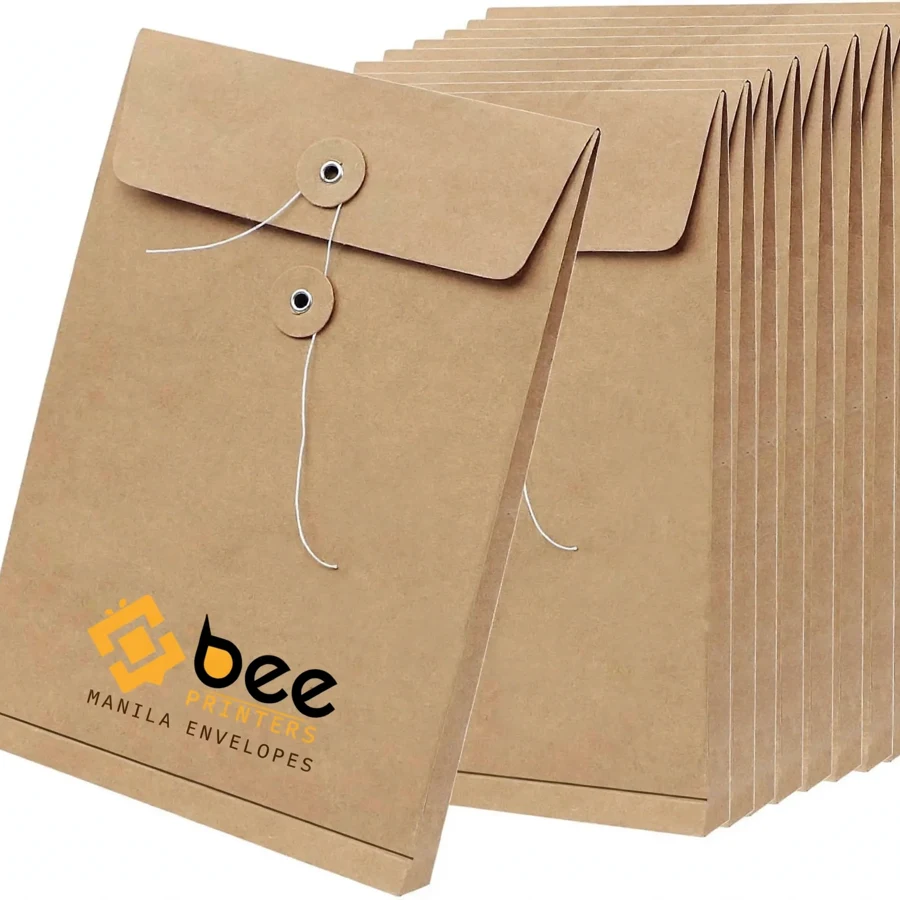
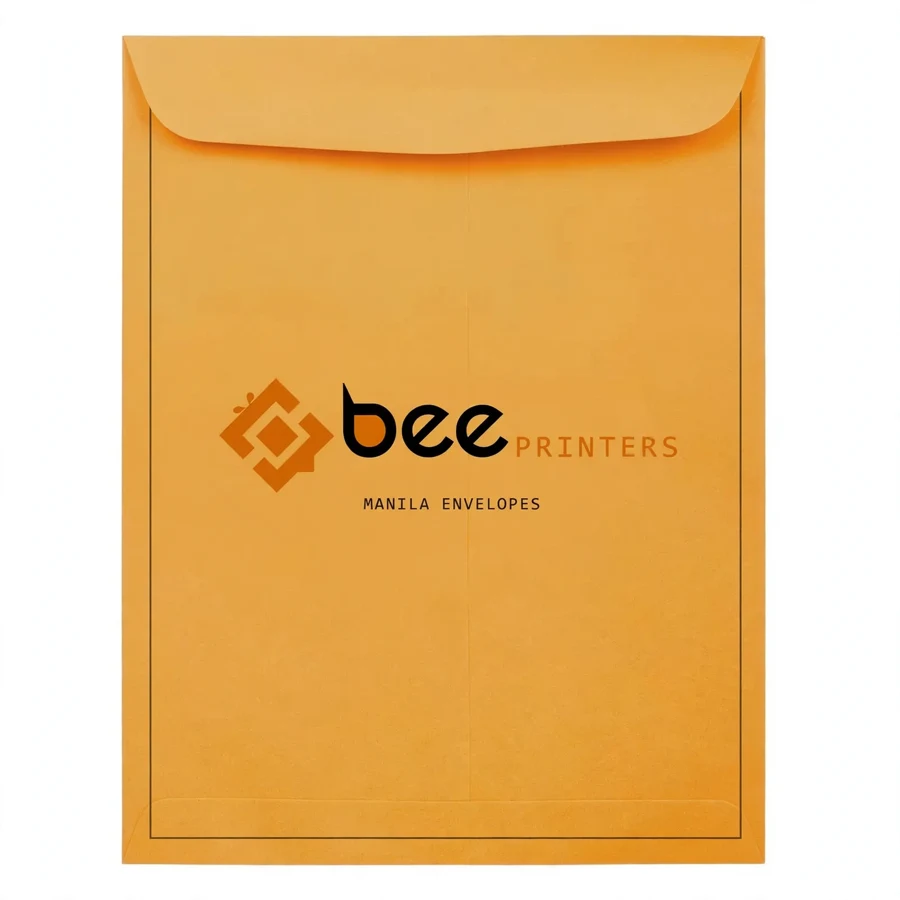
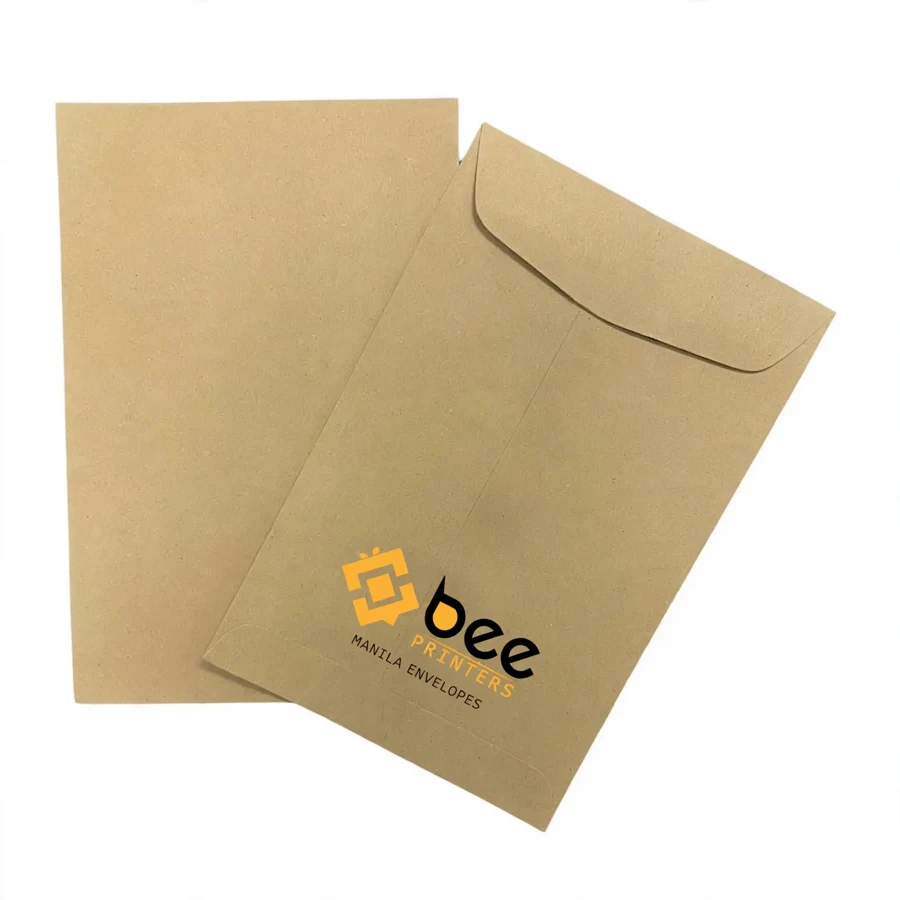
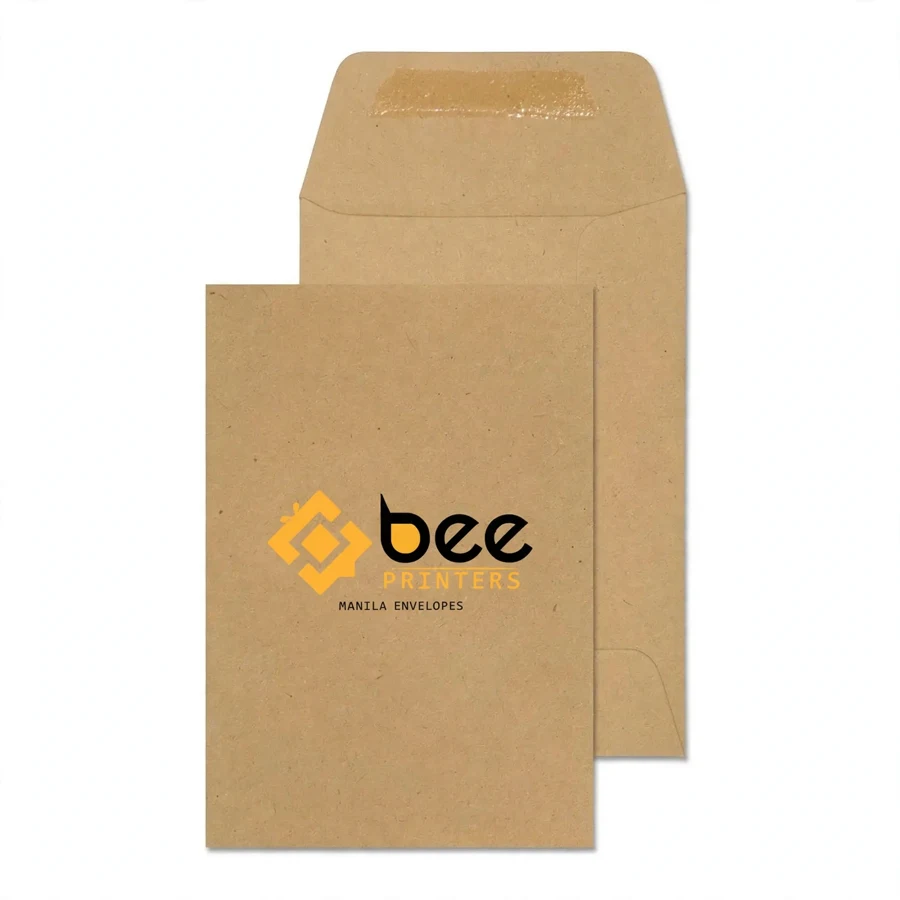
The manila envelope is the most recognisable envelope in any office. Its warm tan kraft colour, its sturdy paper, and its practical clasp or self-seal closure have made it the standard envelope for documents, photographs, and mailings that need to arrive flat and intact. Bee Printers supplies custom manila envelopes in all sizes, from small envelopes for photographs and cards to large envelopes for documents, reports, and artwork, with clasp and self-seal options and your logo printed on the outside. A manila envelope is not a decorative product — it is a working envelope, and its value is in how reliably it does its job.
A manila envelope is made from manila paper, a strong kraft paper originally made from manila hemp, which gives it its characteristic tan colour and its toughness. The paper is thicker and stiffer than the paper used for a standard letter envelope, which is why a manila envelope holds its shape when it is filled and resists tearing when it is handled. The colour is also practical: a manila envelope is easy to spot on a desk, in a tray, or in a pile of mail, and its contents are not visible through the paper. The name has stuck even though modern manila envelopes are usually made from wood pulp kraft rather than hemp, and the look — that warm, natural tan — is now so familiar that it signals “documents inside” to anyone who sees it.
Manila envelopes are made in a wide range of sizes, from small 5×7 envelopes to large 10×13 and 12×15 document envelopes, and the size is chosen to fit the contents flat. A document that fits flat arrives looking professional; a document that has to be folded to fit looks like an afterthought. That is the basic rule of manila envelopes: buy the size that fits what you are sending, and let the envelope do the rest.
Documents are the main use. Contracts, reports, certificates, legal papers, and application forms all travel in manila envelopes, because they need to arrive flat, undamaged, and easy to find. A manila envelope protects the edges and corners of a document, which are the parts that get damaged first in a plain envelope, and it keeps a multi-page document together as a single unit. Law offices, accountants, schools, and government offices use manila envelopes every day for exactly this reason.
Photographs are the second classic use. A photograph in a manila envelope is protected from bending, scratching, and light, and the stiff paper of the envelope acts as a backing board. Photographers, studios, and archives use manila envelopes to store and send prints, and a small manila envelope is the standard way to hand a set of prints to a client. The same protection suits artwork, certificates, and any flat item that should not be folded or creased.
Mailings are the third use. A manila envelope is the standard envelope for bulk document mailings — a set of forms, a booklet, a catalogue — because it is strong, economical, and easy to address and seal in volume. Its colour also helps it stand out in a pile of white mail, which is a small advantage in a direct mail campaign.
Small manila envelopes, around 5×7 or 6×9 inches, suit photographs, cards, and small documents. Medium sizes, such as 9×12 inches, are the standard for letter-sized documents sent flat: a standard letter sheet fits a 9×12 envelope without folding, which is why it is the most commonly used manila size. Large sizes, such as 10×13 or 12×15 inches, suit larger documents, artwork, and multi-page reports that need room. Choosing the right size is straightforward: measure the largest item going inside, add a small margin for easy insertion, and pick the envelope that fits. An envelope that is too tight is hard to fill and risks tearing; an envelope that is too large lets the contents slide around and looks empty.
For very thick mailings, an expandable or gusseted manila envelope is available, with folded sides that open out to take a thicker stack of papers. These are useful for files, dossiers, and reports that run to many pages, and they keep a thick mailing in one envelope instead of splitting it across two.
The classic manila envelope has a metal clasp: two prongs that pass through a reinforced hole and fold flat, closing the envelope securely. A clasp is strong, reusable, and easy to open and close, which is why it is the standard for envelopes that travel between offices or are opened and resealed. A clasp envelope can be opened without tearing, which matters when the envelope itself is part of a filing system and needs to be reused.
Self-seal manila envelopes have a peel-off strip that reveals an adhesive, and they close with a firm press. Self-seal is faster than a clasp when envelopes are sealed in volume, and it gives a clean, flat closure with no metal parts, which suits envelopes that go through sorting machines. Some manila envelopes combine both: a clasp for strength and a gummed or self-seal flap for a clean finish. The right choice depends on how the envelope is used — a filing envelope wants a clasp, a mailing envelope wants a self-seal strip, and an envelope that does both can have both.
Manila envelopes are made from kraft paper in a range of weights. A standard weight is strong enough for everyday documents and light enough to keep postage reasonable. A heavier weight suits large or thick mailings, and a lighter weight suits small, everyday use. The paper surface is smooth enough to write on and to print on, which matters because manila envelopes are often labelled by hand or printed with a return address and a logo. Custom printing turns a manila envelope into a branded piece of mail: a logo and return address in the top left corner, in one or two colours, is enough to make the envelope recognisably yours, and it helps undelivered mail find its way back.
Because the paper is a warm tan, dark inks — black, dark brown, navy — read best on it, and they give a clean, classic look. A printed manila envelope looks professional without being flashy, which suits the serious documents that usually travel inside it. For envelopes that carry private information, a security tint or an opaque lining can be added, though the natural opacity of kraft paper already hides the contents well.
Manila envelopes are a bulk product, and the price per envelope improves with quantity, so offices order them by the hundred or the thousand. Before ordering, list the sizes you use — a small size for photographs, a 9×12 for documents, a large size for reports — and decide on clasp or self-seal closures for each. You can compare the full range in our Envelopes collection to see the sizes and styles available. Store manila envelopes flat and dry, away from heat and damp, and the paper and the clasps will stay in good condition. A steady stock of the right sizes means no one in the office is ever stuck without the right envelope, and every document that leaves the building travels in an envelope that looks like it belongs to the business.
Manila envelopes are often used alongside other mailers in the same office: a #10 envelope for letters, a manila envelope for documents, and a padded mailer for small parcels. Keeping the branding consistent across all three makes the whole set look like one system. Our Book Mailers are a useful companion for the thicker items — booklets, catalogues, and multi-page documents — that are too thick for a standard manila envelope, and they can carry the same printed return address and logo. When you are ready to order, bring your logo file, your return address, and a note on the sizes you need, and your manila envelopes can be printed and delivered ready to use.
| Material | Kraft, Cardboard, Corrugated, Rigid stock |
| Sizes | All custom sizes (any length × width × height) |
| Printing | CMYK / PMS, full-color, offset & digital |
| Finishing | Matte, Gloss, Soft-touch, Foil, Spot UV, Embossing |
| Add-ons | Window cut-outs, inserts, interior printing |
| Minimum Order | 100 boxes |
| Turnaround | 7 to 10 business days after design approval |
| Shipping | Free shipping across the US |